The Best Applications for Permeable Concrete in Residential and Commercial Properties
Underneath every Permcon surface sits a base of clean screenings doing more work than the concrete on top of it. The slab itself has a void content of 20 to 25 per cent, so it's full of connected voids: that's what lets rain drop straight through rather than sit on the surface. What happens next depends on the base. It stores the water, lets it soak into the ground, or lets it go slowly through an under drain, and the surface above stays dry underfoot the whole time.
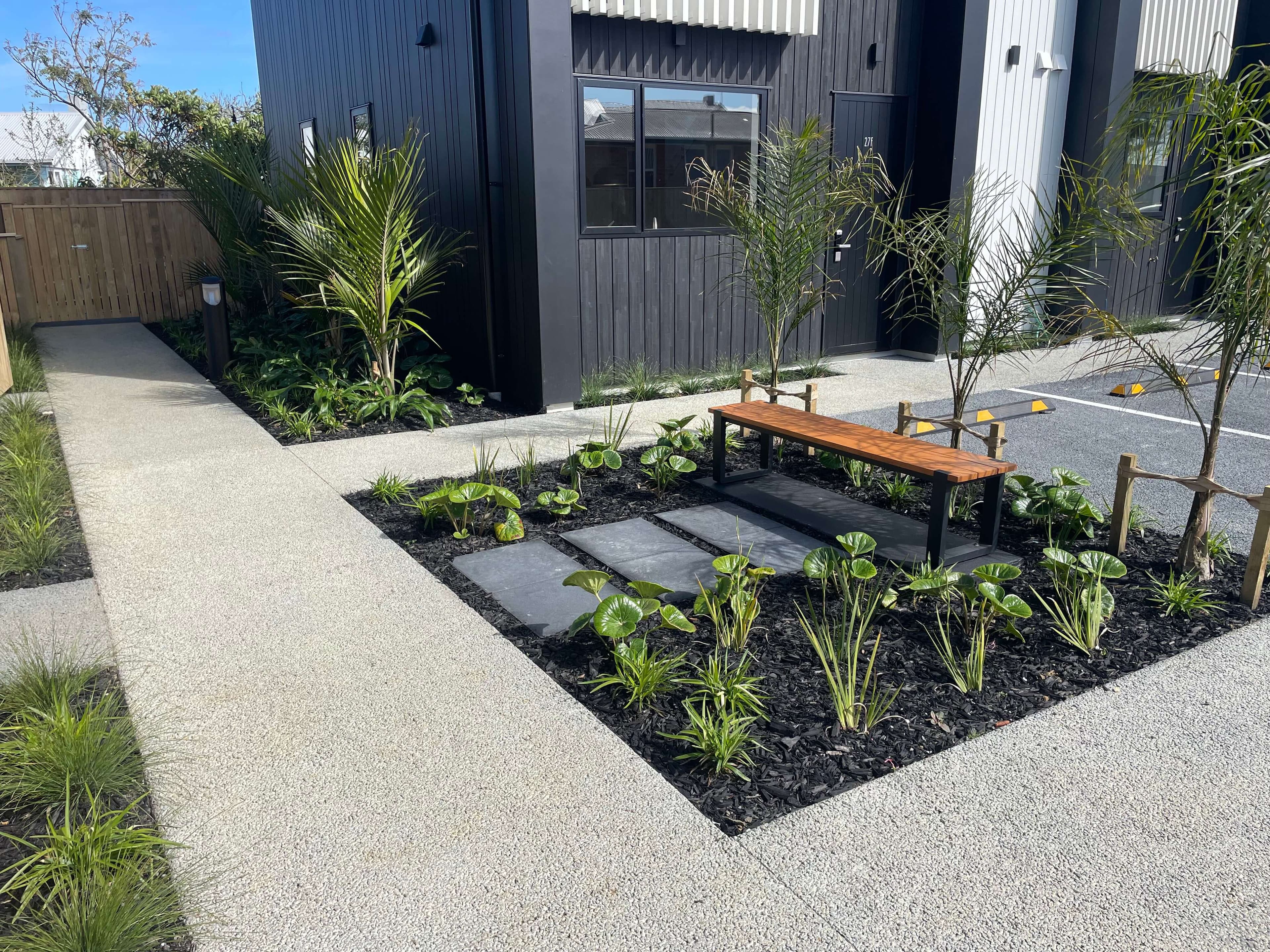
Once that mechanism is in place, permeable concrete uses stretch a long way past the driveway most people picture: paths, pool surrounds, car parks, footpaths, the paving around a rain garden. Anywhere rain lands on something that then gets walked or driven on.
Residential permeable concrete uses
Paths and garden walks
A garden path gets the drainage of loose gravel without the raking. No muddy edges by winter, no scouring where the path meets the garden bed after a downpour, and the roots of whatever's planted alongside it still get water and air through the surface.
Pool surrounds
Splash goes straight through the slab instead of pooling on top of it. The surface carries a P4 slip rating, which counts for more here than almost anywhere else on the block: bare feet find more grip on an open-textured surface than on a sealed one.
Patios and courtyards
An entertaining area that drains through itself is still usable the morning after rain, without relying on falls to a single grate in the corner. Plain grey, charcoal, soapstone and sandstone cover most houses; Ultracon, with its 2 to 5 mm stone and permeable resin, gives a smoother face for anyone hosting barefoot around the table before Christmas.
Driveways
A Permcon driveway takes rain at 8,000 to 10,000 mm/hr, so there's no pooling at the garage and nothing sheeting across the crossover to the street. Where council accepts it, the driveway counts toward the pervious area of the block, and that's often what gets a permit through without a detention tank eating into the yard. Standard slab thickness is 125 mm, poured as one continuous surface with no joints.
Commercial permeable concrete uses
Green infrastructure
Around a rain garden or a swale, a hard surface either feeds the system or bypasses it. Permeable concrete uses here filter as they drain: up to 70 per cent of heavy metals, hydrocarbons, detritus and suspended solids come out before the water reaches a creek.
Cafés, retail and outdoor seating
Outdoor seating that dries fast after a shower fills back up faster than seating that doesn't. The finish reads as one even surface rather than a patched-together paving job, and a wash brings it back if it gets grubby.
Footpaths and shared paths
On footpaths and public realm work, low points don't puddle, and the street trees lining the route keep getting water and air through the surface instead of around it.
Car parks and loading areas
Impervious area caps and detention requirements bite hardest here, which is exactly where a permeable surface earns its keep. A permeable car park drains where it stands and stores the storm in its base, which can shrink or remove the pits, pipes and tanks a sealed car park needs. It's the same 25+ MPa mix as a driveway, just poured thicker wherever bin trucks and delivery vehicles use the loading area. Our crews place 500 m² and more in a day.
What it does for the site as a whole
Every one of these applications is doing three jobs on one footprint. It's the pavement first, and underneath that it's carrying the site's stormwater volume while cleaning what passes through on the way down. Less runoff leaves the site and groundwater gets topped up. Peak flows sit in the base rather than surging into the stormwater network all at once.
Upkeep is simple: a look each month, checking it's clear and draining properly. Add a sweep once a year, and a wash if moss ever settles into the voids. Kept to that routine, design life runs in excess of 30 years. The thickness moves before the mix does, matching the load to the job. Read more on how the system works from the surface down in our guide to permeable concrete, then send through a plan of the block or site and we'll tell you where it fits and what each area needs.