
Wa-Karroong
Wathaurong Aboriginal Co-operative in Geelong has a new home. Wa-Karroong began as a conversation and got built by many hands, APC's among them.
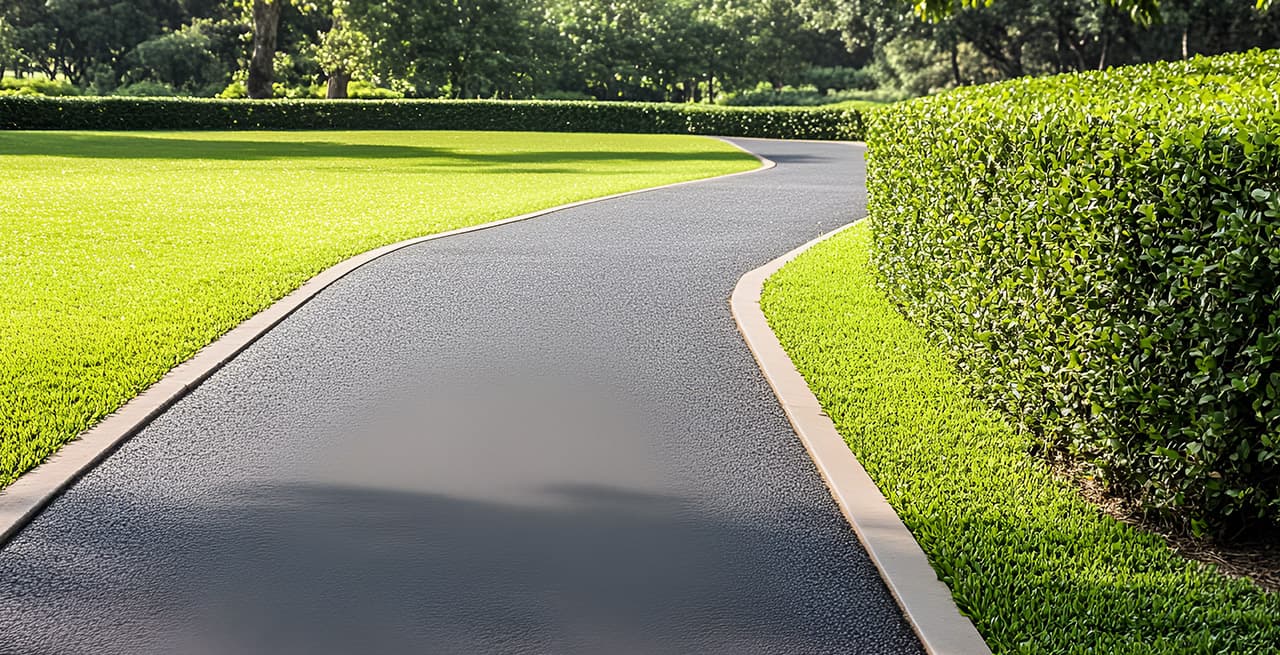
Rain lands on this permeable footpath and keeps going, straight down through the concrete. The pit and pipe network gets one less job.
Prefer to talk? Call 1300 010 499
A few quick questions about your site. You get a straight answer about whether permeable concrete is the right call, including when it isn't, before anyone asks for your details.
 Permcon™ is Australian made. Designed at our Mitcham factory, mixed with Boral Concrete and poured by our own crewsAbout our manufacturing
A bin truck pulling up at a crossover in a storm throws off a sheet of water, because a sealed path sends rain along its surface to wherever is lowest. That can be the foot of a kerb ramp, or on sloping ground the path's own uphill edge, where it holds water back like a dam. Sooner or later one of those becomes a pit and a length of pipe, or a complaint.
Rain on a permeable footpath goes through it. We leave the fines out, which makes 20 to 25 per cent of the slab voids connected from top to bottom, and water passes through them at 8,000 to 10,000 mm/hr to a bed of clean screenings. It soaks into the ground from there. Or an under-drain takes it away at a rate the network can handle.
We pour our paths as one continuous surface. On unit paving the trip hazards start at the joints, where one paver settles and the one beside it doesn't. The edge it leaves is what a toe or a walking frame finds. In the wet, rain goes through ours instead of sitting on it. It carries a P4 slip rating too.
A 5,156 m² catchment drained toward one low stretch of a Gold Coast waterfront park, and the old concrete path across it was acting as a dam. Water hit a path that shed everything, beside compacted clay that barely let any in. So it ponded.
The rebuild was in Permcon, with vertical infiltration cores formed down through the clay. Water goes through the slab to the base now, then down the cores into the ground. The old path shed water onto clay that barely took any in. That same clay is why the new one sends water down instead of sideways. See more of our project work.
Ultracon is the option when a path wants a finer face; it uses smaller stone than Permcon. For colour, plain grey lets a path vanish into the street. Charcoal or soapstone gives a shared zone its own tone, and a park path through planting can go sandstone.
We place 500 m² or more of path in a day, so the fencing isn't up for long. Send the alignment through and we'll work out the profile.
It can be done. Levels are matched to the old slab so there's no lip at the join, and the pour goes right up to it. The part to watch is the sealed path upstream, because its runoff drags grit onto the new surface. We sort that out at the site visit. Otherwise it would wash across after every storm.
Then the base holds it and the under-drain lets it out slowly (see above), so the path still drains in place. Heavy clay is handled the way the Gold Coast path was, by taking water down through it. The clay shapes the profile we draw.
Yes, Permcon is MUSIC certified. We send the node parameters on request, along with the profile for your path. Your engineer and the responsible authority decide whether it counts toward permeable area.
It's a footpath poured in Permcon, a permeable concrete whose finished slab holds 20 to 25 per cent interconnected voids. Rain goes straight through at 8,000 to 10,000 mm/hr. Below the path sits a base of clean screenings that holds the water and lets it soak away, instead of sending it across the surface to a pit. Each 100 mm of screenings stores about 28 litres per square metre at 85 per cent design capacity. That takes pressure off the stormwater network.
No. Permcon carries a P4 slip rating, and the rain that makes a sealed path slick goes down through this one instead of sitting on top, so there's no sheet of water to step onto. On a high-volume path we confirm the finish with you before the pour, since the texture is part of what you're specifying.
Permcon is 25+ MPa, the same permeable concrete we pour for car parks and bus stops. A standard footpath is 100 mm of it over a base of the same depth. It's one continuous slab. There are no joints to rock or lift. With the maintenance kept up, design life is in excess of 30 years, backed by a 10-year structural warranty.
Yes. Air and water keep reaching the roots through the slab, so the tree isn't capped the way it is under a sealed path. At the VicRoads bus stop on Racecourse Road, Mornington, we poured 175 mm of Permcon over open aggregate, right inside the Tree Protection Zone of an established tree. The arborist sets the excavation depth and method for your tree. We build to that.
Mostly a look once a month, and a leaf blower. Keep the path clear of leaf litter, and stop garden beds or bare ground upslope from washing soil onto the surface. Sweep or wash it as needed. Once a year, sweep it anyway and check the voids for moss or organic build-up. Structural failure sits under our warranty: we assess the area and, if it's failed, remove and replace it ourselves.
It can. Permcon comes in plain grey, charcoal, soapstone and sandstone, so the path can match the kerbs and paving already in the street. For a smoother finish there's Ultracon, laid with smaller stone than Permcon's 7 mm in Victoria and 10 mm elsewhere. We settle the finish with the specifier before the pour.
A shared path carrying a council mowing ute needs more concrete than a footpath that only sees prams, and a crossover with cars on it needs more again. The mix doesn't change: it's 25+ MPa every time, and the thickness does the work. Our lightest profile is 100 mm of Permcon on a 100 mm course of clean screenings, and that course holds around 28 litres in each square metre at 85 per cent of design capacity. That's storage along every metre of the path. The technical page gives each profile with its estimated axle load.
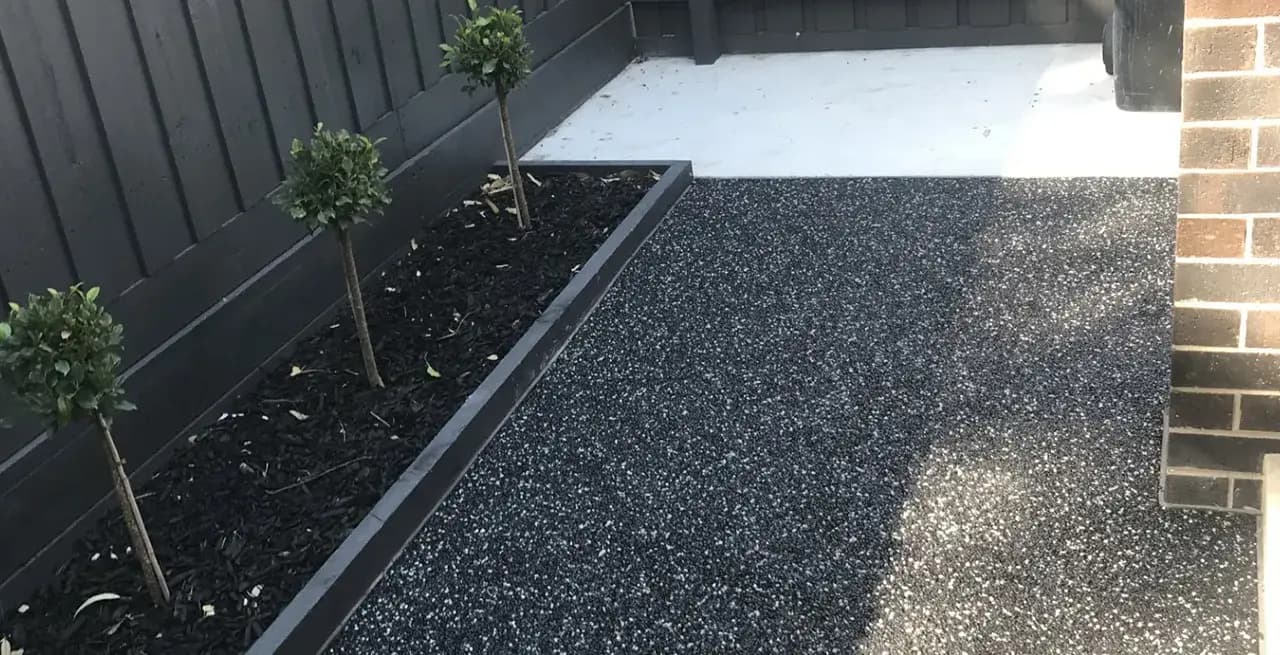
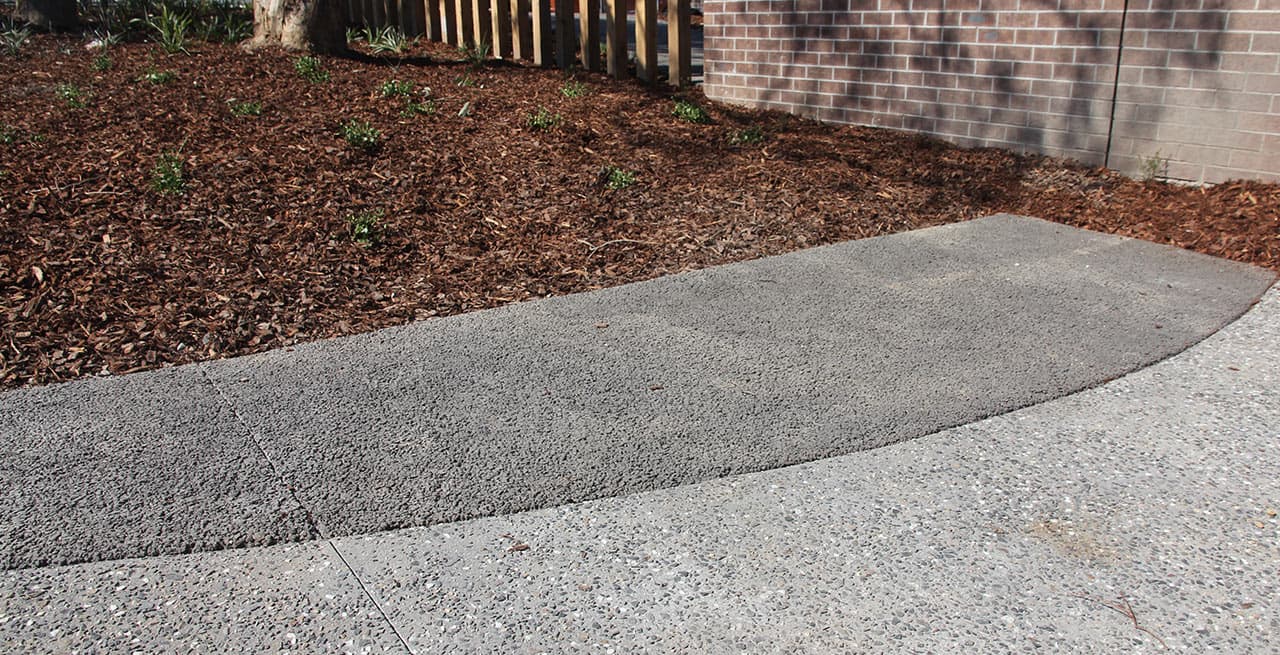
In Mornington we poured a 71 m² bus stop 175 mm thick inside the protection zone of an established canopy tree, and rain and air still reach the roots through it. Most footpaths have the same problem. Seal the ground over the roots and sooner or later someone is choosing between the tree and the path. Inside a protection zone, the arborist sets how deep we dig; we build to that. See tree protection zone paving.
A walk along it. Leaves and debris come off, and after rain you're checking it drained without sediment building on top.
Clean the surface with a broom or a hose. If garden beds or bare ground are washing soil across, fix it at the source, and after any landscaping change check no new overland flow reaches the path.
Moss and organic matter in the voids are what to look for, so clear out whatever's there. Sweep it too if the monthly walks haven't led to one.
Wathaurong Aboriginal Co-operative in Geelong has a new home. Wa-Karroong began as a conversation and got built by many hands, APC's among them.
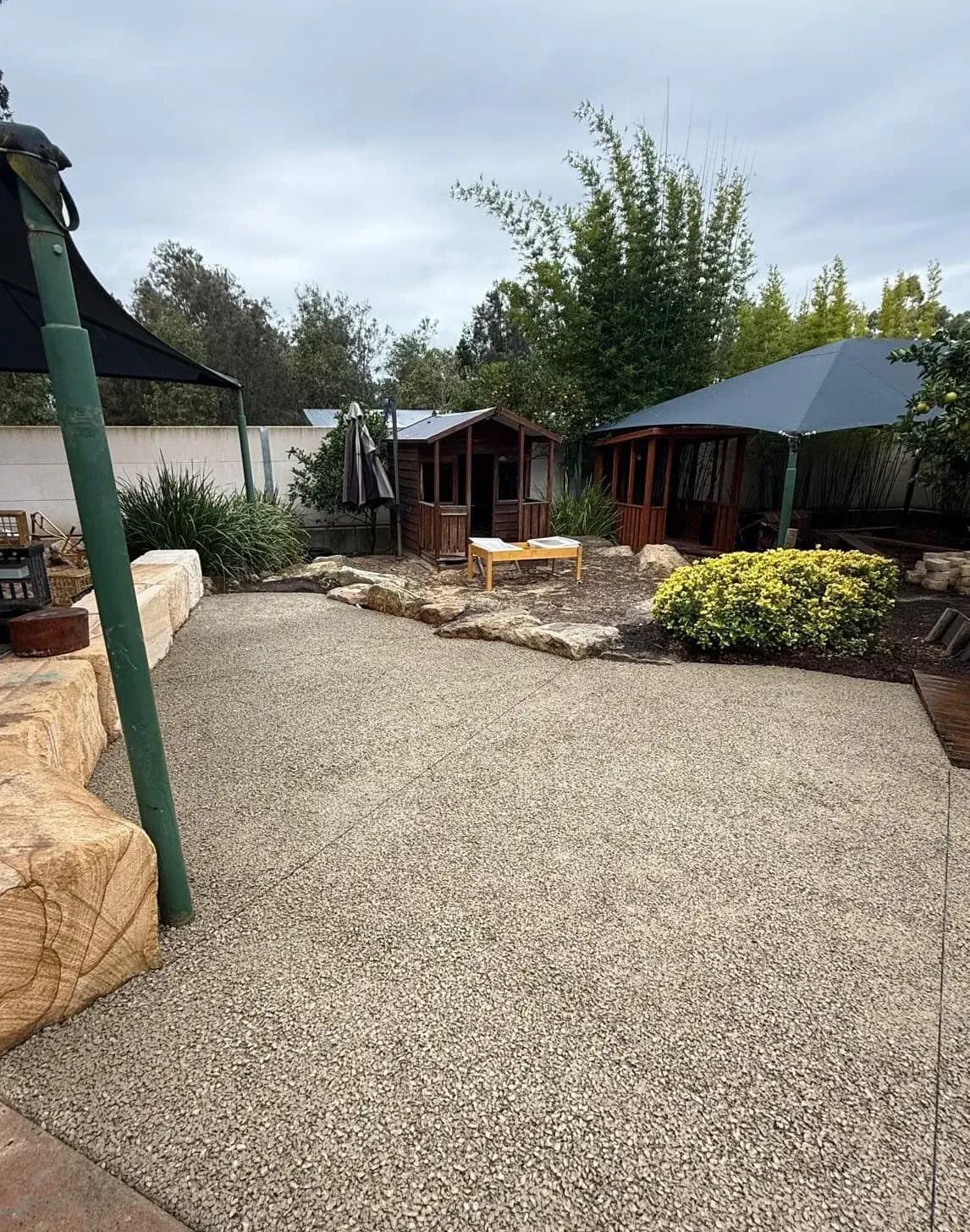
A council job in Warwick: light-coloured Ultracon poured around an Early Learning Centre's existing cubby houses, sandstone blocks and garden beds to make a permeable play area.
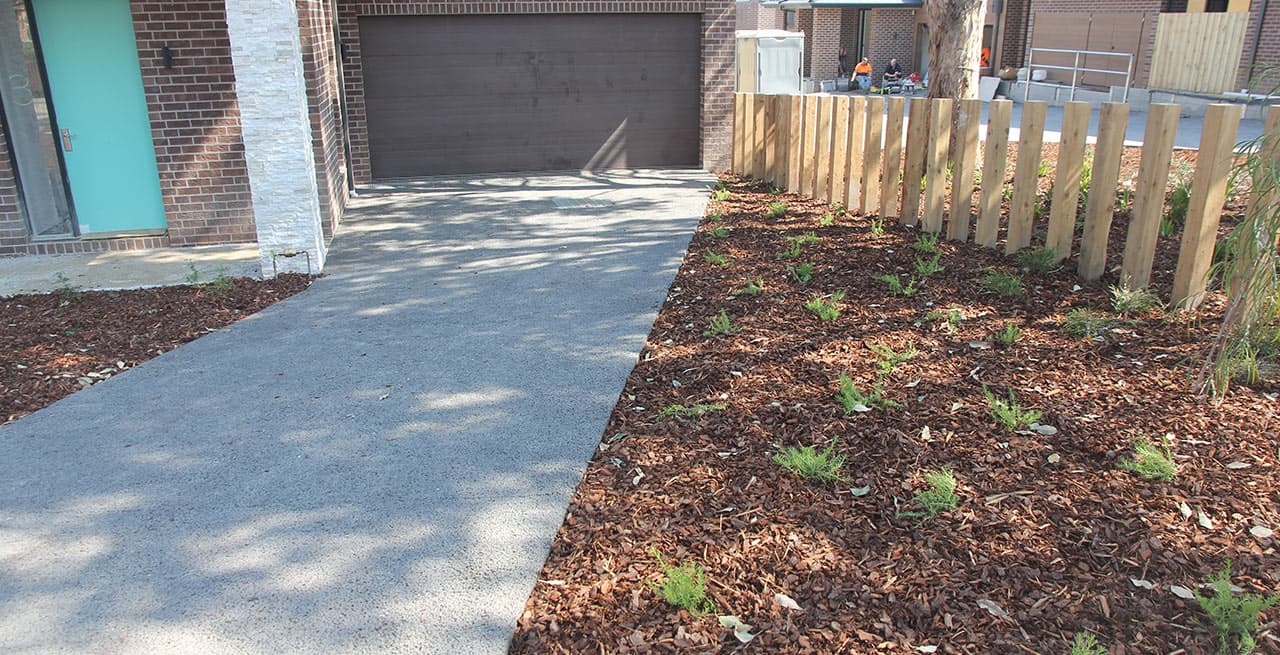
A grey Permcon driveway runs up to a brown garage door, with a mulched garden bed and timber posts along the side.
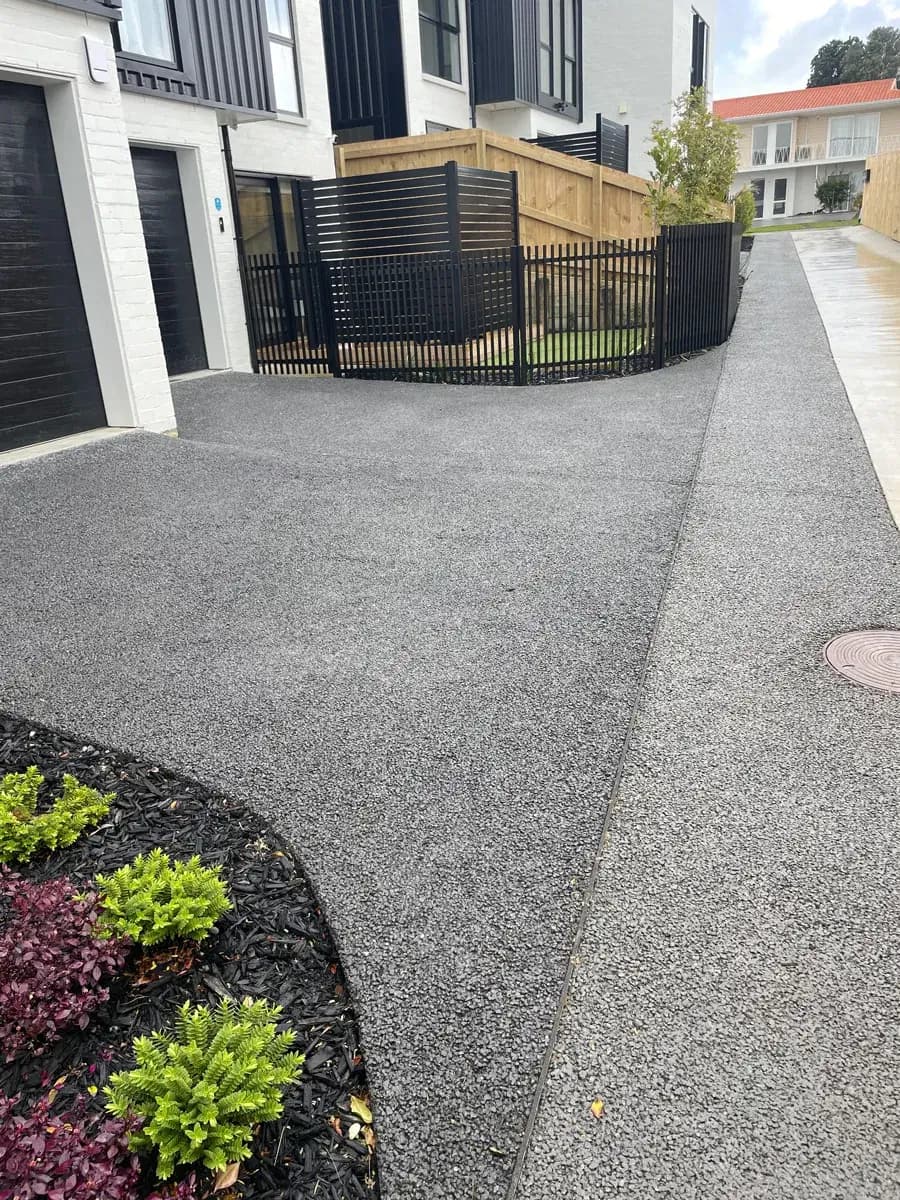
Ferns and red-leaved planting mark the bend where this dark grey Ultracon driveway curves past shared garages, its edges softened by garden beds.
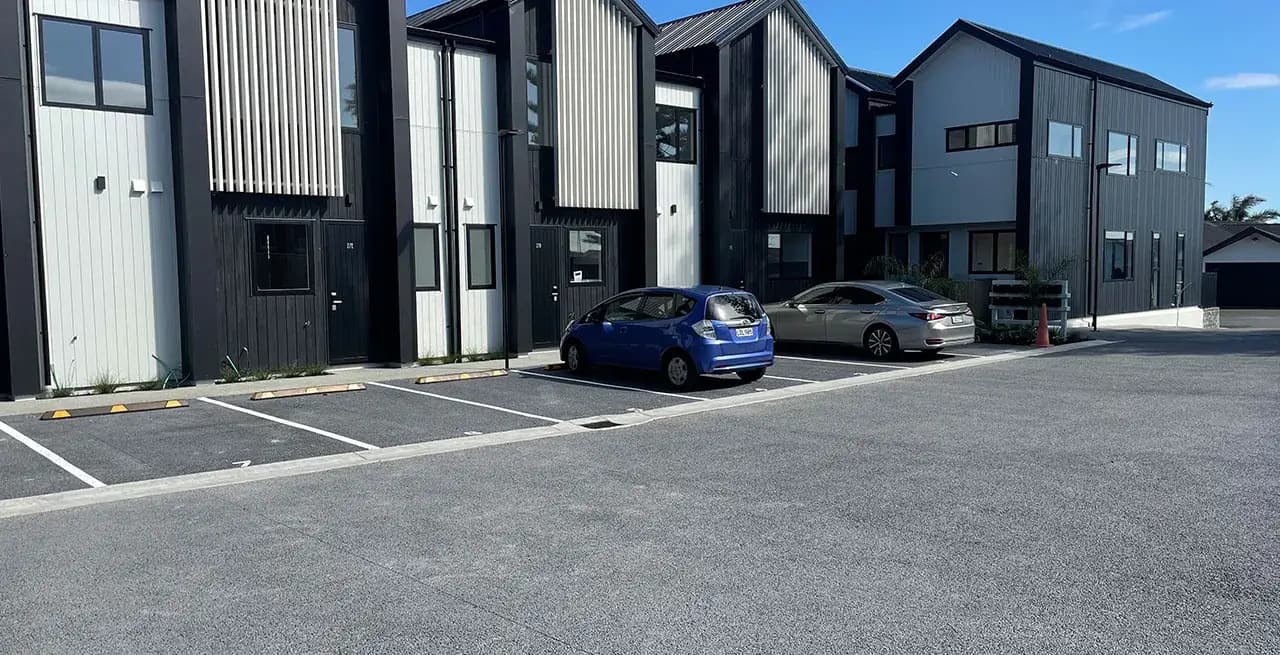
Wheel stops in yellow and black, bays marked in white, a wide aisle: a dark grey Ultracon permeable car park for housing units in front of black-and-white-clad townhouses.
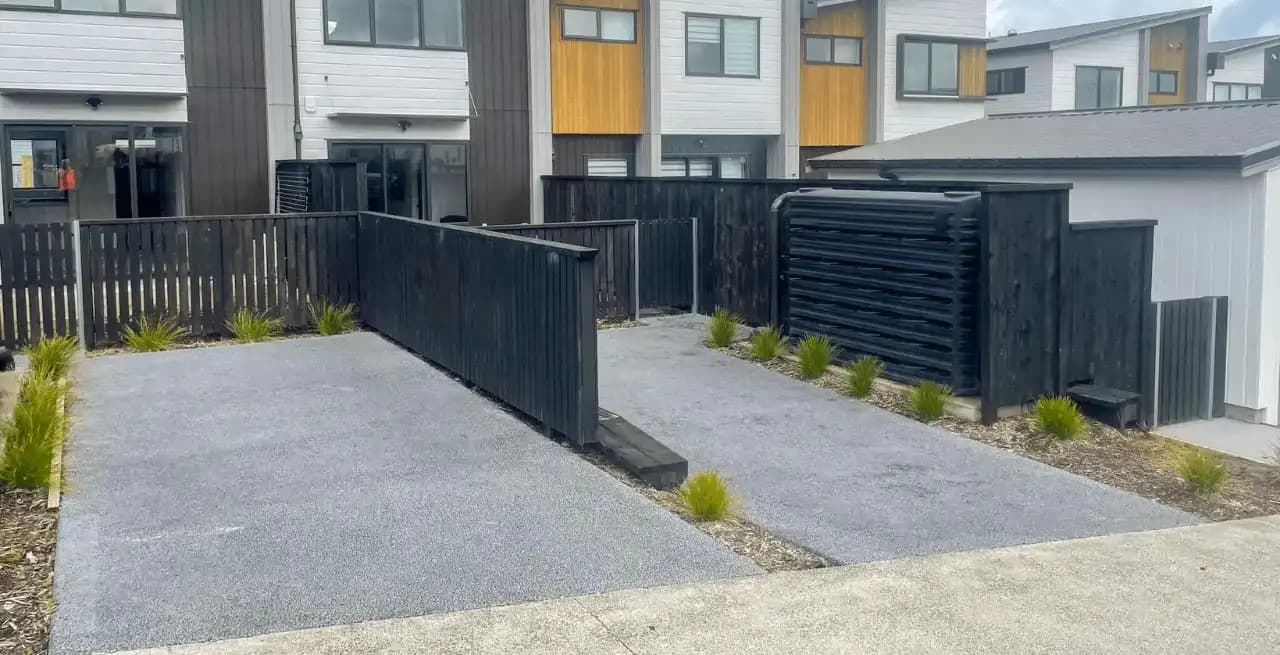
Split down the middle by a black timber fence, two plain grey permeable parking pads front a contemporary home and finish at garden beds on each side.
Ring us and an estimator comes out once to walk the alignment; we have teams in every state. You get the profile and upkeep in writing, then our own crews pour it to the thickness in that profile.