
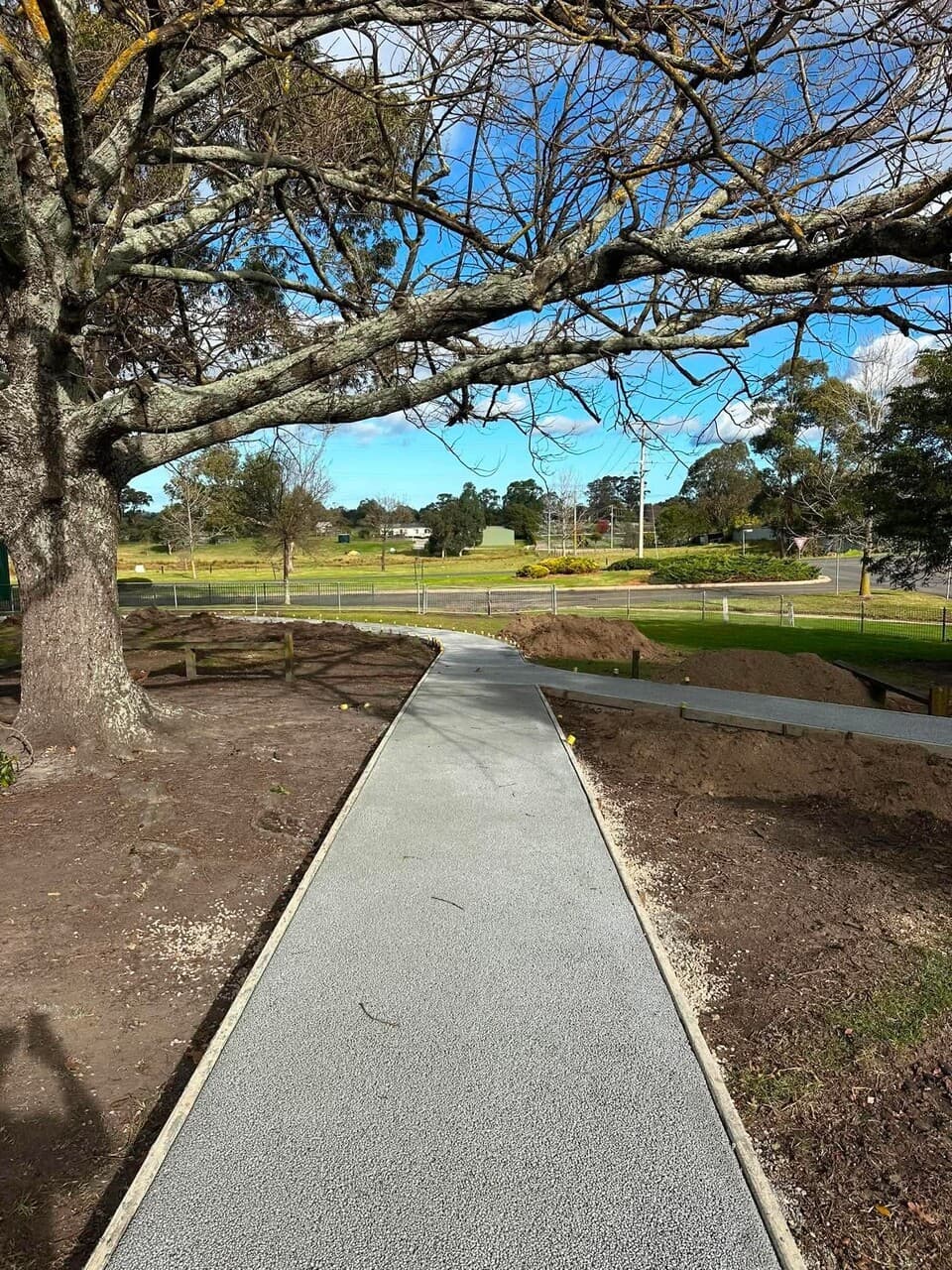
Orbost Path
Roof water. Lawn runoff. Whatever washes out of the garden beds along the fence line.
A sealed path does the obvious thing with all that water: puddles at the low points, and sheds the rest downhill toward the entry doors and whatever garden bed sits in the way. That's not what you want right outside a doorway kids use all day.
What a permeable path installation does once it's down
Water crosses the surface and moves straight into a base of clean screenings underneath, at 8,000 to 10,000 mm/hour. It's poured as one continuous run, no joints, at the standard 125 mm we use on footpaths, in the same 25+ MPa Permcon mix we pour for driveways and car parks. Thickness is what changes between jobs, not the mix; that's how we build for a heavier load without changing the recipe.
The surface carries a P4 slip rating, so wet mornings don't turn into a skating rink at the gate. Underneath, the base holds 28 litres per square metre at 85 per cent design capacity, footpath profile, which is what actually buys the time for that water to soak away instead of running off toward the buildings.
Wet, not flooded
Damp, draining, nothing standing on it: that's the state of the path after rain. Less water reaches the garden beds and entries downhill, and less reaches the site's stormwater drains during the storm itself.
Upkeep for a grounds crew already doing rounds
- As required: stop soil from garden beds washing onto the surface.
- Monthly: a look over for leaves, debris and drainage after rain.
- Annually: a sweep, and a check of the voids for moss.
Paths like this one are routine work for us on council sites: walkways, courtyards, routes between buildings. What counts as approved for a given path, depth and finish included, is a council call, not ours; our permeable footpaths page covers the fuller maintenance schedule, plus how we handle tree protection zones and bus stops. Beyond that, it's a site visit and a look at what's actually falling on the ground.