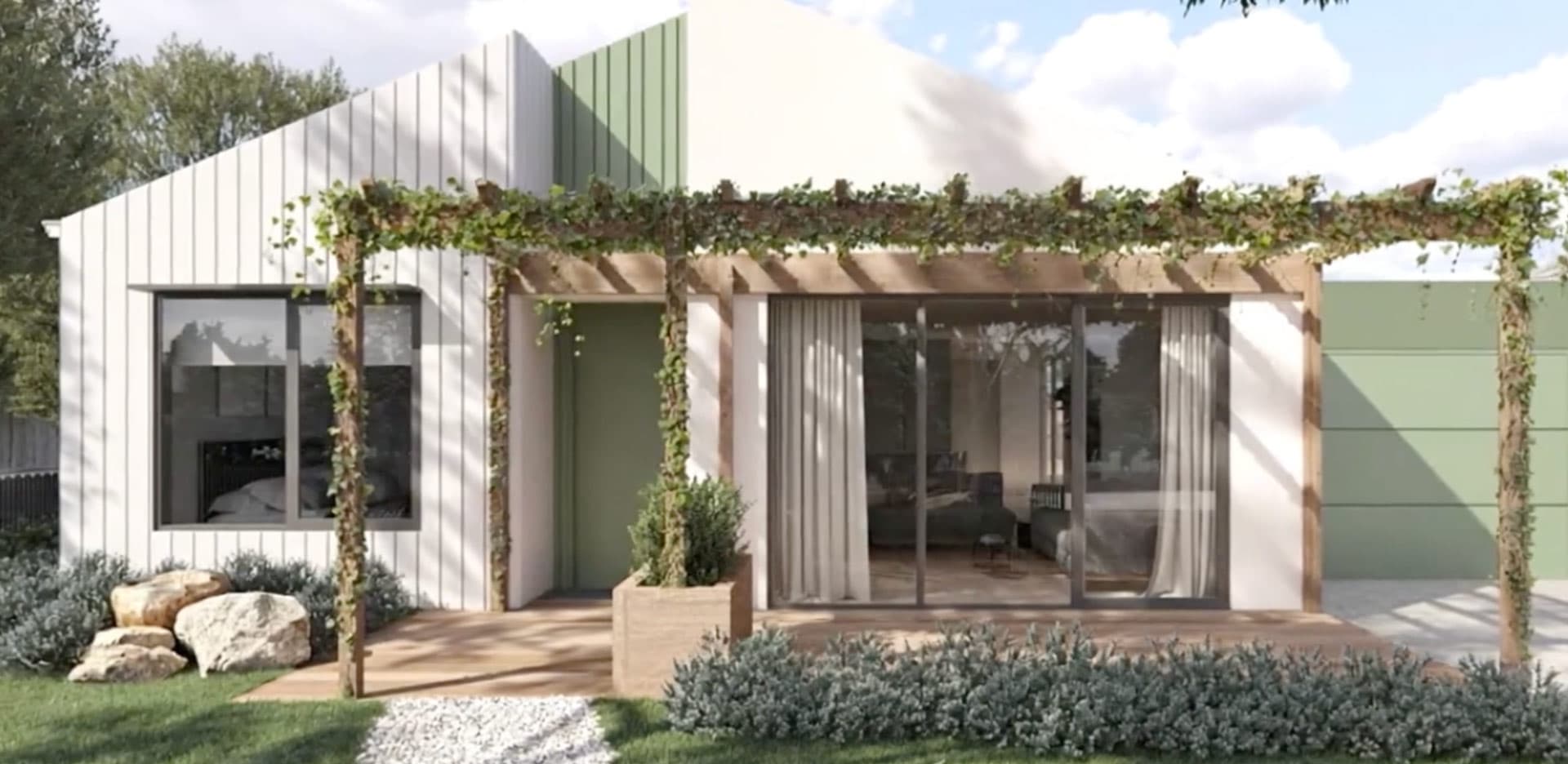
Wa-Karroong
Wathaurong Aboriginal Co-operative in Geelong has a new home. Wa-Karroong began as a conversation and got built by many hands, APC's among them.

Rain falls through a Permcon slab into a stone base instead of running off. We invented it, and we make and pour it in every state.
Prefer to talk? Call 1300 010 499
A few quick questions about your site. You get a straight answer about whether permeable concrete is the right call, including when it isn't, before anyone asks for your details.
 Permcon™ is Australian made. Designed at our Mitcham factory, mixed with Boral Concrete and poured by our own crewsAbout our manufacturing
Start underneath. A layer of clean screenings goes down first, and that's where the water is stored. From there it soaks into the ground, or, on slow soil or a site where soakage isn't allowed, it leaves through an under-drain at a controlled rate. That base is the part we size for your site.
On top goes the slab, which is the fast part. It's concrete that lets water through. With the fines left out of the mix, nothing fills the gaps between the stones; they lock together where they touch and leave 20 to 25 per cent of the slab as voids, joined from the top face to the bottom. Rain lands and drops straight through. It never gets the chance to run anywhere. From the kerb it's a textured concrete, and on our jobs it's Permcon, poured on site as one continuous slab by our own crews.
On smaller Victorian sites the stormwater check is BlueFactor, which replaced STORM. Bigger jobs get modelled in MUSIC, and so do sites under the Queensland councils that ask for a MUSIC model with the development application. In NSW, each council writes its own detention and WSUD controls. Behind all of them sits one problem. Every roof, driveway and car park turns rain into runoff that carries oil and grit and reaches the pit at the same moment as the rest of the street. Water sensitive urban design is how councils answer it, with caps on impervious area, on-site detention and targets for how clean the outflow is.
Permeable concrete meets those requirements on ground you were paving anyway. The slab is your pavement; underneath, it takes care of how much stormwater leaves and how clean it is. Designed as a passive system, it counts as pervious, much as grass would. That drops your impervious total. The base is storage an engineer can count, so the detention tank shrinks or goes, taking some of the pits and pipes with it. Whichever tool your site goes through, the pavement fits it.
Assessed to ISO 14067:2018, Permcon's cementitious materials carry 62 per cent less embodied carbon than conventional concrete, and our environmental page has more on that.
A 71 m² bus stop we poured at Mornington went down at 175 mm, inside the tree protection zone of an established canopy tree. Most jobs don't need that. The standard slab is 125 mm, and it covers nearly every driveway and path; our loading chart estimates a 5.8 t axle at that depth. Heavier vehicles get more depth, because the mix never changes and the thickness does. The technical page sets an estimated axle load against every thickness and explains the method.
Each slab is poured as one continuous surface with no units or joints, so weeds have no joint to root in. It carries a P4 slip rating. Structurally it's warranted for 10 years (terms and conditions apply), and it's designed to last in excess of 30 years on a monthly look and a yearly sweep.
Standard Permcon has an open, stony texture, from 7 mm stone in Victoria or 10 mm in other states. Colours run plain grey, charcoal, soapstone and sandstone. For something smoother underfoot there's Ultracon, the finer one, with small stone held in a permeable resin.
Pervious concrete is the engineers' word. On a homeowner's quote request it's usually porous concrete, and water permeable concrete says it plainest.
Two products get mixed up with it. No-fines concrete is lower in strength and isn't a substitute for Permcon. Pavers and grids are separate units draining through the gaps between them; permeable concrete drains through its whole face and has no pieces to move.
Yes. Clay takes water slowly, so the base carries more of the load: it holds the storm and lets it out bit by bit through the under-drain (see the bottom-up section above). The pavement still detains and filters; the water just exits by pipe instead of the ground. We set the base depth after seeing the soil.
Plenty of councils count it toward permeable area, and Victoria's guidance for townhouse and low-rise sites names pervious driveways and paths outright. Still, the decision is the council's. We'll give its engineer our infiltration and storage figures in writing.
Pavers are individual units on a bedding layer, and water finds its way down the joints. Permeable concrete is one poured piece taking water across the whole surface, so there are no joints to top up and no units to rock or sink when a loaded trailer turns on them. The full comparison sets them side by side.
It behaves much as it does dry, since water drains away instead of sitting on top. With the slip rating above, it suits pool surrounds.
What's left: a slab riddled with interconnected voids, 20 to 25 per cent of it by volume. Rain doesn't puddle on top. It goes straight through, at 8,000 to 10,000 mm/hr, into a base of clean screenings underneath. From there it either soaks away into the ground on its own or gets carried off in a controlled way through an under-drain, depending entirely on how the job's designed. Strength doesn't suffer: still a 25+ MPa mix, rated for trafficable use.
30+ years is the design life. Walk it over each month. Leave it long enough and it clogs, though a wash brings it back. Structurally it's backed for 10 years, terms and conditions apply.
No. A broom, a hose, that's it. Once a month, walk it: clear the leaves, clear the debris, check it's still draining after rain. Sediment off garden beds and bare soil is the real culprit, so keep that tidy and away from the edge. Once a year, get down into the voids themselves and clear out any moss.
Oil from a leaking sump and dust off brake pads sit on a sealed surface until the next rain carries them to the drain. Through Permcon, as much as 70 per cent of the heavy metals, suspended solids, hydrocarbons and detritus stays behind.'s been in the sun since morning. Permcon is MUSIC certified, which matters if you're modelling stormwater; the parameters are yours on request.
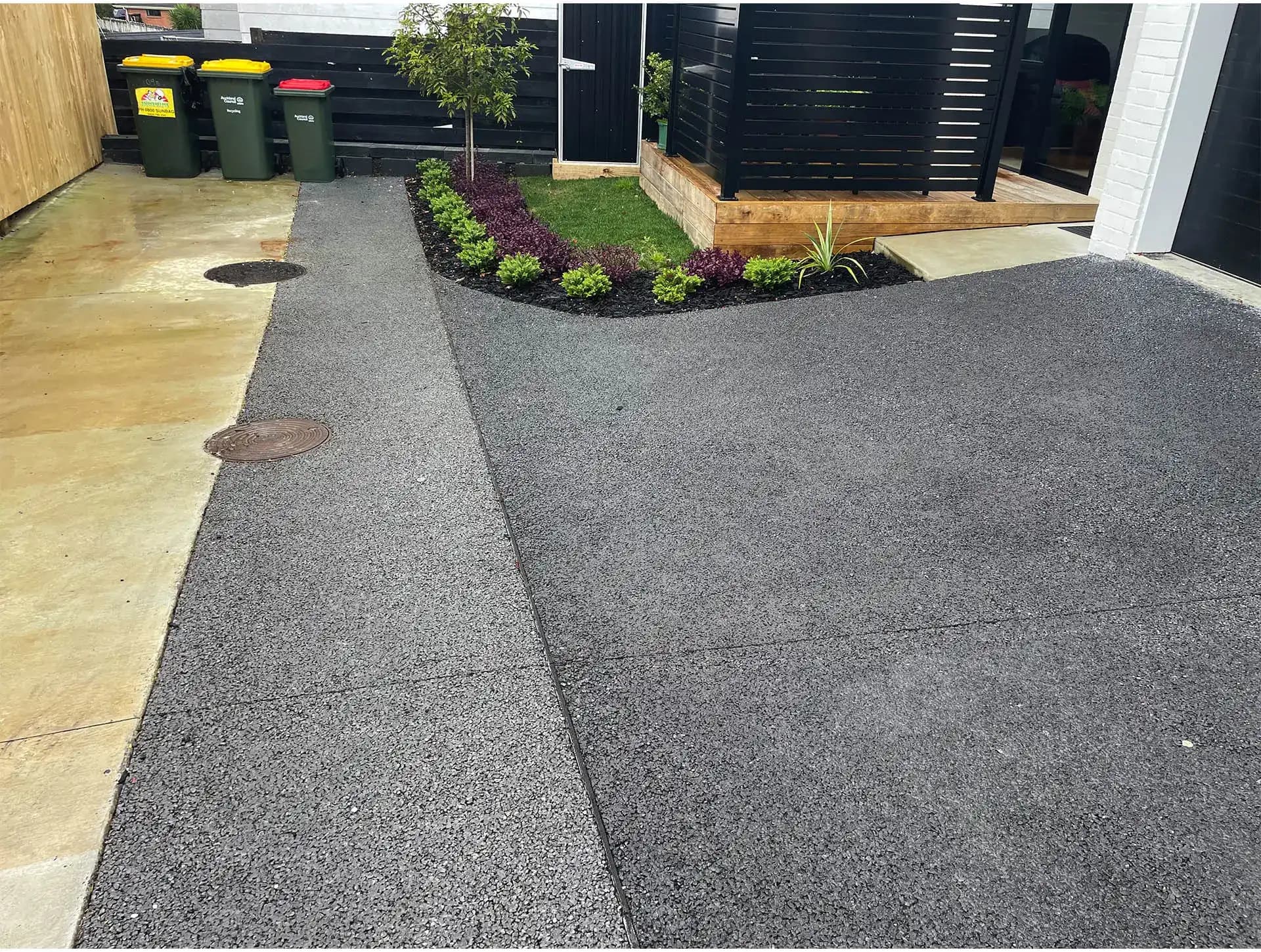

Australian Permeable Concrete supplies and installs Permcon, and we've laid more than 100,000 m² of it since we started. We will work with anyone that wants the Permcon product. We just need to make a design that suits their needs. Engineers usually start at the technical page. For the money side, permeable concrete cost explains what moves the price.
Wathaurong Aboriginal Co-operative in Geelong has a new home. Wa-Karroong began as a conversation and got built by many hands, APC's among them.
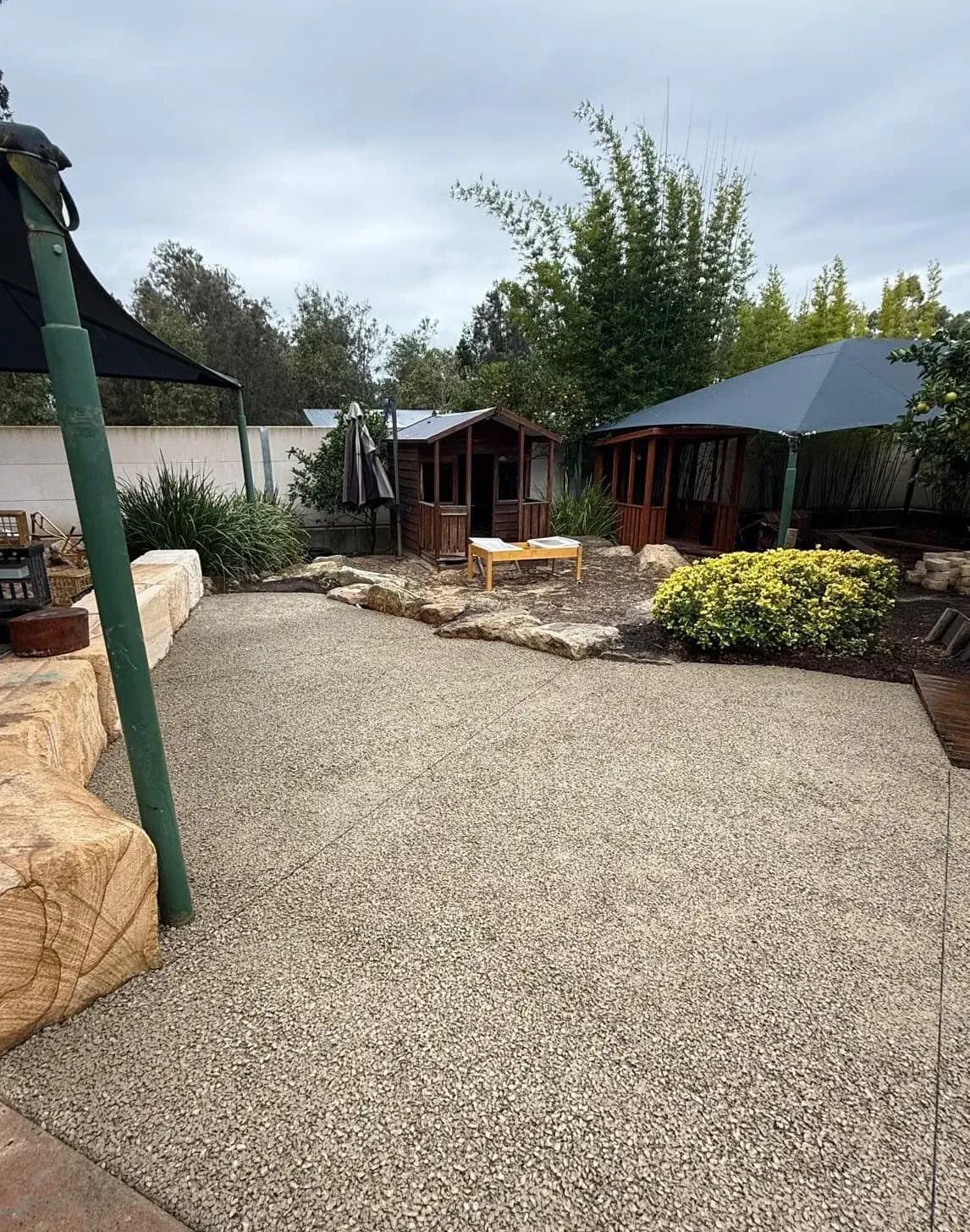
A council job in Warwick: light-coloured Ultracon poured around an Early Learning Centre's existing cubby houses, sandstone blocks and garden beds to make a permeable play area.
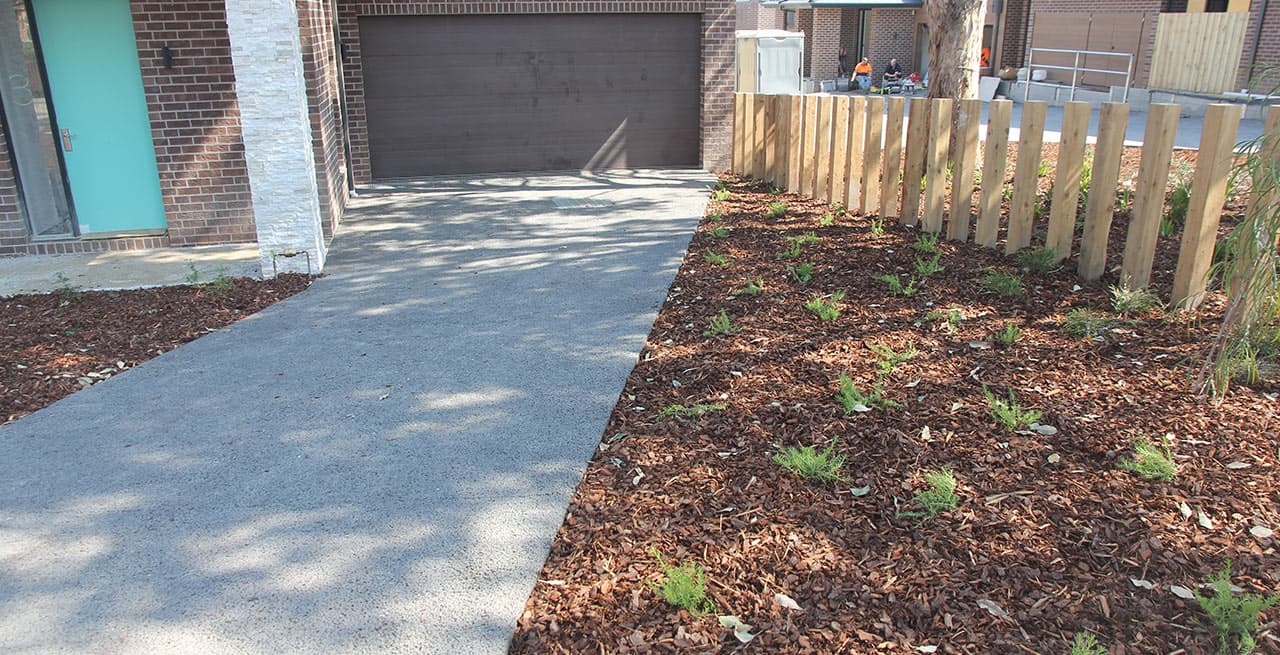
A grey Permcon driveway runs up to a brown garage door, with a mulched garden bed and timber posts along the side.
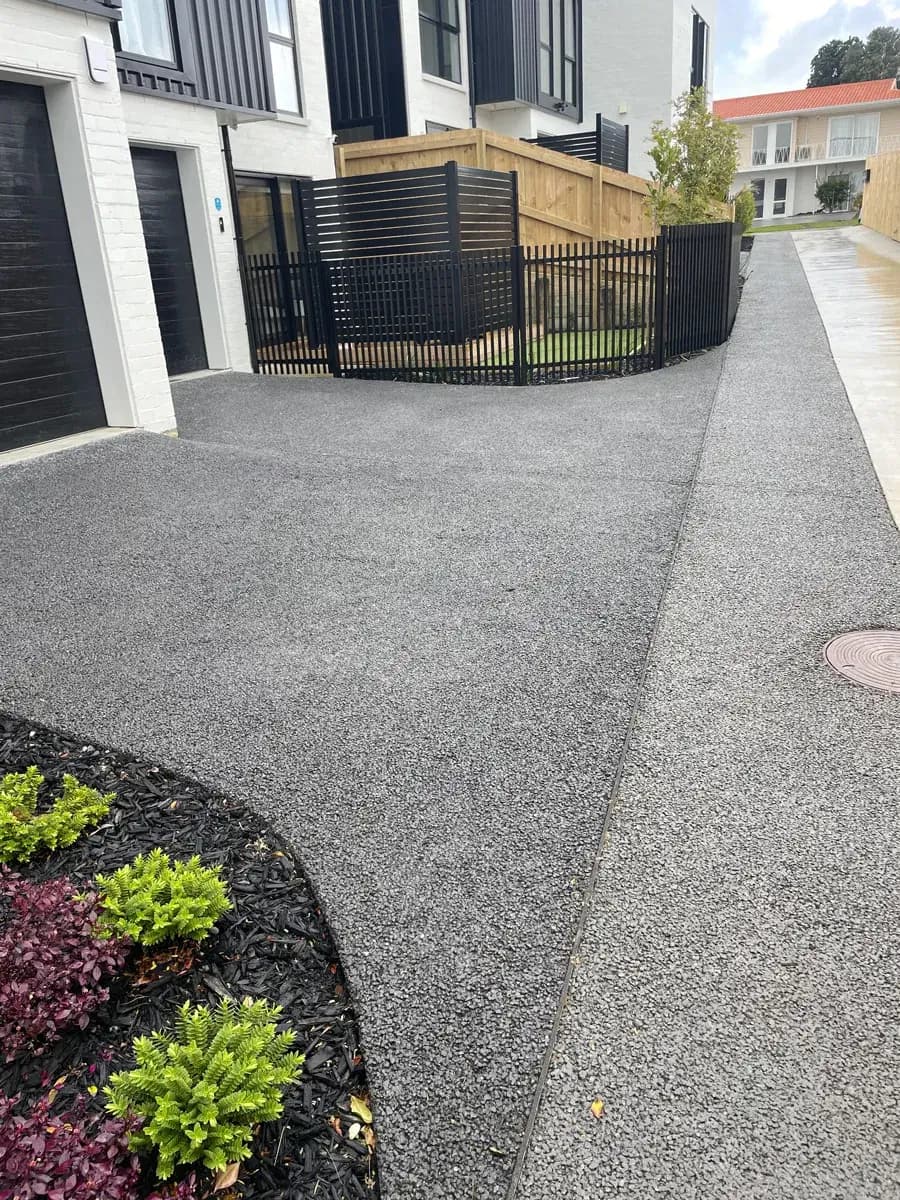
Ferns and red-leaved planting mark the bend where this dark grey Ultracon driveway curves past shared garages, its edges softened by garden beds.
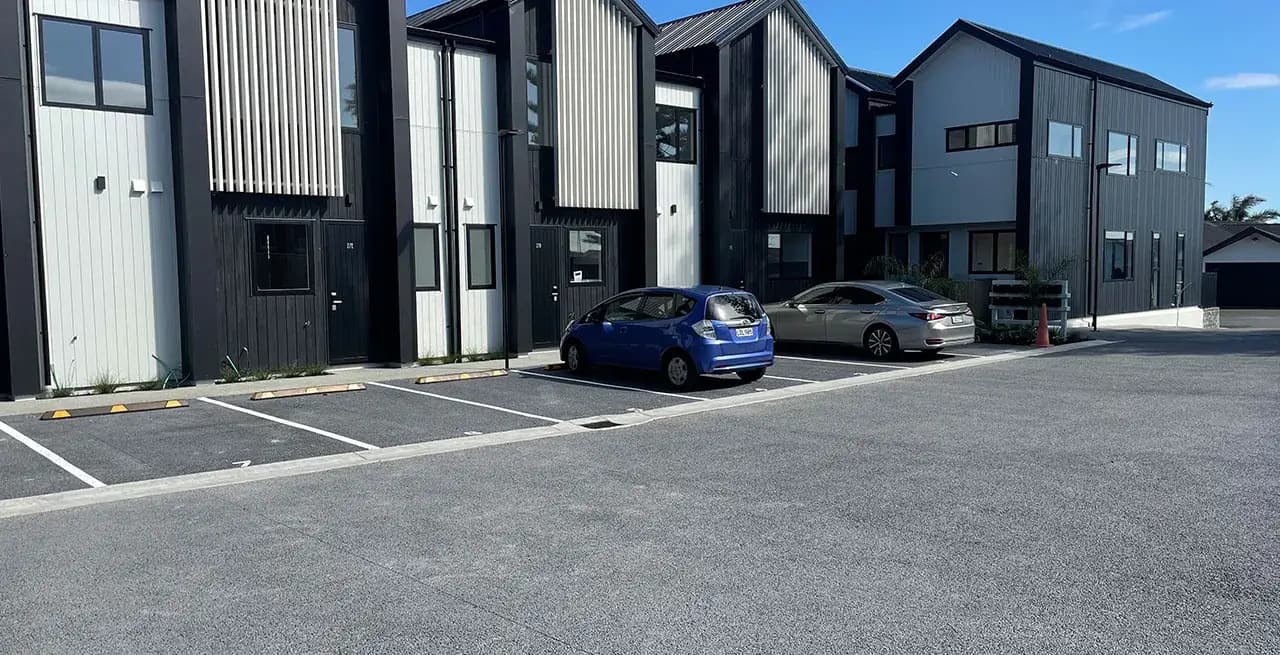
Wheel stops in yellow and black, bays marked in white, a wide aisle: a dark grey Ultracon permeable car park for housing units in front of black-and-white-clad townhouses.
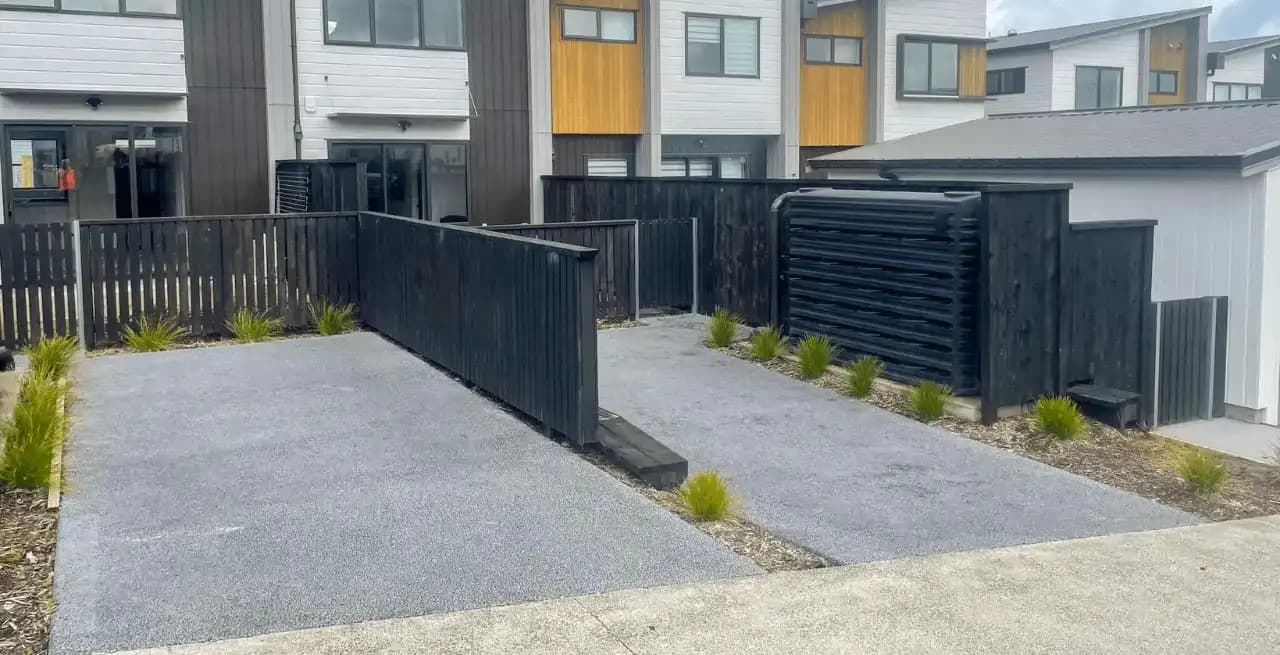
Split down the middle by a black timber fence, two plain grey permeable parking pads front a contemporary home and finish at garden beds on each side.
One visit: we check the soil and the traffic, and note where the water goes now. The slab, base and price then come to you in writing.