Every square metre drains
Water enters through the material across the full area, not through the fraction of surface that is open joint.
Nearly every permeable paving quote you will get is made of units, laid one at a time, draining through the gaps between them. We do the same job in one continuous pour, where the water goes through the surface itself. Same intent, very different surface a decade later.
Segmental permeable paving works by arithmetic. Only the widened joints are open, so a small share of the total area is doing all of the drainage, and it only keeps doing it while the joint stone stays clean, full and level. Every metre of joint is also a line where something can move: sand washes out, silt packs in, weeds and ants find a way, and a unit that settles a few millimetres becomes the lip you feel every time you drive over it.
A poured permeable surface has no joints because it has no pieces. The voids are inside the material, 20 to 26 per cent of it, running from the top of the slab to the bottom, so the whole area takes water at 130 to 170 litres per minute per square metre. Nothing to re-sand. Nothing to re-level. Nothing to lift.
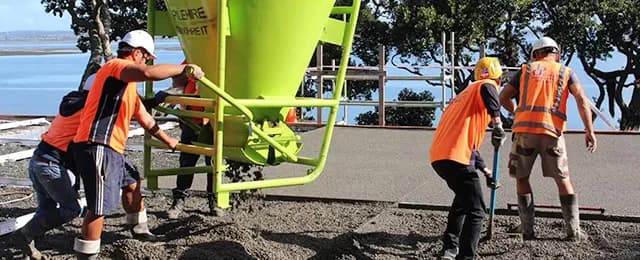
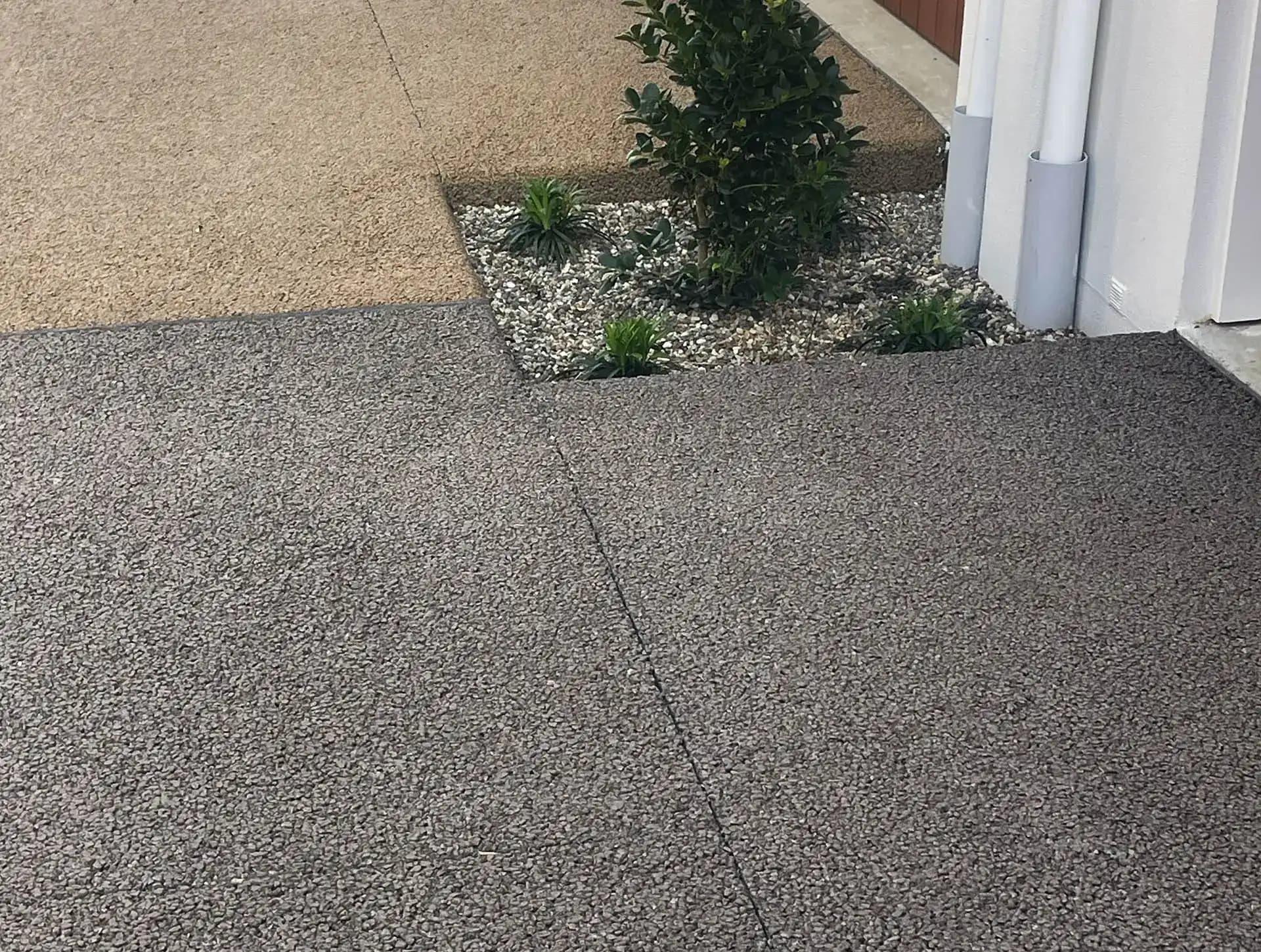
It also goes in differently. Instead of a crew laying units for days, our crews place 500 square metres and more per day as a single continuous pour, so most residential jobs are one visit. What you get is a surface at 20 to 25 MPa, trafficable to AS 3727.1, with a P4 slip rating and a 30 year plus design life, in an exposed aggregate finish with colour options rather than a repeating grid of units.
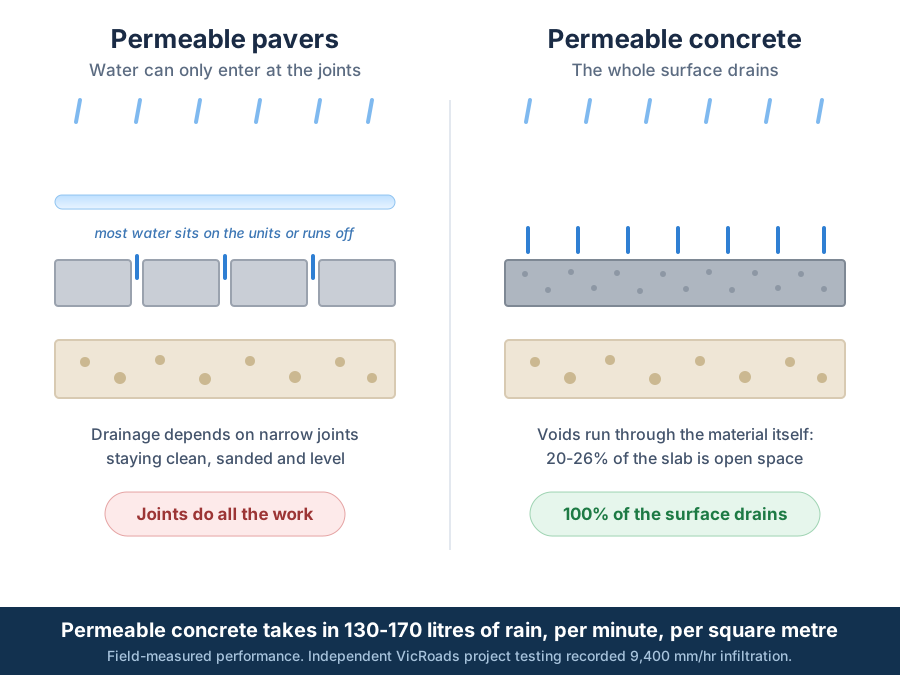
The surface takes in 130 to 170 litres of rain per minute, per square metre, through voids that run through the material itself, 20 to 26 per cent of the slab by volume. Independent testing on a VicRoads project measured 9,400 millimetres per hour.
Below the slab, an open-graded stone base stores the water and lets it soak or release at a controlled rate, holding 28 to 56 litres per square metre inside the system.
A few quick questions about your site. You get a straight answer about whether permeable concrete is the right call, including when it isn't, before anyone asks for your details.
Get in touch today to discuss your project. We're here to help with all your permeable concrete requirements, from a single driveway to major civil infrastructure.
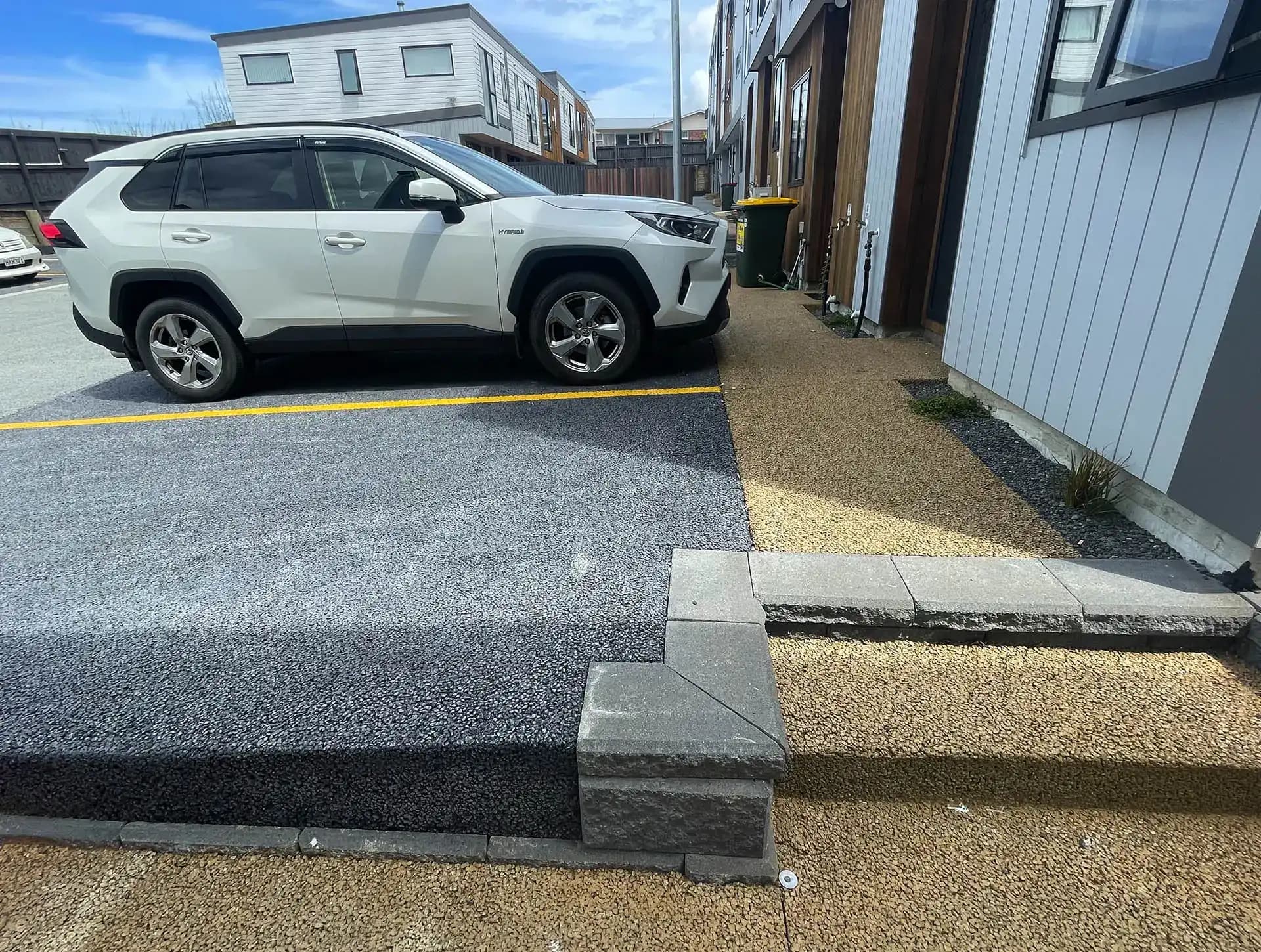
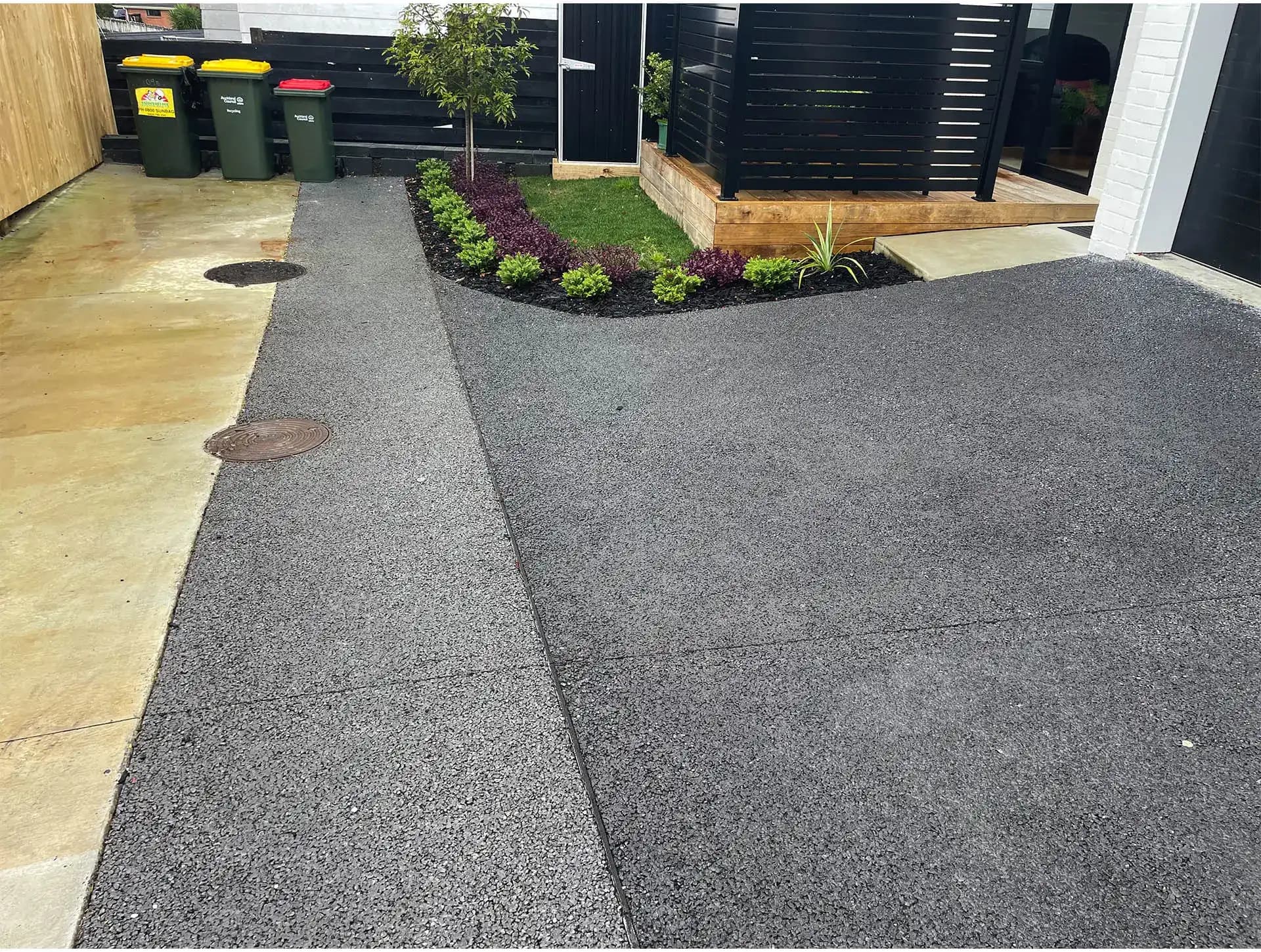
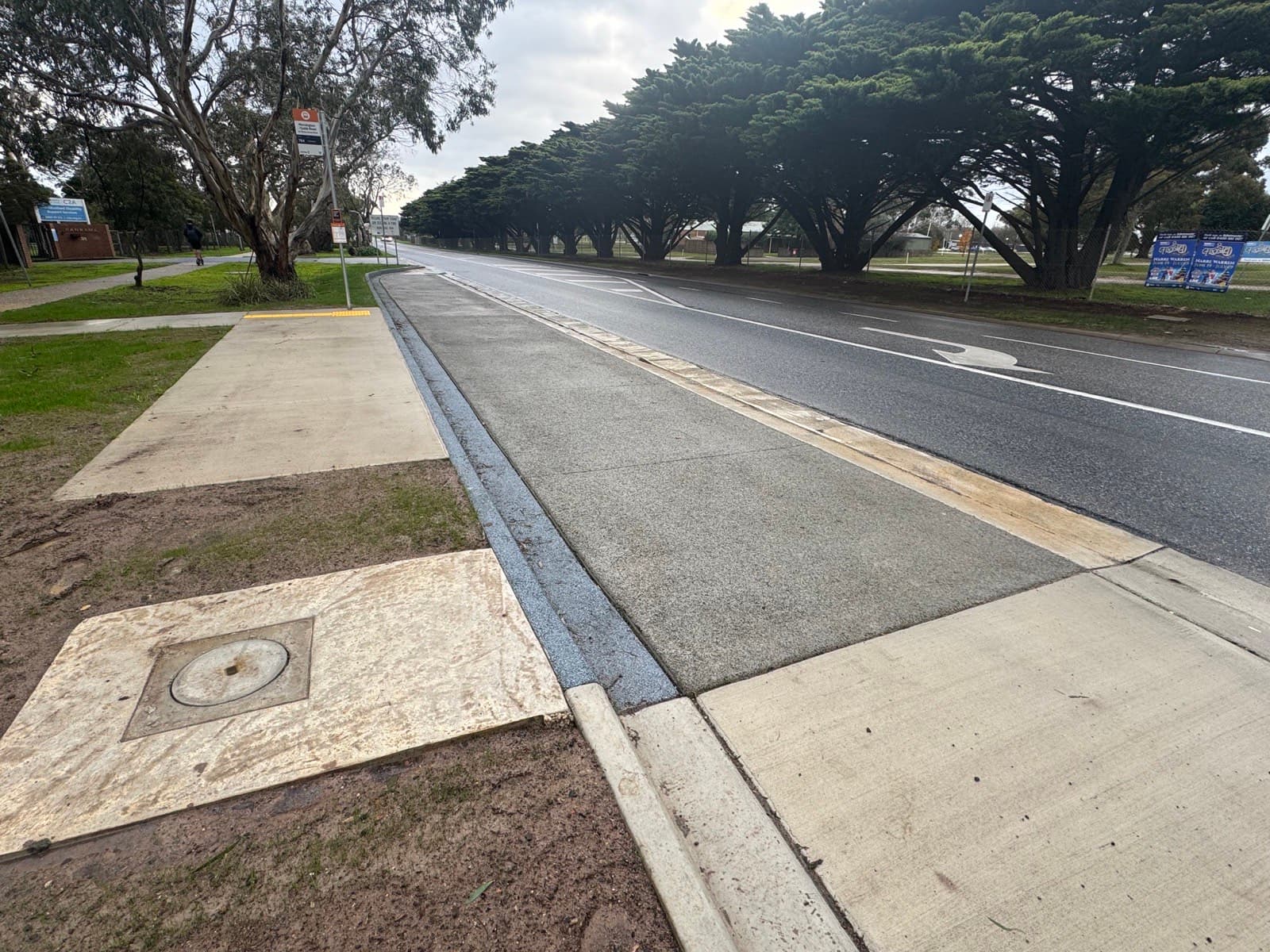
Water enters through the material across the full area, not through the fraction of surface that is open joint.
Nothing to re-sand, top up or re-level, and nothing open for weeds and ants to colonise.
One continuous surface, so no unit can settle, rock or lip, and no edge restraint can let the field creep.
500 square metres and more placed per day, poured in one go rather than laid piece by piece.
Exposed aggregate texture with charcoal and other oxide colours, plus the Ultracon premium range, instead of a repeating grid.
20 to 25 MPa trafficable to AS 3727.1, P4 slip wet or dry, and a 30 year plus design life.
Permeable paving normally means segmental units laid with widened joints or spacer nibs, the joints filled with clean open-graded stone. Rain lands on a dense unit, runs a short distance to the nearest joint, passes into the joint stone and then into an open-graded base beneath. Grid pavers work the same way with an open cell filled with gravel or turf. In every case the drainage happens between the pieces, not through them, so the effective open area is a modest fraction of the surface you are looking at.
Poured permeable concrete inverts that. It is a no-fines cementitious mix, cement and coarse aggregate with the sand left out, so the hardened material carries 20 to 26 per cent interconnected voids running right through it. Water enters wherever it lands. Measured infiltration is 130 to 170 litres per minute per square metre, equivalent to 9,400 millimetres per hour under VicRoads testing, across 100 per cent of the area.
Joints are the working part of a segmental system and also its weak point. Fine silt from tyres, gardens and the air settles into the top of the joint stone and reduces infiltration from the surface down. Joint sand and stone migrate under wheel loads and rain, so the joints need topping up. Edge restraints absorb the lateral force of every turning vehicle, and when one lets go the field spreads and the joints open. Individual units settle where the bedding sand or base compaction varied, and the result is lipping and a surface that no longer reads as flat.
None of that is a reason to avoid pavers on the jobs they suit. It is a reason to know what you are buying. A continuous pour has none of these mechanisms available to it, which is why the maintenance regime reduces to keeping the surface clean.
Clogging is the honest failure mode for all permeable paving. Prevent it by edging the pavement, keeping garden beds and unstabilised soil from washing across it, and stabilising upstream ground during construction. Maintain it with a vacuum or regenerative-air sweep at an interval that matches the litter and grit landing on your site. If infiltration has already dropped, a pressure wash followed by vacuuming recovers most of the lost capacity. Never use a rotary broom on any permeable surface, because it drives debris into the voids instead of lifting it out. Done properly, the poured surface meets a 30 year plus design life.
Trafficable mixes are placed at 20 to 25 MPa complying with AS 3727.1, with higher strength mixes available where an engineer nominates them, and a P4 slip rating wet or dry. Aggregate is 7 mm in Victoria and Tasmania and 10 mm in New South Wales, Queensland, South Australia and Western Australia. Beneath the surface, the open-graded base stores 28 to 56 litres of water per square metre, giving the system a runoff coefficient around 0.3 and capturing roughly 70 per cent of pollutants in the profile, which is what satisfies most council permeability and water sensitive urban design conditions. We design the mix, make it at our Mitcham factory in Victoria and install it with our own ISO 9001, 14001 and 45001 certified crews, more than 85,000 square metres of it over thirty years.
An estimator visits, checks the ground and the access, and prices the surface with no joints in it so you can compare finished jobs side by side. If units suit your site better, we will tell you. Call 1300 010 499 or book a free on-site assessment.