Skip to content
CallBook
ISO 9001 • ISO 45001 • ISO 14001 • MUSIC CERTIFIED
Permeable concrete vs pavers

Permeable Concrete vs Pavers, Grids and Grass

On a paver driveway the trouble usually shows first where the car turns: a sunk patch, a rocking unit. We set pavers, grids, grass cells and Permcon against that daily turning load, and say when pavers are the right call.

Permeable concrete vs pavers, in short

On permeable pavers, rain goes down the joints, since the pavers themselves are solid. Grid and grass pavers are open cells, mostly plastic or concrete, holding gravel or turf, and the water drains through that fill. Poured permeable concrete takes it everywhere. The whole surface is one continuous slab, and water passes through every square metre of it.

Every one of them gets the water into the ground; the difference is where. Resin-bound gravel is a different product class and sits outside this page. The rest each have their place. For a driveway with a car on it every day, our view is that one poured surface does better on drainage, movement, weeds and upkeep. Below we go through it point by point, alongside the jobs where we'd put pavers down instead.

Permeable concrete vs pavers, in short
8,000–10,000mm/hr
Rain through every square metre
20–25%
Of the slab is voids
25+MPa
One slab, no units to shift
10years
Structural warranty

Pavers against a poured slab, point by point

  • Movement. Under every paver is a bedding layer, and bedding shifts. After a few years of a ute turning on it, units rock and sink in the turning circle while the edge rows creep outward. Permcon is a 25+ MPa slab with no joints. There's no loose piece in it to shift.
  • Weeds and ants. Ants tunnel through the sand in paver joints. Weed seed lodges in any fill, and grass cells will grow whatever the wind drops in, which suits a lawn and little else. On a poured surface, neither gets a joint to start in.
  • Maintenance. Pavers need their joints topped up and weeded, and now and then a unit lifted and re-levelled. With a grid, it's raking gravel back into the cells after every heavy downpour, or mowing and patching turf. Ours gets a look each month and a sweep each year. Beyond that, stop the garden washing soil onto it.
  • Drainage. A paver surface drains only at the joints, a grid only through its cells: a fraction of the area, open only while the fill stays open. Permcon's mix leaves the fines out, so 20 to 25 per cent of the slab is void and rain passes through its face at 8,000 to 10,000 mm/hr. Below it, clean screenings hold the water while the soil takes it in.
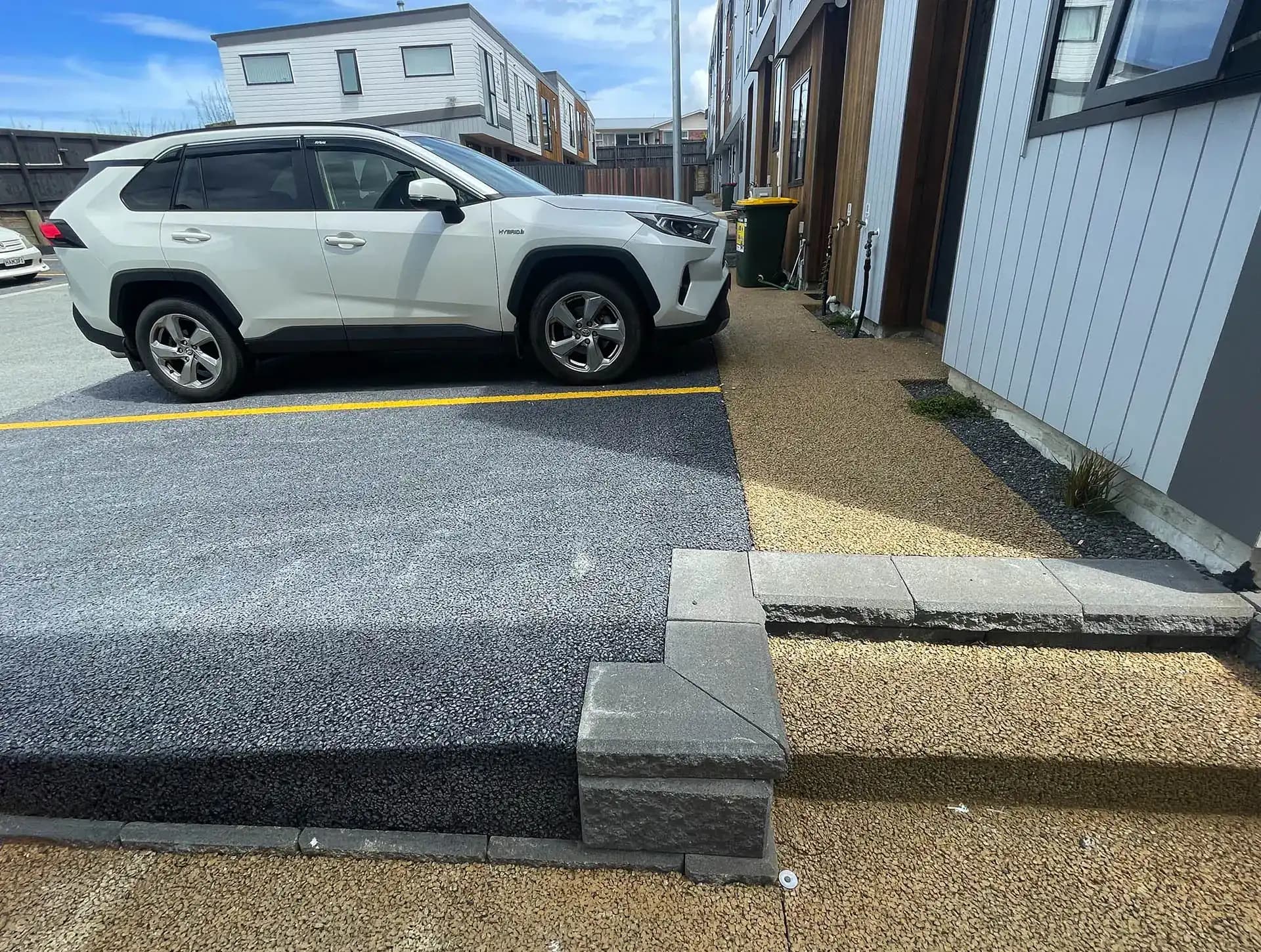
  • Vehicles. Most permeable concrete driveways get our standard 125 mm slab, which our loading chart puts at an estimated maximum axle load of 5.8 t. Thickness decides what it carries, so heavier loads mean going thicker: at 175 mm the estimate is 11.3 t. The surface holds a P4 slip rating. Grids and turf cells are built for light traffic that comes and goes.
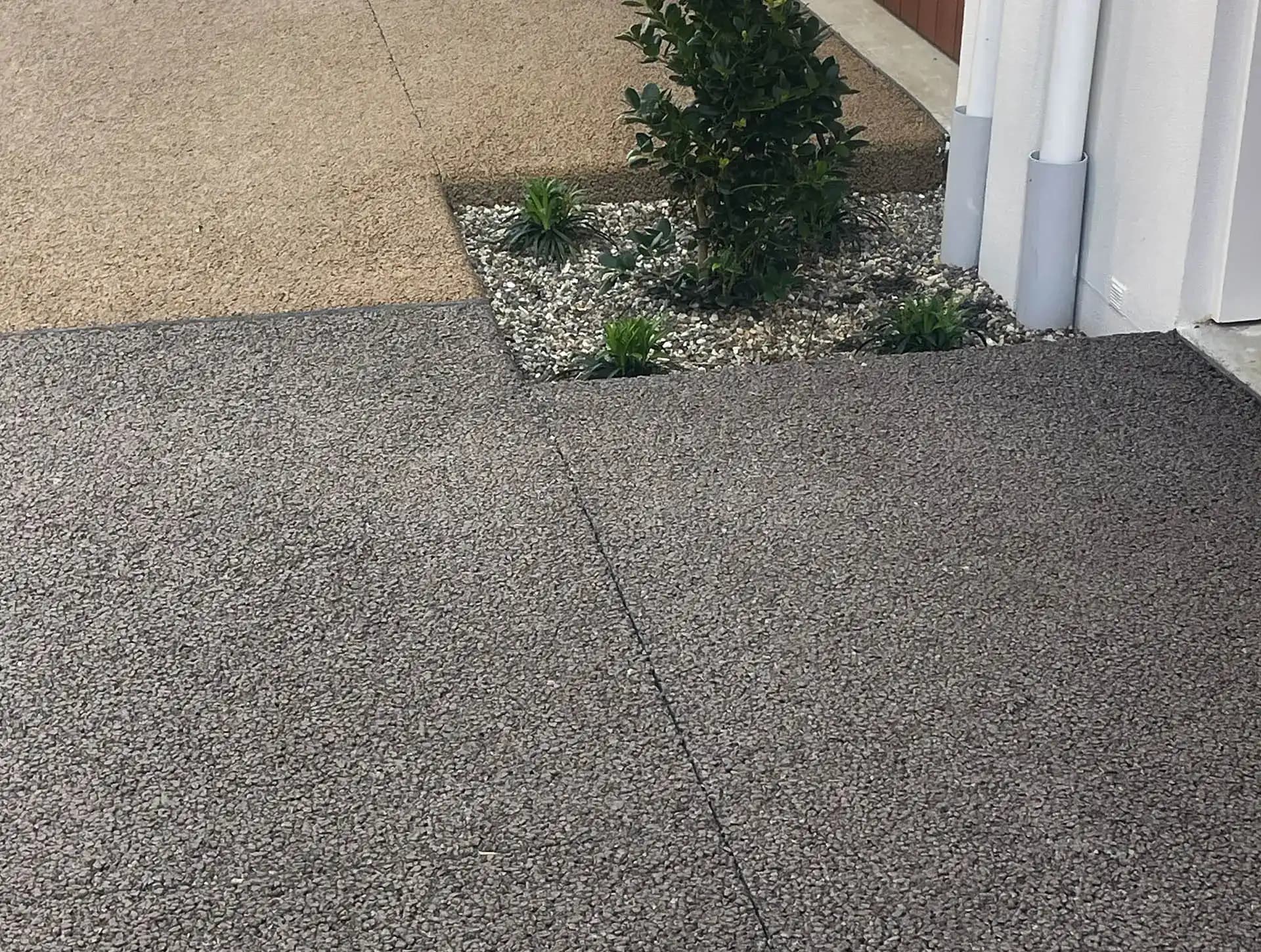
  • Looks. Plain grey, charcoal, soapstone or sandstone, with the stone showing. Ultracon gives a finer, smoother finish. Pavers win for a laid pattern.
  • Council permeable area. Both can count toward the permeable area on a permit where the council accepts them. We size the base for the site and give your council's engineer its storage: 28 litres per square metre for every 100 mm of screenings, at 85 per cent design capacity.
  • Cost. Pavers are mostly labour, laid a unit at a time and relaid when they move. We pour straight off the truck. Once the base is in, a crew can place up to 500 m² in a day. Access and soil shape the base, and thickness shapes the pour; the permeable concrete cost page breaks it down.
  • Warranty. The slab itself carries a 10-year structural warranty on our terms and conditions. Keep up the maintenance above and its design life runs past 30 years.

When pavers or grids are the better choice

Small repairs and DIY

Pavers are a real weekend job for a handy owner, and a single cracked unit lifts out; a poured slab needs a truck and a crew.
A heritage or patterned look

Matching a heritage street, or laying herringbone inside a two-colour border, is paver work.

An overflow lawn

For a spare bay that fills at the Christmas barbecue and little else, grass cells stay green.

Regular digging underneath

If a plumber opens the ground every other year, pavers stack up and go back; a slab gets saw-cut.

Will a pour suit your site

Check if permeable concrete suits your site

A few quick questions about your site. You get a straight answer about whether permeable concrete is the right call, including when it isn't, before anyone asks for your details.

Site check · 1 of 5

What are you surfacing?

Enquire now

Tell us about your project

Tell us where the site is and what you're planning. An estimator from your state team will call you back, look at the site with you and give you a real figure, from a single driveway to a council car park.
📞Call us1300 010 499✉️Email us[email protected]
📍Head officeFactory 7, 25-39 Cook Road, Mitcham VIC 3132

Request a call back

Tell us a little about your project and the right local team will be in touch.

Poured permeable surfaces on real jobs

Pavers or a pour: common questions

Are pavers cheaper than permeable concrete?+

We'll give you our figure after seeing the site, to sit beside the paver quote.

Do grass pavers work for a driveway?+

They can, on a driveway that gets used now and then. With a car on it every day, the turf in the wheel tracks starves for light and thins out by autumn. Then come the top-ups. Gravel-filled grids stand up better, though the gravel wanders onto the lawn.

Can you pour over old pavers?+

No. The pavers and their bedding come up first, because the slab needs a fresh screenings base to drain into (the drainage point above covers why). We include taking the old ones out in the price.

Which lasts longer, pavers or permeable concrete?+

Pavers last for decades as units, yet the surface they make gets re-levelled and re-jointed along the way. A Permcon slab has nothing to relay. For how long it lasts, see the warranty point above; the monthly and yearly routine that gets it there is under maintenance.

Still torn between pavers and a pour

We'll walk the site, then tell you what we'd lay and what it would cost. On heavy clay, the design may include an under-drain. If pavers suit it better, you'll hear that from us.