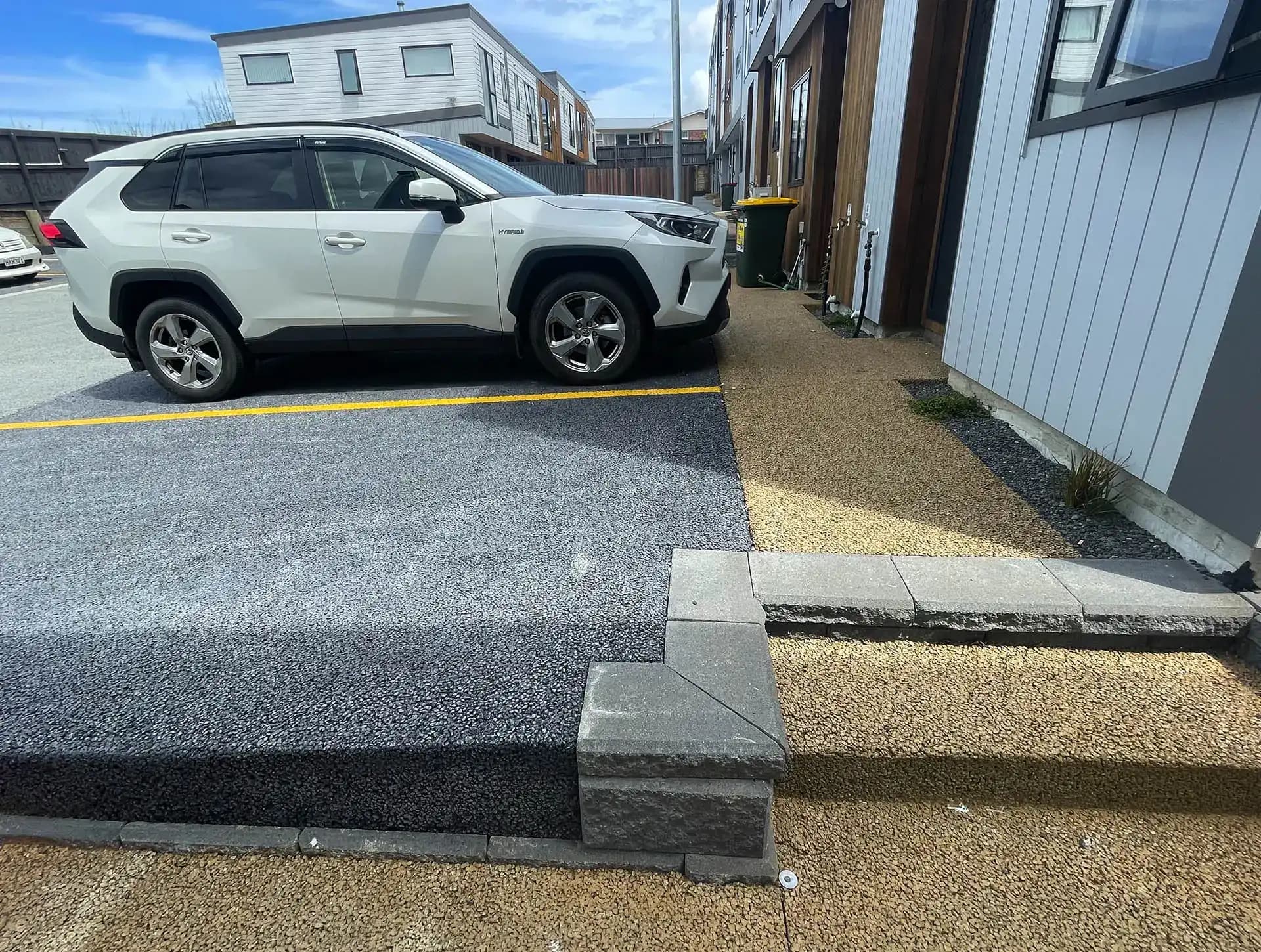
Area and access
A big open pour spreads the setup cost across more metres. A tight backyard with no truck access adds barrows, pumps and hours.
We pour it on site from a truck. It is concrete, not pavers, so the price covers the slab you drive on and the drainage system underneath it.
The honest answer is a band, not a single rate, because the slab you can see is only half of what you are buying. The other half is the drainage base underneath, and your ground decides how much of it you need.
What you get from us is a real number for your address: excavation, base, slab and finish, itemised and fixed before anyone pours.
The fastest way to get it is a free on-site assessment. We walk the site, check the levels and the access, and you get the figure that applies to your job rather than an average of everyone else's.
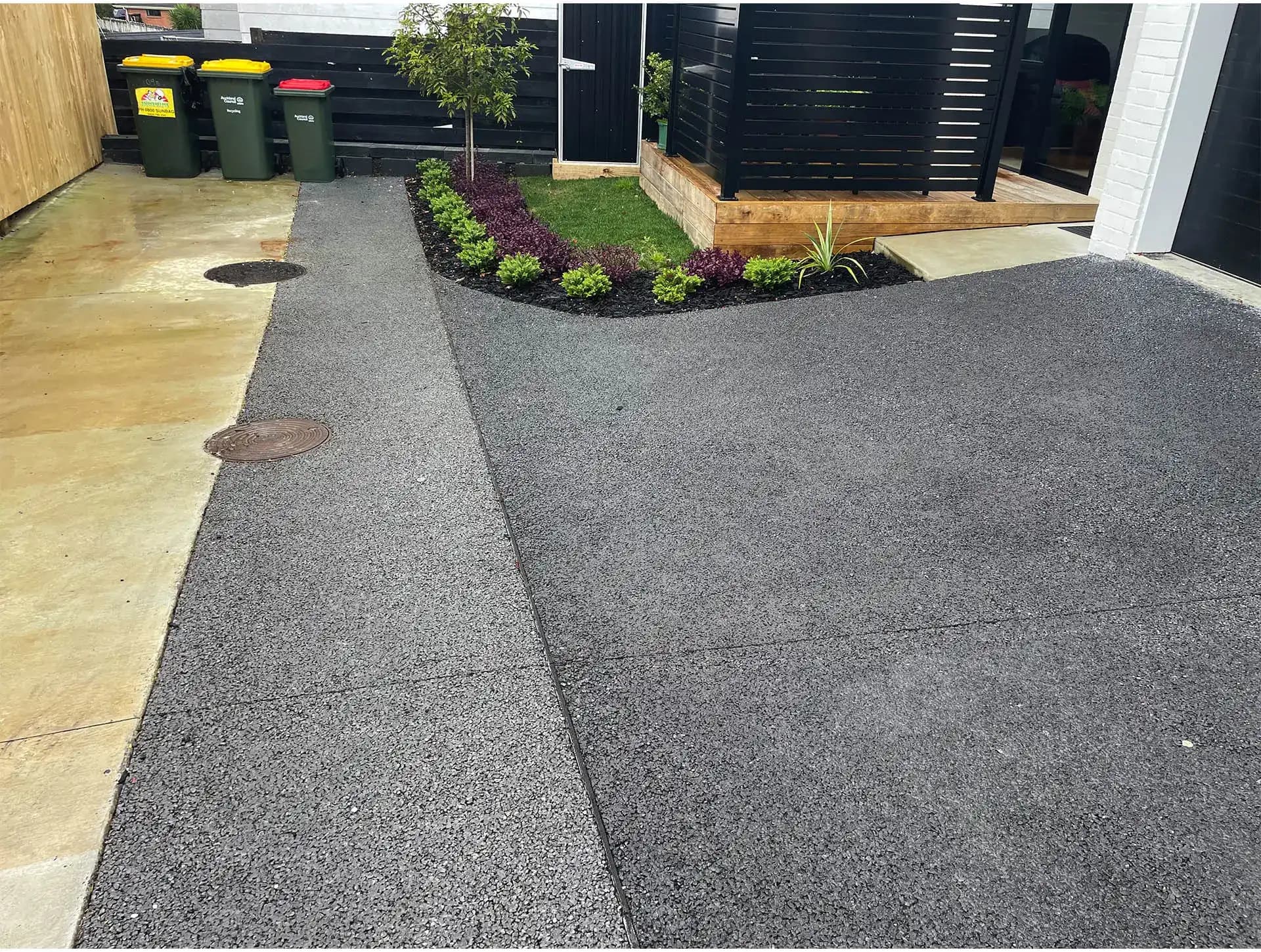
A big open pour spreads the setup cost across more metres. A tight backyard with no truck access adds barrows, pumps and hours.
Soft or clay subgrade needs more base than firm ground. On many jobs the base is the largest single cost.
A garden path and a delivery van hardstand are not the same slab. Thickness follows the vehicles that will use it.
If the base doubles as your stormwater storage, the required volume sets the depth. More storage means more stone and more digging.
Standard Permcon is the workhorse surface. Ultracon finishes cost more and look it. That choice is yours to make late.
Edge restraint, garage thresholds, kerb crossings and step-downs to paths are real work, and they show up in the price.
Breaking out an old slab and carting the spoil away is priced by the truckload. An empty, level site is cheaper than a cluttered one.
We batch and pour from Mitcham in Victoria, and crews travel for scheduled work. Distance and mobilisation are part of any honest price.
Get in touch today to discuss your project. We're here to help with all your permeable concrete requirements, from a single driveway to major civil infrastructure.
Permeable concrete is a no-fines mix: cement, water and coarse stone with the sand left out. That leaves 20–26% open voids in the slab, so rain drains straight through it into a stone base that stores the water while it soaks away. You are buying a pavement and a drainage system in one pour.
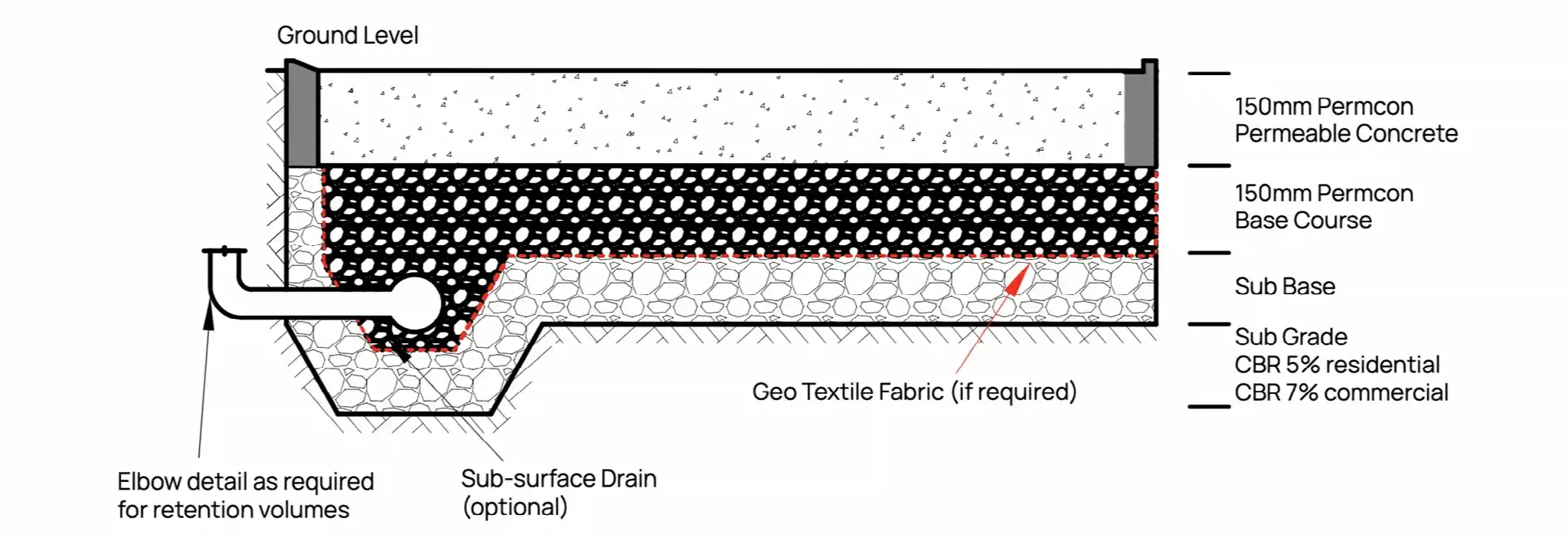
Every quote we give prices that whole build-up for your ground, not just the surface you can see. A number that turns up before anyone has looked at your site is a guess in a nice font.
The stone base is the storage. Sandy ground drains fast and needs a modest base. Tight clay holds water longer, so the base gets deeper, with more digging, more spoil carted off and more stone in.
That single line is the most common reason two driveways of the same size price differently. It is set by your soil, not by a rate card.
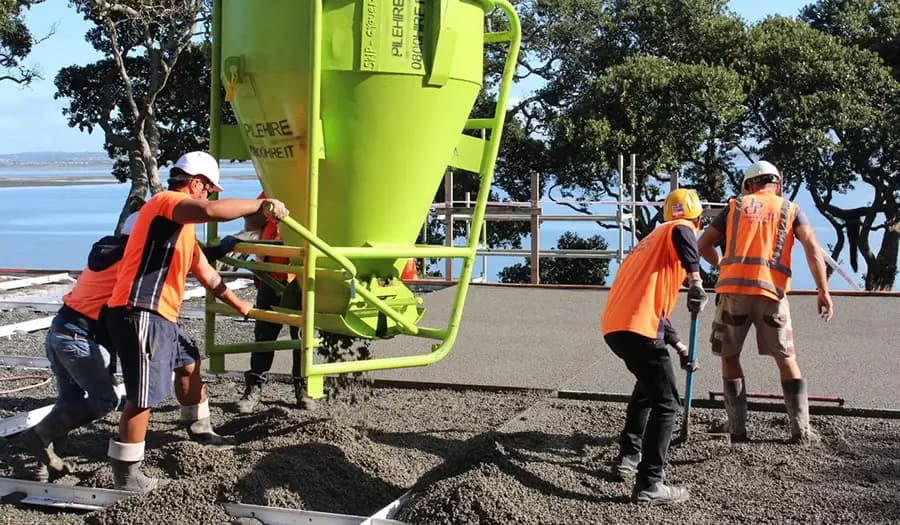
Per square metre, permeable concrete usually costs more than a plain slab. We are not going to pretend otherwise. Where it wins is everything a sealed slab forces you to build beside it:
A permeable pavement deals with the rain where it lands, so those lines shrink or drop out of the job. On a lot of residential sites that closes most of the gap, and sometimes all of it.
It does not always land in your favour, and you should hear that from us on site rather than find it in a competing quote.
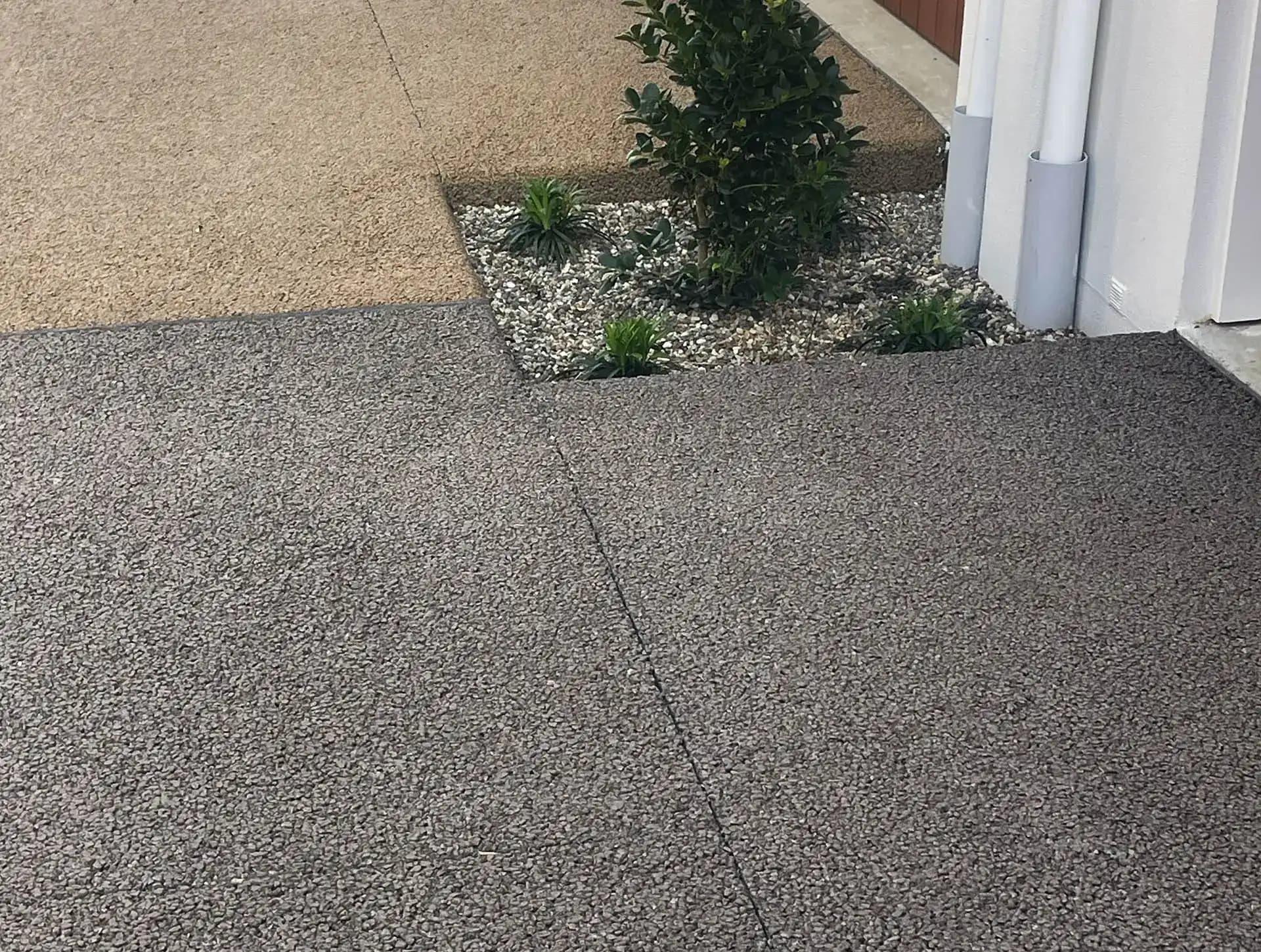
Design life is 30+ years, and the maintenance is a sweep. A vacuum sweep somewhere between quarterly and yearly keeps the water going through, and a pressure wash followed by a vacuum brings a neglected surface most of the way back.
One rule we will keep repeating: never let anyone run a rotary broom over it. A rotary broom drives dirt into the voids instead of lifting it out, and turns a cheap sweep into an expensive recovery.
We walk the area with you. Access for the truck, levels, where the water goes now, what the surface has to carry, and what has to come out first.
Soil information, any CBR or infiltration testing already done, the council drainage requirement, and your engineer's design if there is one. This is what sets the base depth.
Slab thickness for the vehicles, base depth for the storage the design has to hold, edge restraint, joins and thresholds, then the finish. Standard Permcon or an Ultracon finish.
Every price rests on a build-up. Ask for the thickness and the base depth, from us and from anyone else you are comparing. Without those two numbers, a rate per square metre tells you almost nothing.
Large jobs do not have to happen in one hit. Driveway now, path and parking area later, is a normal way to run the work. Say so early so the levels and edges are set up for it.
Per square metre, usually yes. The mix is different, the base underneath is deeper, and placing it well takes a crew that knows the material. Where it evens up is the rest of the job. Normal concrete sheds all its water, so the drainage has to be built beside it. Permeable concrete takes the water on the spot, so pits, pipes and detention can shrink or drop out. Compare the total of paving plus drainage, and the gap usually narrows a long way.
Nearly always the ground and the build-up. One price may assume a shallow base on firm soil while another has designed for clay and a set storage volume. Then check whether excavation, spoil removal, edge restraint and thresholds are in or out, whether the finish is standard or an Ultracon finish, and whether the crew doing the work is the one you spoke to. Two prices are only comparable when both list a slab thickness and a base depth.
Often, yes. The base is not just support, it is storage. It holds the rain until the soil beneath takes it. Sandy ground that drains fast needs less. Tight clay needs more, sometimes a lot more. That is the honest reason we will not price a job off a photo and a square metre count.
It can, and it is one of the bigger swings on a residential job, because a tank brings its own excavation, connection, and sometimes a pump. What we cannot do is promise it before your site is assessed. Whether a tank comes out is a decision for the council and your engineer, based on the site soil and the drainage requirement. Sometimes the answer is a smaller tank rather than none. We will tell you which one we think you are looking at, and why.
Yes, and plenty of people do. Driveway first, then the path, then the parking area or the pool surround later. The main thing is to tell us at the assessment, so levels, edges and joins are set up for the next stage instead of being cut into afterwards.
No. The on-site assessment is free. We would rather spend an hour on your site than send you a number that falls apart the day someone puts a shovel in the ground.
Send us the address and what you want surfaced. We design, manufacture and install our own Permcon system, so the price and the pour come from the same team.
A few quick questions about your site. You get a straight answer about whether permeable concrete is the right call, including when it isn't, before anyone asks for your details.