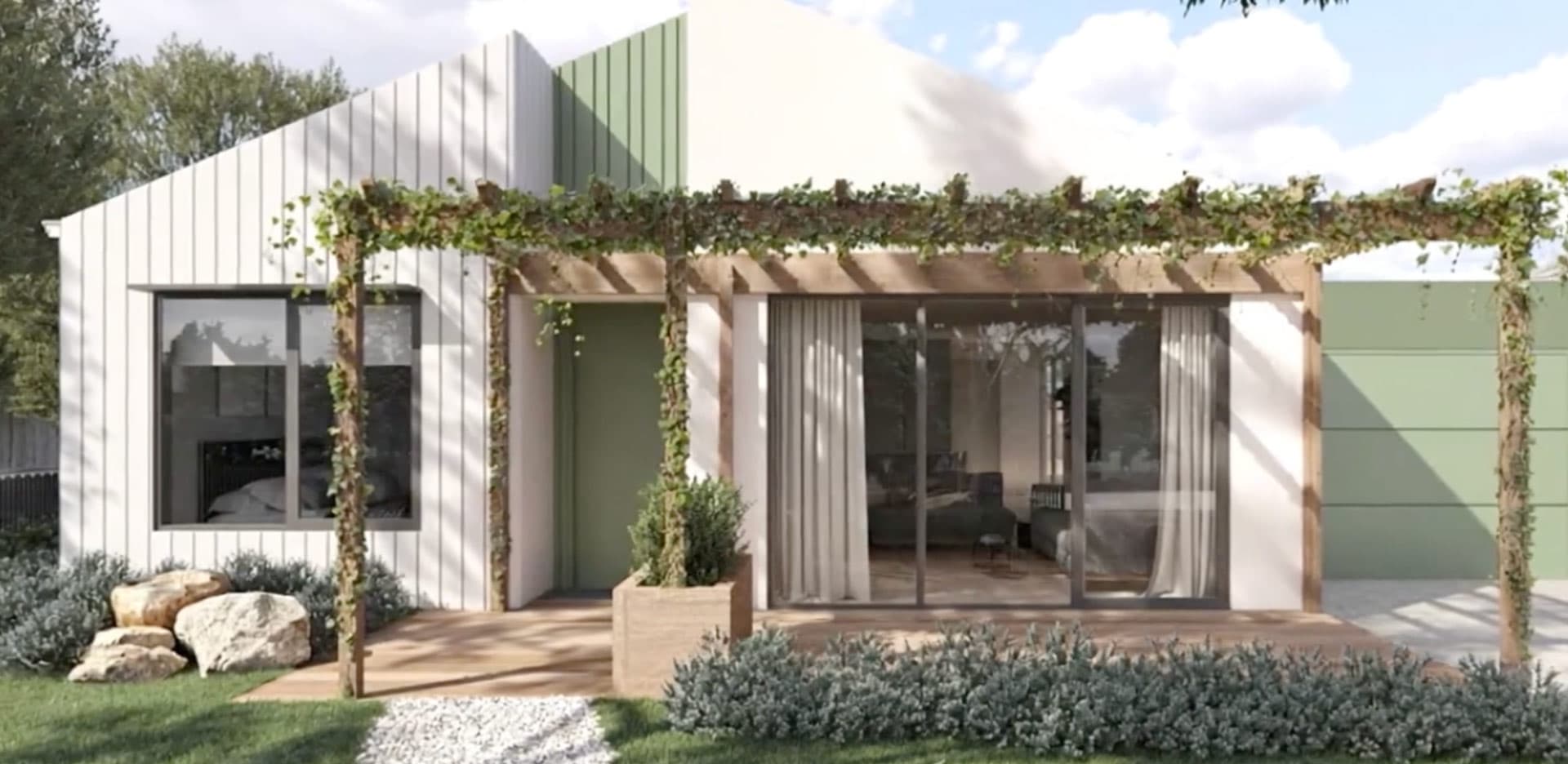
Wa-Karroong
Wathaurong Aboriginal Co-operative in Geelong has a new home. Wa-Karroong began as a conversation and got built by many hands, APC's among them.
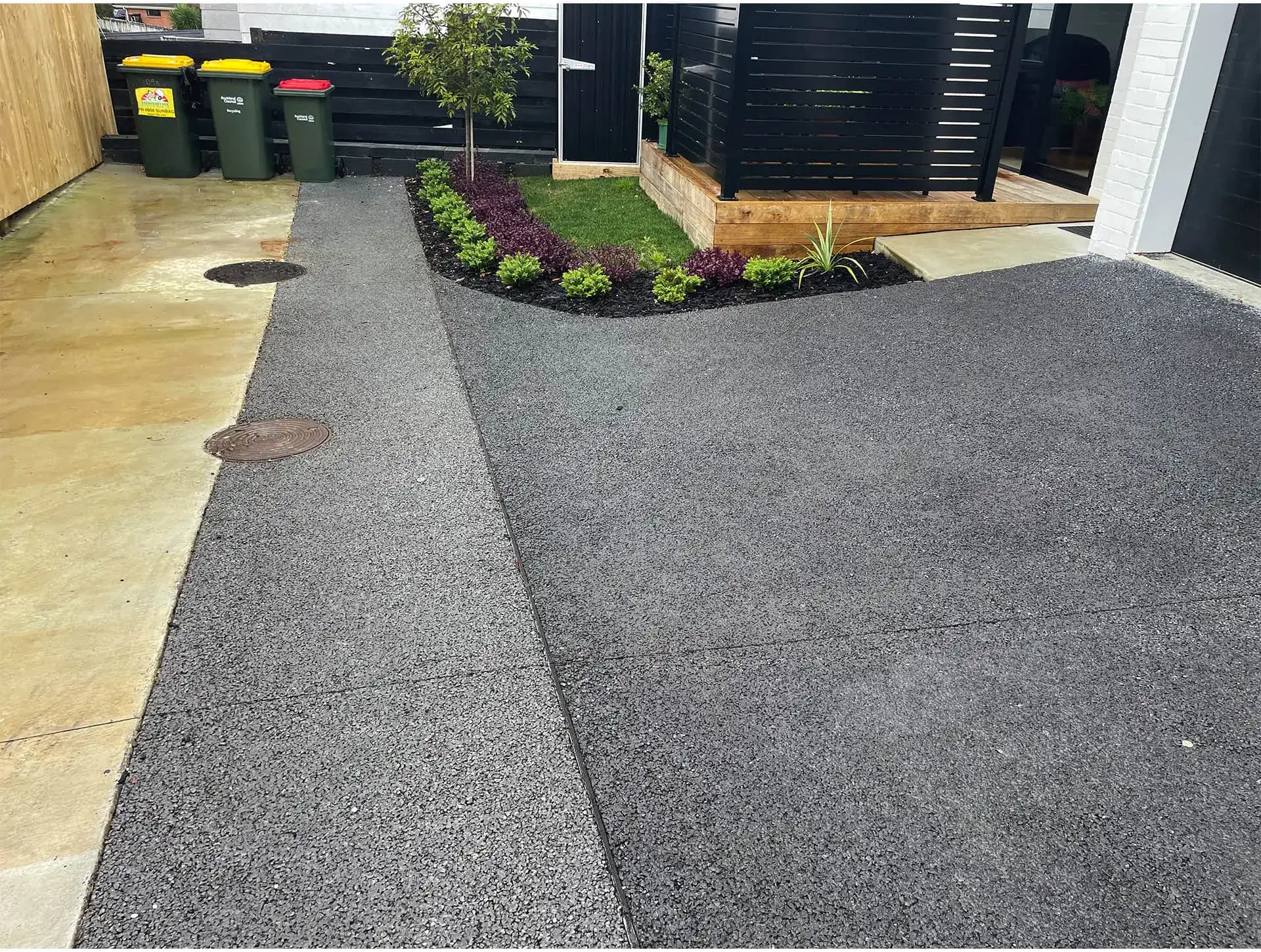
For paths and pool surrounds. They're dry again soon after rain, because the water drains down through the slab.
A few quick questions about your site. You get a straight answer about whether permeable concrete is the right call, including when it isn't, before anyone asks for your details.
 Permcon™ is Australian made. Designed at our Mitcham factory, mixed with Boral Concrete and poured by our own crewsAbout our manufacturing
Rain goes down through the slab. Voids make up 20 to 25 per cent of it, and water runs through them at 8,000 to 10,000 mm/hr into a layer of clean screenings, then soaks into the soil under your own garden.
Victoria's planning guidance for townhouse and low-rise sites wants at least 20 per cent of the site letting water into the soil, and it names pervious driveways and paths as able to count. Councils set a minimum permeable area on a new house, a unit development or an extension. Hard paving eats it fast. Pervious paving can go toward it where your council accepts it, so the path goes on the plans without costing you lawn.
Standard thickness is 125 mm, and we go thicker where heavier vehicles will run. The concrete itself is 25+ MPa. The finished surface has a P4 slip rating, and the design life is more than 30 years, provided somebody looks after it.
Upkeep is light work: walk over it once a month to check for leaves and sediment, and sweep it once a year. If it's been left a few seasons, a wash opens the voids back up.
Yes. Each area is a separate pour, so doing the pool surround this summer commits you to nothing on the driveway. We'd still walk the whole block at the first visit and price each stage on its own, so you can plan the spend. See what permeable concrete costs.
Yes. We look at the house slab or footings on the site visit, and the base beside them is designed so water isn't held against the building. If the site needs it, we can add an under-drain to help the water flow.
Mostly the opposite. Roots still get water and air through the slab, and we've poured a roadside bus stop inside a tree protection zone for exactly that reason. Leaves are the only job: blow or sweep them off when they pile up so they don't break down into the surface.
Plenty of them do more than carry a sedan. We pour the same Permcon mix under caravan-park roads and commercial car parks, just at a different thickness. On a domestic drive it's 125 mm as standard, a 25+ MPa slab over a base of clean screenings that shares the load rather than only handling water. Add a trailer or a caravan and we simply go thicker. Before any of that we check the ground, because what's underneath decides both drainage and how much weight the surface can carry.
The base under a Permcon path or driveway is doing real work here: it stores rain and lets it soak away rather than shedding it straight to the kerb. That's why permeable concrete counts toward permeable area on plenty of domestic sites, where the council accepts the design, and it's often the reason a project is even proposed. A driveway that soaks away can shrink or remove the detention tank a sealed one would need. If a council wants a stormwater model, Permcon is MUSIC certified. Rules differ from council to council, so check yours before pricing.
A downpour isn't what catches a Permcon surface out. It's rated at 8,000 to 10,000 mm/hr, so the slab itself is rarely the constraint. The real limit is underneath: every 100 mm of clean screenings holds 28 litres per square metre at 85 per cent design capacity. On a block that floods or sits on clay, we go deeper on the base and add an under-drain, so water leaves slowly instead of banking up. We can't fix water rolling in from next door, but we can stop your own paving adding to it. Soil testing sets the base depth.
Leaf litter and garden run-off are the two things worth watching. Clear leaves and debris off the surface as they build up, and keep mulch or garden soil from washing across the pavement from nearby beds. Sediment is what actually clogs the voids. If you notice puddles sitting instead of draining away, a wash usually sorts it. Once a year, sweep the whole thing and check the voids for moss or organic build-up, then clear it out.
A 10-year structural warranty sits behind a design life in excess of 30 years, and the two numbers point at different things. Leaves and grit left to sit eventually pack the voids, and a clogged slab stops draining the way it's meant to. Heading that off just takes a monthly glance and one proper sweep a year. Genuine structural failure gets assessed, and we remove and replace under warranty.
Ripping out the old slab is the biggest part of this job, not laying the new one. Concrete and whatever base is under it both have to go, because permeable concrete needs its own layer of clean screenings underneath to drain into, and it can't be laid over the old sealed surface. With the ground open, we check soil type and levels before building that new base. On a clay block, the base stores water and an under-drain releases it slowly rather than letting it pool. Heavy or awkward ground just changes the base design. It doesn't rule the job out.
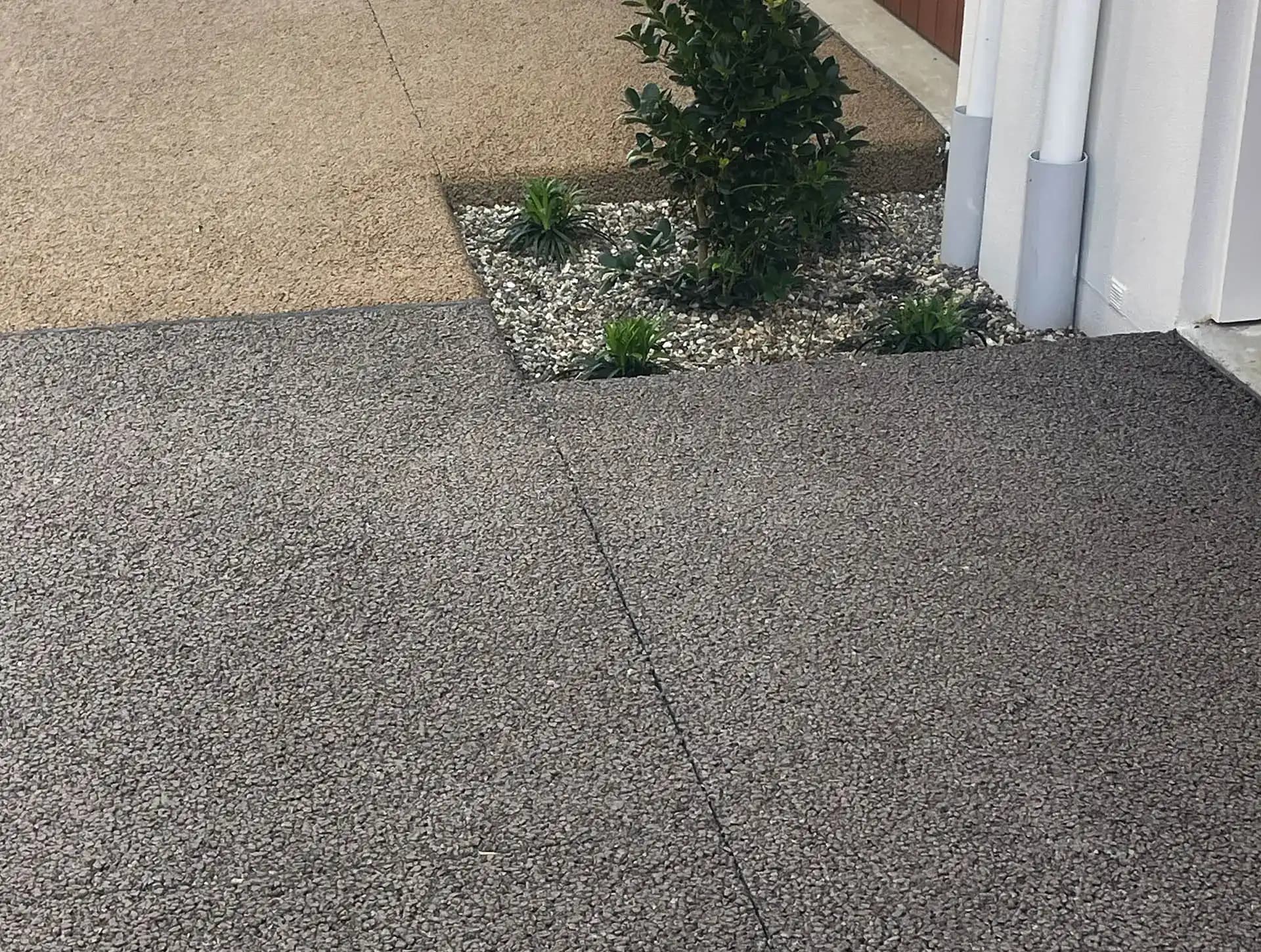
Charcoal on the drive, sandstone on the path: the change in colour tells people where the cars stop and the garden starts. The other two are soapstone and plain grey.
Where feet are bare, around the pool or on the way to the back door, Ultracon permeable concrete uses finer stone than the 7 mm or 10 mm in standard Permcon. It gives a smoother finish. Either way you get one continuous surface, without pavers to rock or joints for weeds.
You'll get a call from an estimator who wants to know what you're paving and when suits for a visit.
Levels, soil, truck access and where the water runs now, all checked on site with you there.
The quote is for your block and your surfaces. Nobody pulls a rate off a list.
Most home jobs are one pour, since crews place 500 m² and more a day. We cover it to cure, then tell you when it's ready for feet and the car.
Wathaurong Aboriginal Co-operative in Geelong has a new home. Wa-Karroong began as a conversation and got built by many hands, APC's among them.
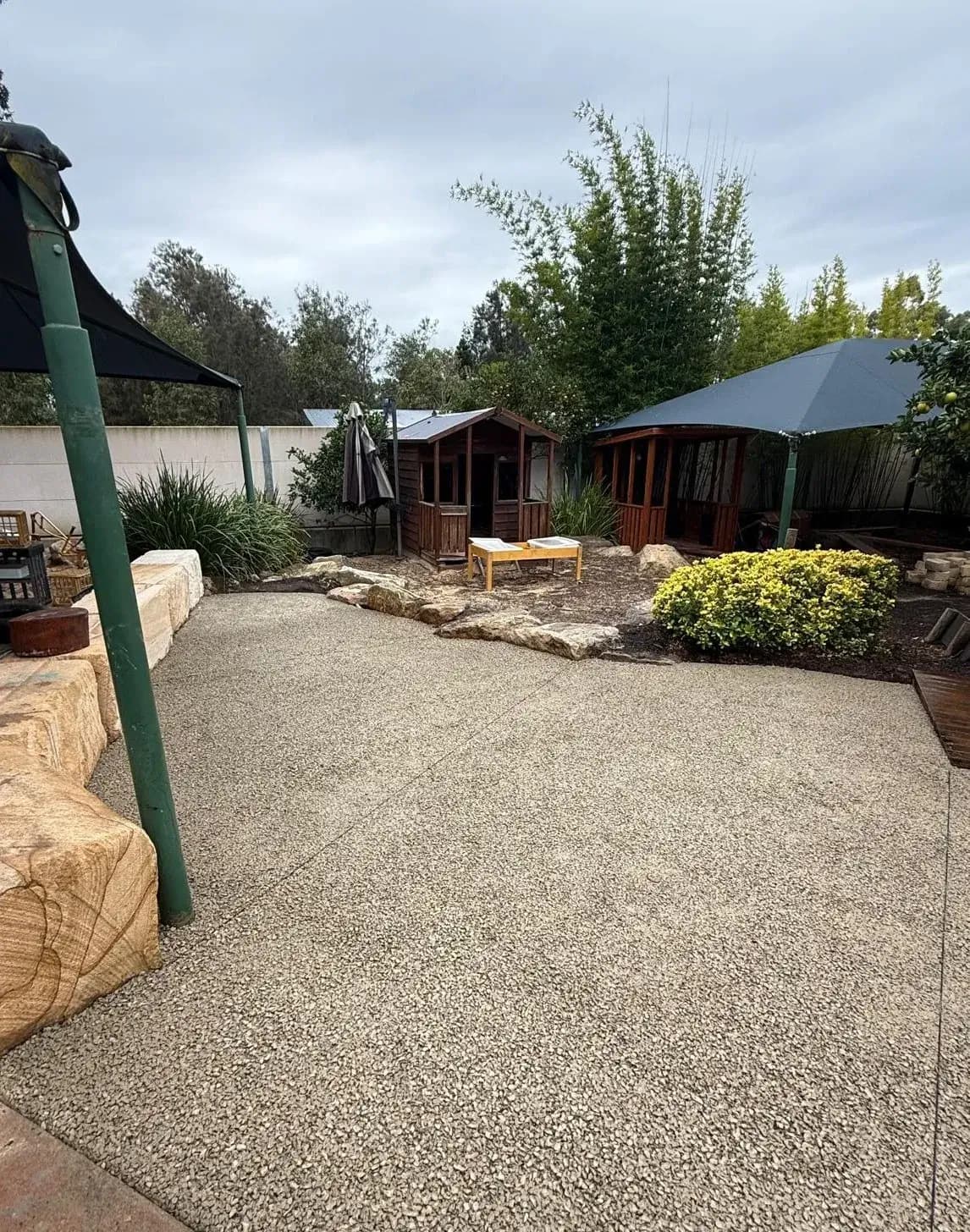
A council job in Warwick: light-coloured Ultracon poured around an Early Learning Centre's existing cubby houses, sandstone blocks and garden beds to make a permeable play area.
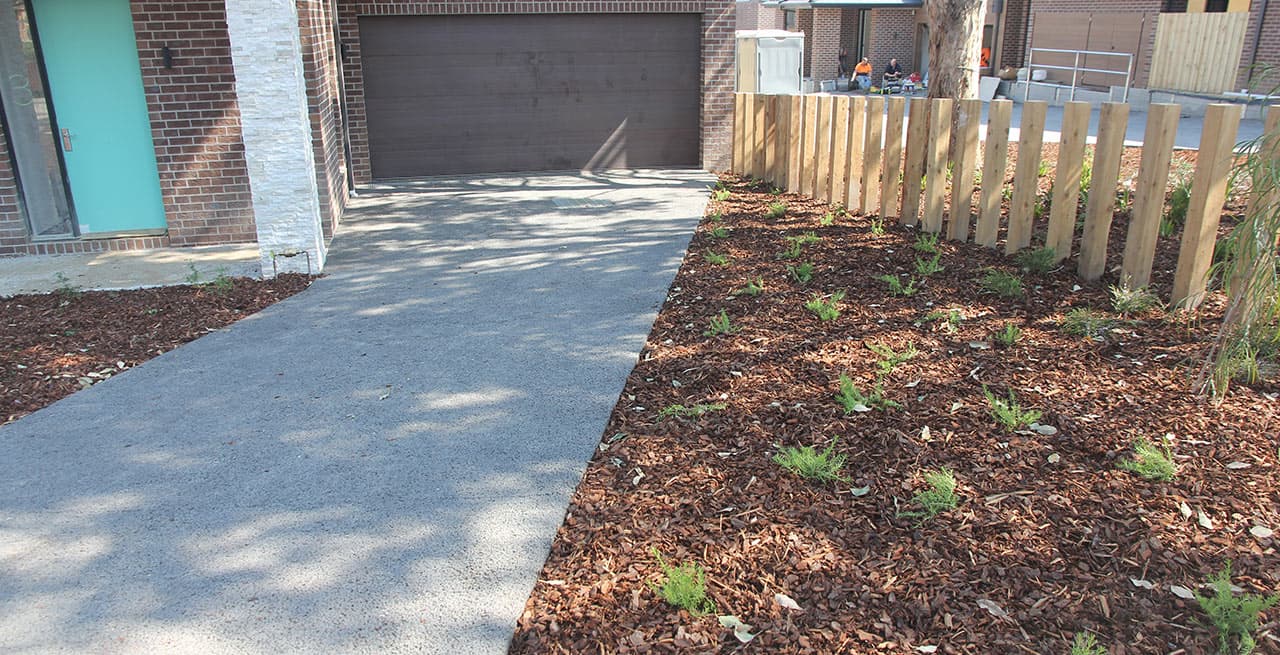
A grey Permcon driveway runs up to a brown garage door, with a mulched garden bed and timber posts along the side.
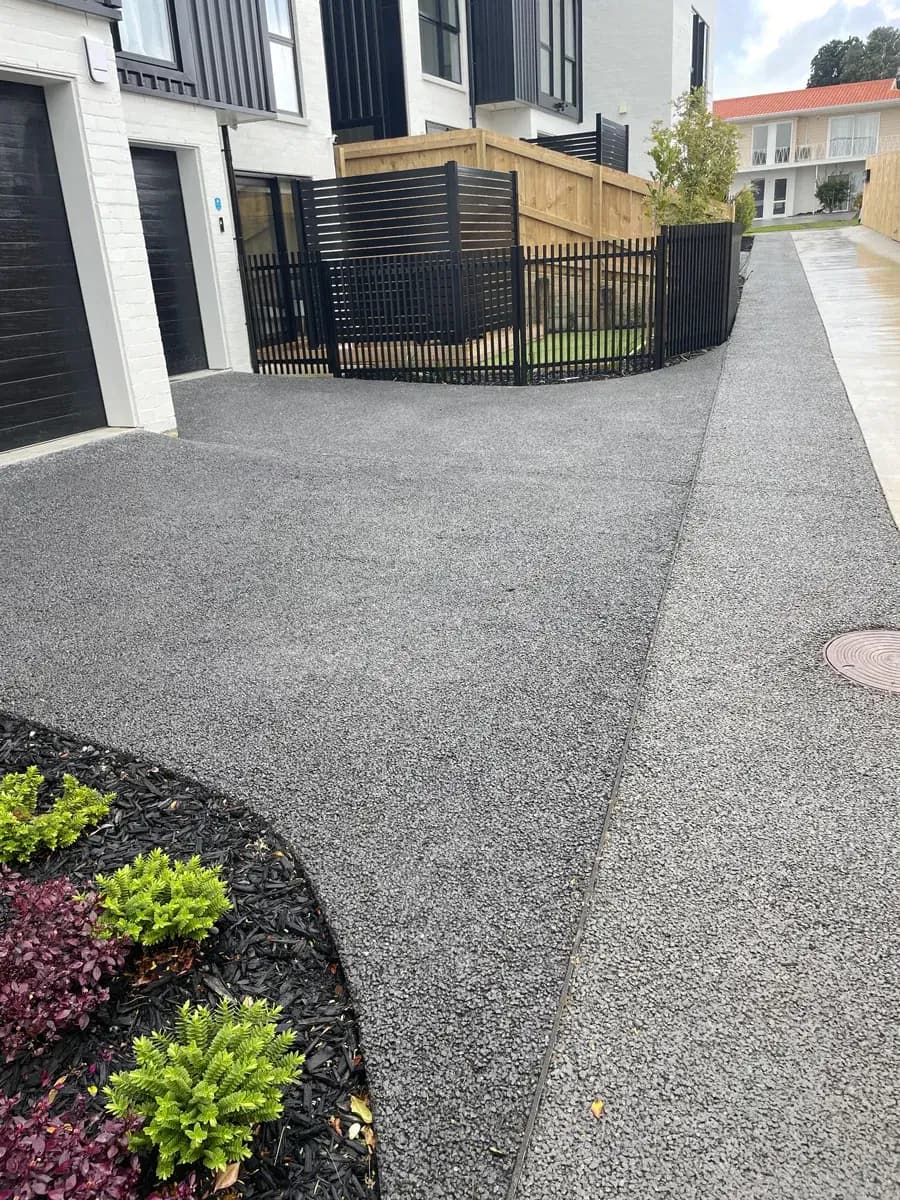
Ferns and red-leaved planting mark the bend where this dark grey Ultracon driveway curves past shared garages, its edges softened by garden beds.
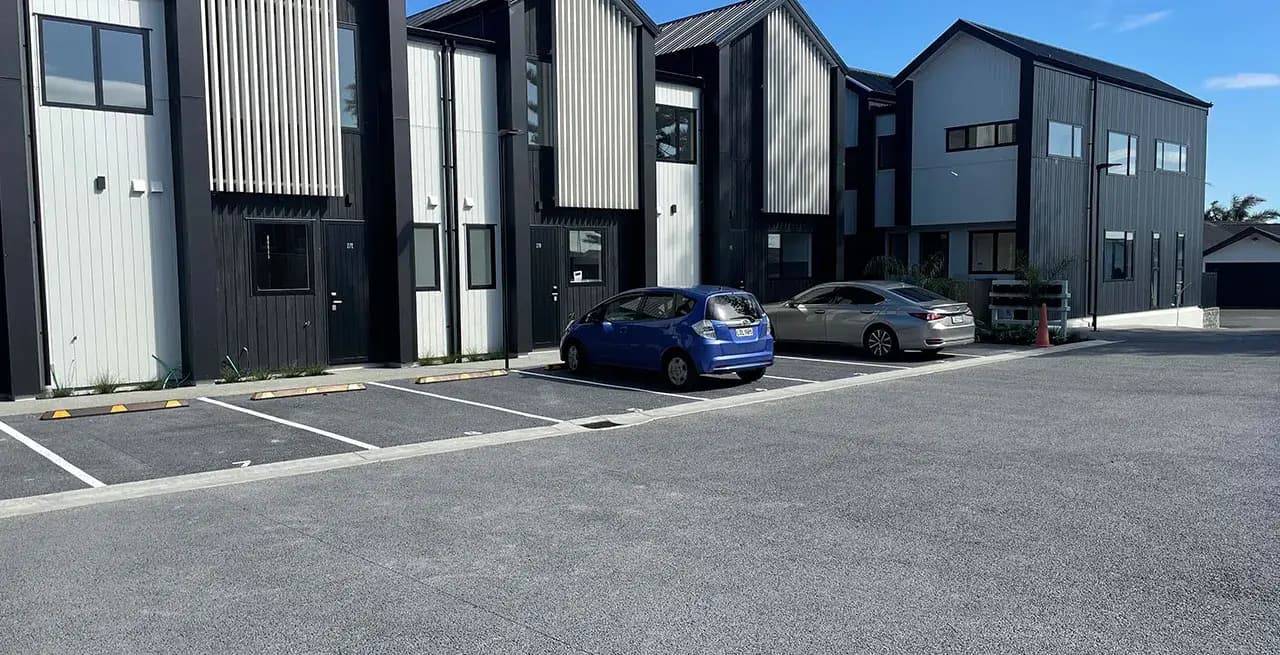
Wheel stops in yellow and black, bays marked in white, a wide aisle: a dark grey Ultracon permeable car park for housing units in front of black-and-white-clad townhouses.
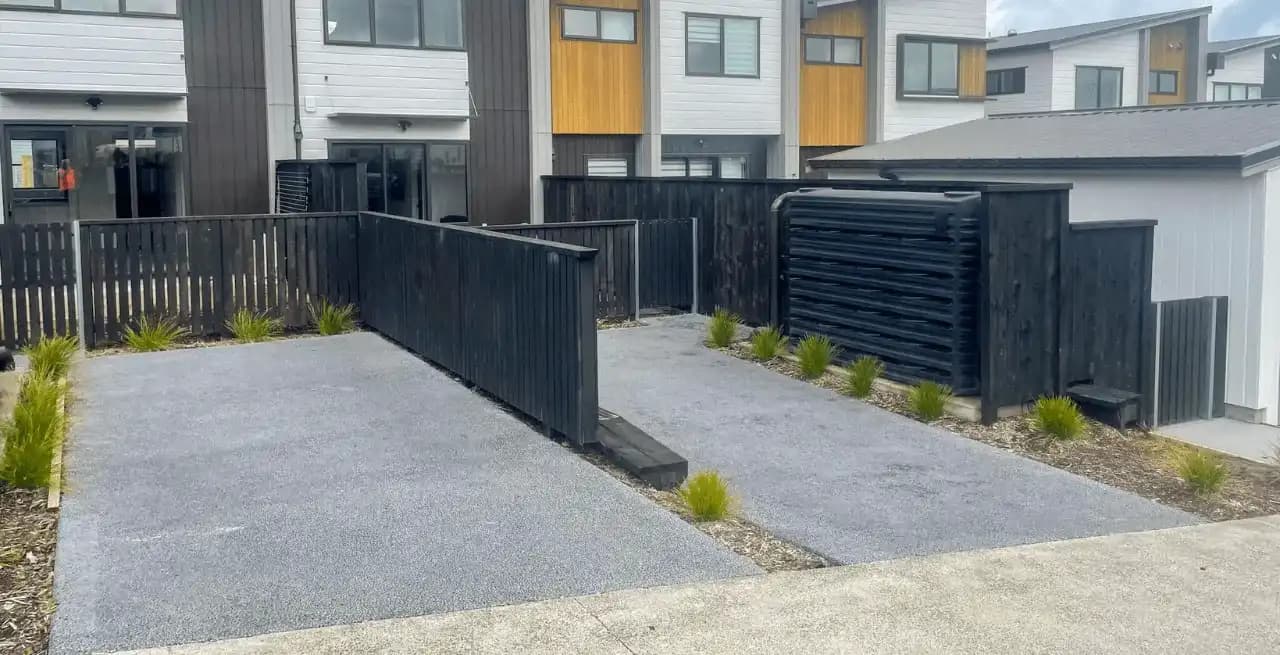
Split down the middle by a black timber fence, two plain grey permeable parking pads front a contemporary home and finish at garden beds on each side.
Paths, pool surround and driveway can all be looked at in one visit. Permcon is Australian made, with teams in every state.