Whole-surface drainage
Water enters everywhere at 130 to 170 litres per minute per square metre, not only through a narrow band of joint stone.
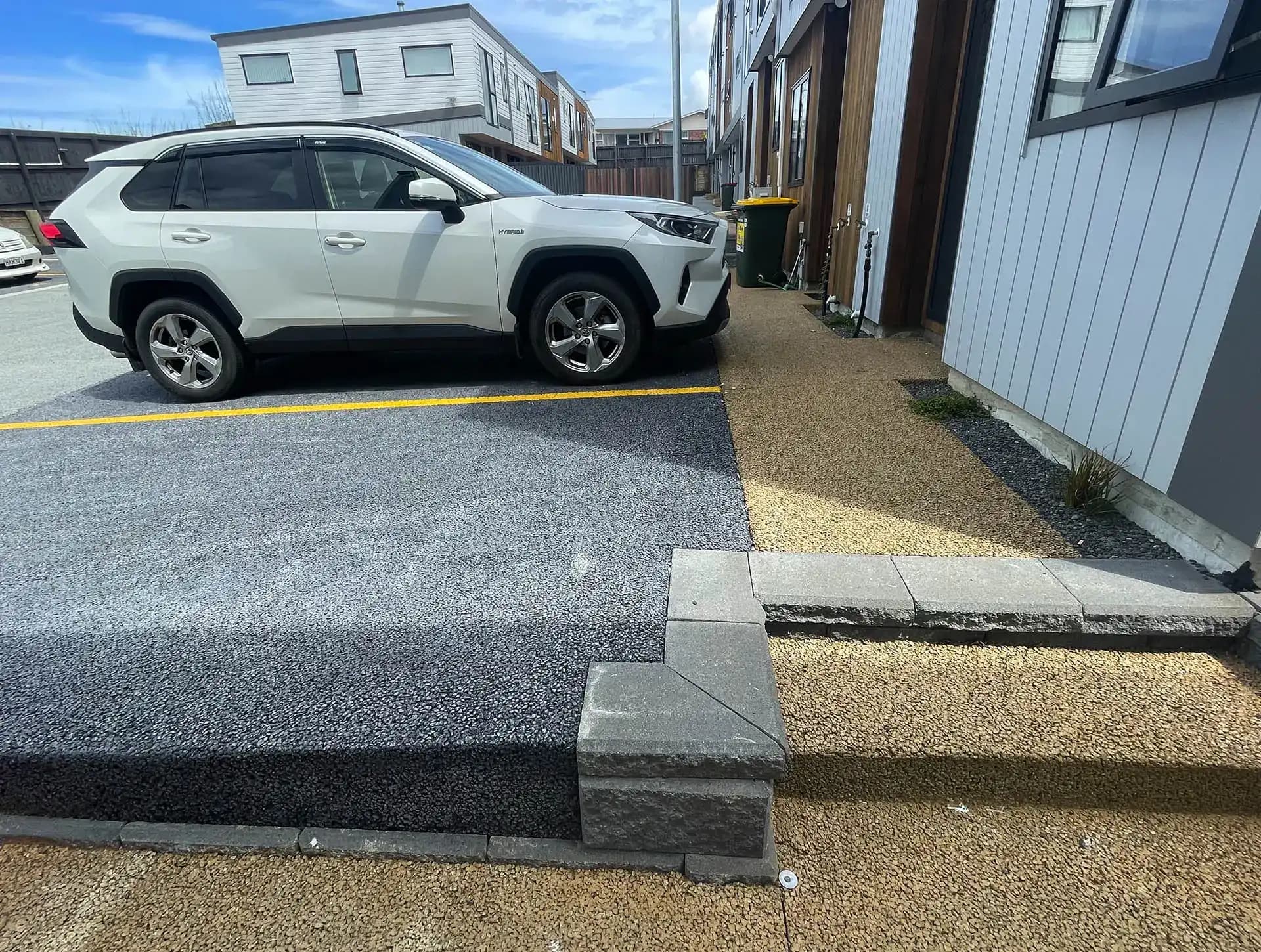
You want a surface that takes the rain instead of shedding it into the gutter. Permeable pavers are one way to buy that. We make the other way: a poured permeable concrete surface that drinks water across every square metre, with no units, no joint sand and no edge restraints to go wrong.
A permeable paver system does its work in the gaps. The units themselves are usually dense, so the rain has to find the widened joints, travel through the aggregate in them, and keep doing that for the next thirty years. That works while the joints stay open and full. It stops working when the joint stone packs down with silt, when a unit rocks, or when the edge restraint lets the field creep.
We pour instead. Permcon is a no-fines mix with 20 to 26 per cent interconnected voids running right through the material, so water enters the surface wherever it lands. Measured infiltration sits at 130 to 170 litres per minute per square metre. There is no small percentage of open area doing all the work.
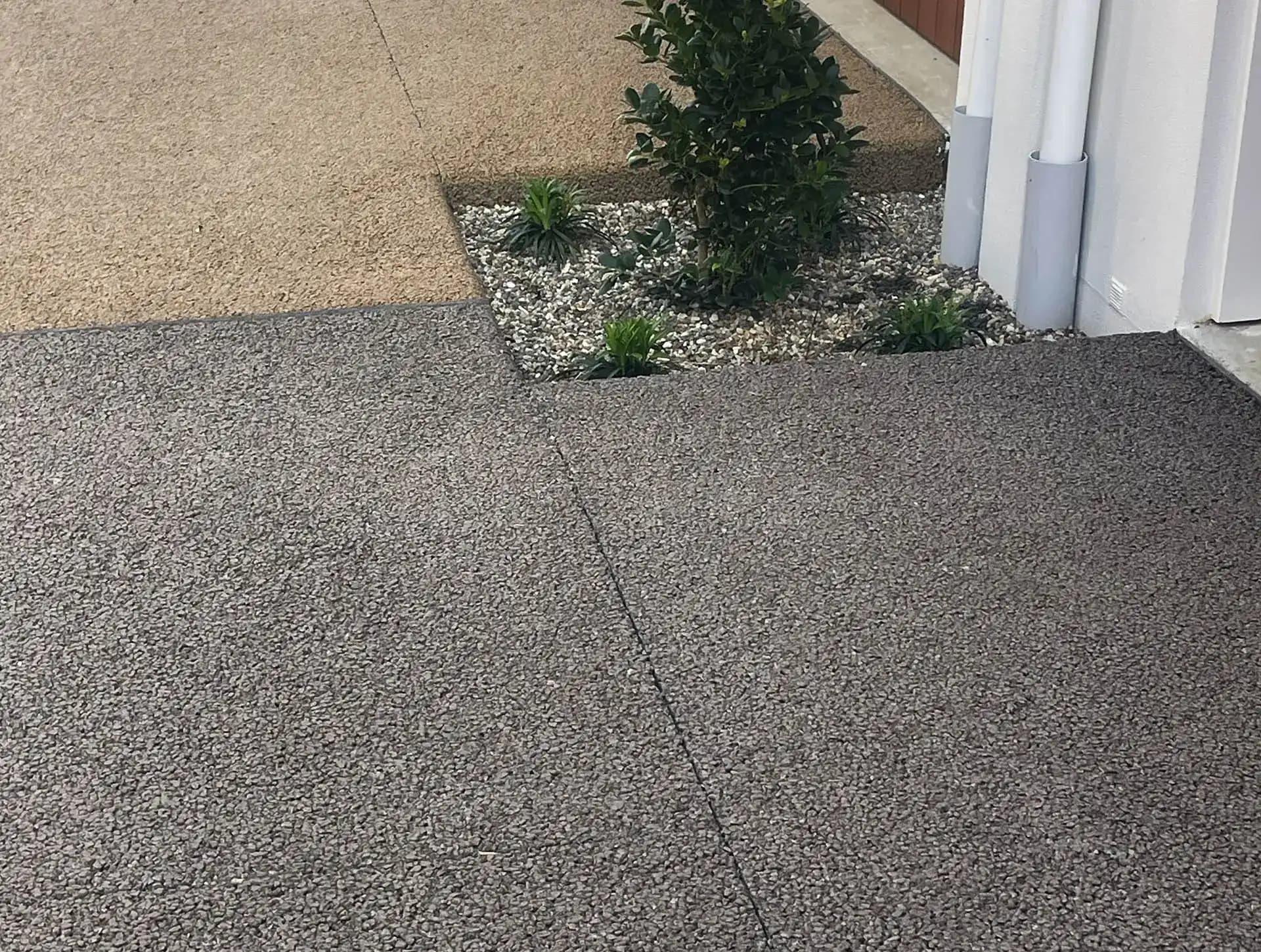
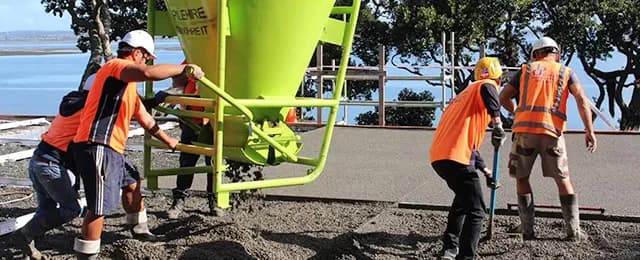
It is a real pavement, not a soft solution. Trafficable mixes run 20 to 25 MPa to AS 3727.1, with higher strengths available where an engineer asks for them, a P4 slip rating wet or dry, and a 30 year plus design life. Our crews place 500 square metres and more in a day, in one visit, with no laying pattern to set out and no cutting to the edges.
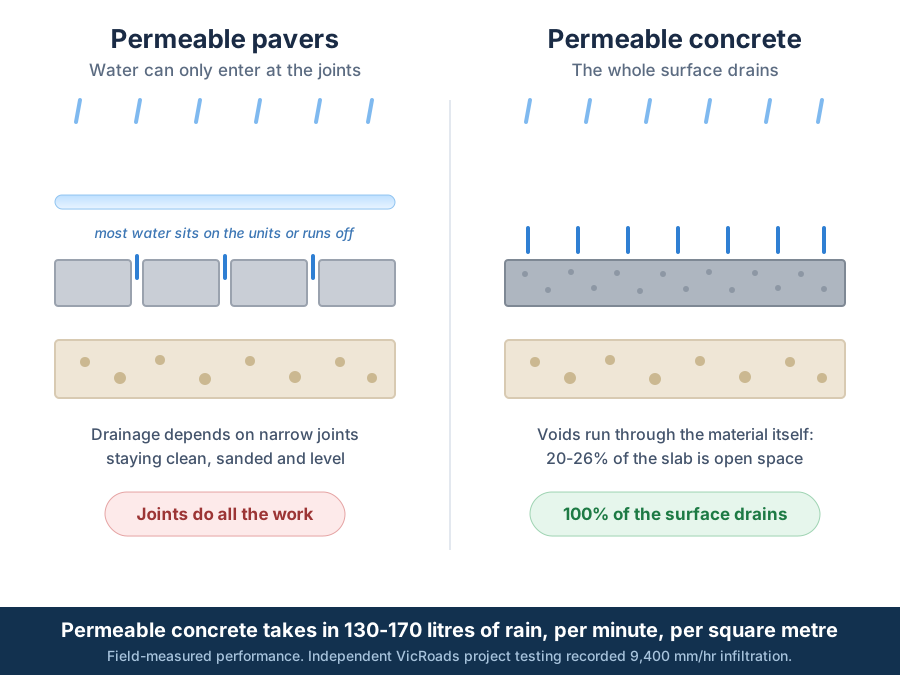
The surface takes in 130 to 170 litres of rain per minute, per square metre, through voids that run through the material itself, 20 to 26 per cent of the slab by volume. Independent testing on a VicRoads project measured 9,400 millimetres per hour.
Below the slab, an open-graded stone base stores the water and lets it soak or release at a controlled rate, holding 28 to 56 litres per square metre inside the system.
A few quick questions about your site. You get a straight answer about whether permeable concrete is the right call, including when it isn't, before anyone asks for your details.
Get in touch today to discuss your project. We're here to help with all your permeable concrete requirements, from a single driveway to major civil infrastructure.
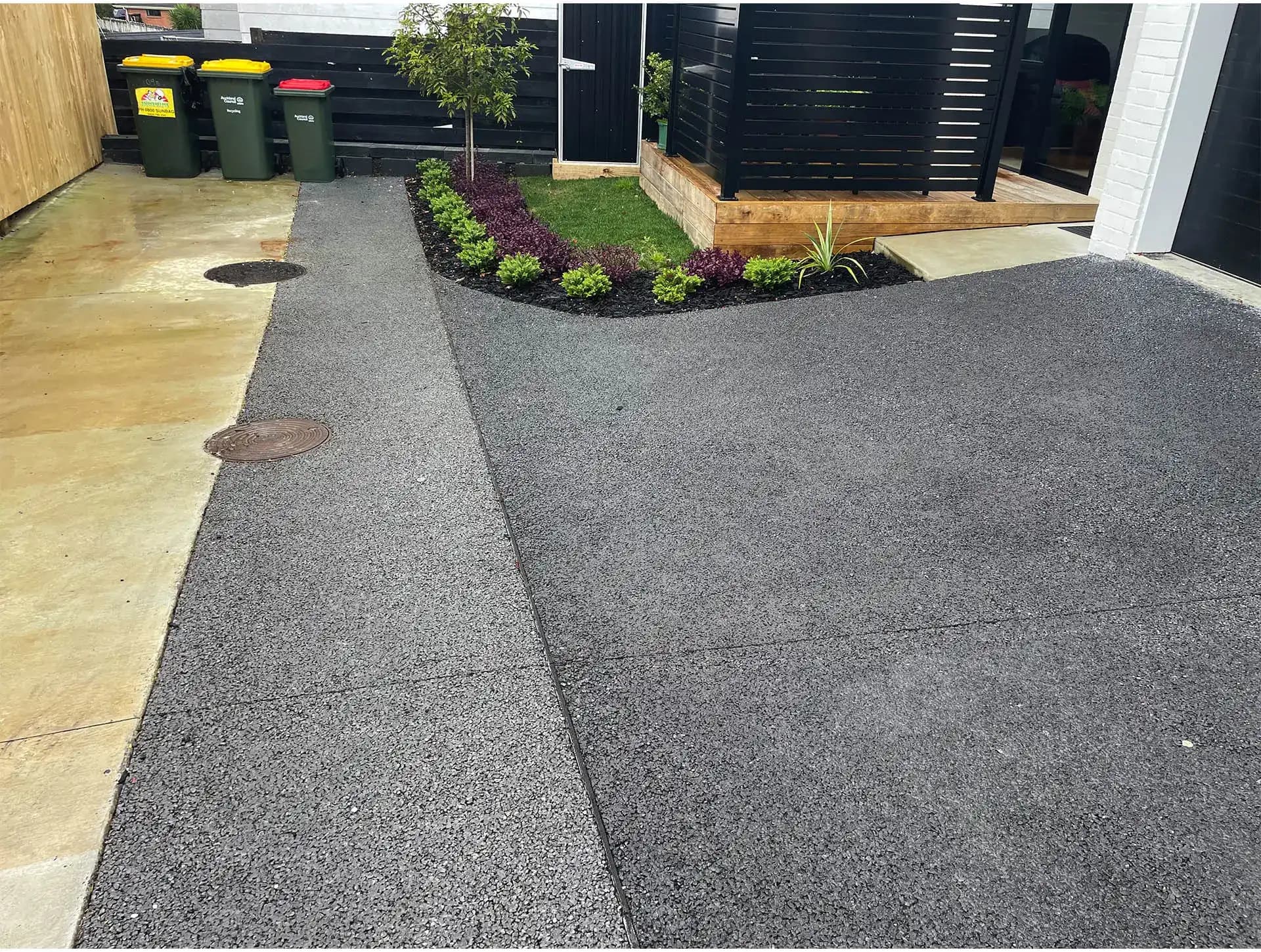
Water enters everywhere at 130 to 170 litres per minute per square metre, not only through a narrow band of joint stone.
One continuous pour bonded across the area, so there are no individual units to settle, lip or shift under a wheel.
Nothing to re-sand, re-level or re-seal, and no open joints for weeds and ants to move into.
20 to 25 MPa trafficable to AS 3727.1 as standard, with higher strength mixes available on engineered jobs.
500 square metres and more per day by our own crews, instead of a slow unit-by-unit lay.
Designed, manufactured at our Mitcham factory in Victoria and installed by our ISO 9001, 14001 and 45001 certified crews.
Permeable pavers are precast concrete or clay units laid with deliberately widened joints or spacer nibs. The joints are filled with clean open-graded stone, and rain drains through that stone into an open-graded base beneath, where it is held and then infiltrates into the subgrade. The units carry the load. The joints carry the water. Grid pavers work on the same principle with an open cell filled with gravel or turf instead of a jointed edge.
They exist for a good reason. Councils across Australia now set impervious-surface caps and water sensitive urban design requirements on new driveways, extensions and developments, and a permeable surface can reduce or remove the need for a detention tank. Anything that lets rain soak in where it lands is doing useful work.
Segmental systems fail in predictable ways, and none of them are secrets in the trade. Joint stone silts up from the top down, so infiltration drops fastest in the first few millimetres. Individual units settle where the bedding layer was thin or the base was not compacted evenly, which shows as lipping you feel through the steering wheel. Edge restraints take the lateral push from every turning tyre, and when one lets go the field spreads and the joints open. Weeds and ants find open joints. None of this makes pavers unusable, but it is the maintenance cycle you are signing up for.
A poured permeable surface removes the category of problem rather than managing it. There are no units, so nothing can rock, lip or creep, and no joints, so nothing needs re-sanding. Water passes through the material itself across the full area.
Permcon is a no-fines cementitious mix designed so the paste coats each aggregate particle without sealing the voids between them. We use 7 mm aggregate in Victoria and Tasmania and 10 mm in New South Wales, Queensland, South Australia and Western Australia, matched to local supply and the finish required. Placed void content sits at 20 to 26 per cent, and infiltration has been measured at 9,400 mm per hour under VicRoads testing, which is the same figure expressed as 130 to 170 litres per minute per square metre.
Trafficable mixes run 20 to 25 MPa to AS 3727.1, with higher strengths available where a structural engineer specifies them. The surface carries a P4 slip rating and a 30 year plus design life. Under it sits an open-graded base built as a storage layer, typically holding 28 to 56 litres of water per square metre before anything needs to leave the site. On subgrades of CBR 5 and above we can usually work with the ground as found, and where infiltration is restricted the base is lined and piped to discharge slowly instead.
If you want the full side-by-side, including where segmental units genuinely win, read our permeable concrete versus pavers comparison. If you already know you want the poured version, the next step is a site visit. We have placed more than 85,000 square metres of permeable concrete over thirty years, and every job starts with someone standing on the ground looking at the falls, the soil and the access.
An estimator visits, checks the ground and gives you a real figure for a permeable surface with no joints in it. Bring your paver quote and compare the finished jobs properly. Call 1300 010 499 or send us the site details and we will come out.