
20–26% voids
The no-fines matrix leaves 20 to 26 per cent interconnected voids through the slab, against 3 to 5 per cent in conventional concrete.
Pervious concrete is what the rest of the world calls permeable concrete. Same no-fines material. We design it, make it and pour it here.
If you've been reading American specifications or ACI literature, you've been reading about pervious concrete. In Australia the same material is usually written up as permeable concrete or porous concrete. One material, three names: a no-fines mix of cement, water and single-sized coarse aggregate, with the sand left out so the voids stay connected.
We're Australian Permeable Concrete. Permcon is our system. We design the mix, manufacture it and install it with our own crews, so the void structure that gets specified is the void structure that ends up in the ground. One team, one line of accountability, ISO 9001, 14001 and 45001 certified. Over 85,000 m² installed to date.
Send us the site. We'll walk it, look at the subgrade, the falls and the discharge point, and come back with a build-up that suits the duty. No charge for the assessment.
The no-fines matrix leaves 20 to 26 per cent interconnected voids through the slab, against 3 to 5 per cent in conventional concrete.
That's roughly 8,000 to 10,000 mm/hr of infiltration, which is orders of magnitude past any storm the site will ever see.
Our mixes run 20 to 25 MPa, and we place 25 MPa or better where the surface is trafficked, in line with AS 3727.1.
Designed for 30 years and beyond with routine maintenance, at a P4 slip rating for wet-area confidence.
A few quick questions about your site. You get a straight answer about whether permeable concrete is the right call, including when it isn't, before anyone asks for your details.
Get in touch today to discuss your project. We're here to help with all your permeable concrete requirements, from a single driveway to major civil infrastructure.
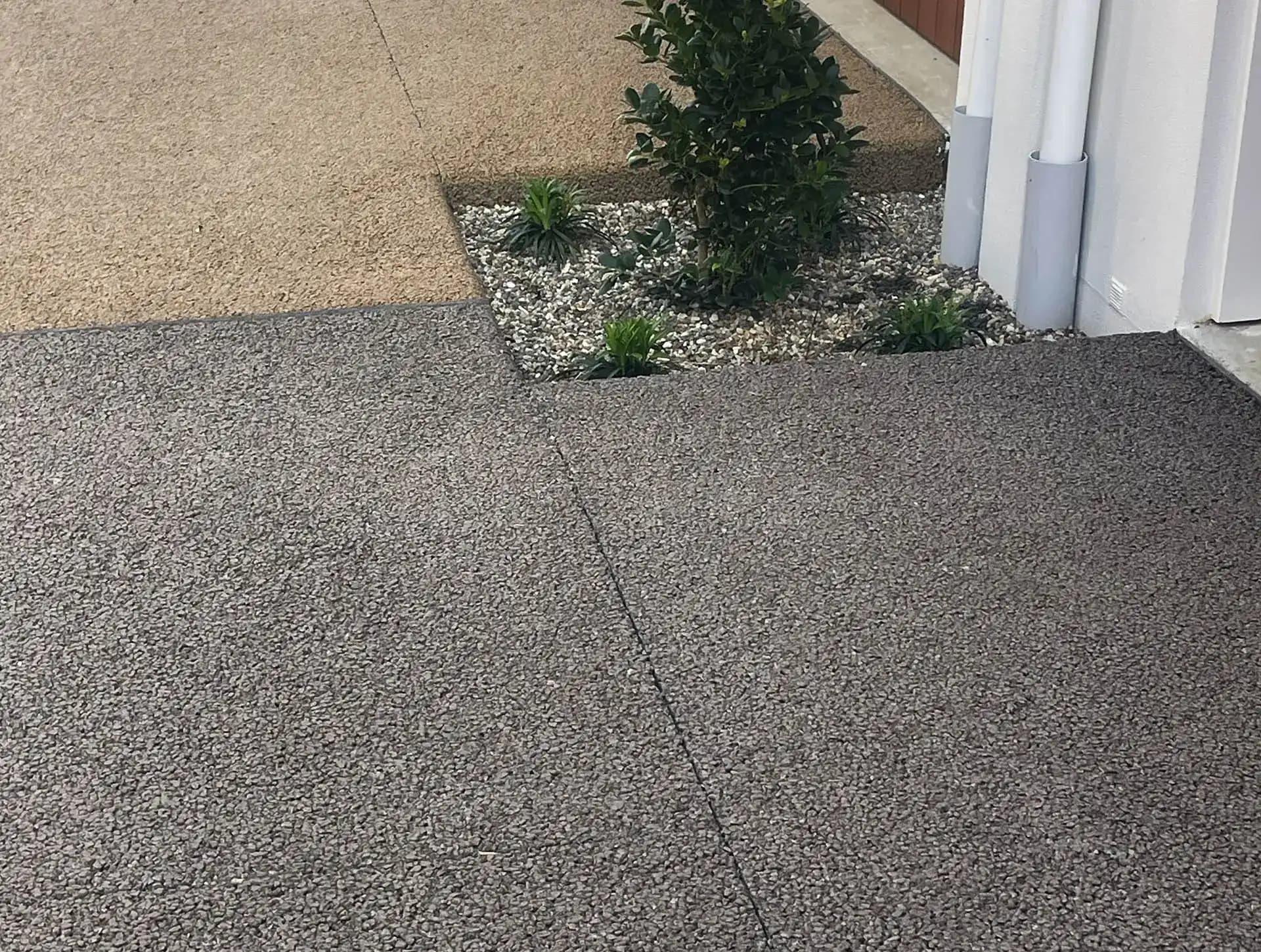
Yes. Pervious, porous and permeable concrete all describe the same no-fines cementitious pavement. Pervious is the common term in US and international engineering literature, while Australian specifications and councils generally say permeable. We supply and install it here as Permcon.
Our mixes take 130 to 170 litres per minute through every square metre, which works out around 8,000 to 10,000 mm/hr. On the VicRoads bus stop job at Cranbourne, measured infiltration came in at 9,400 mm/hr. For context, that is far beyond any rainfall intensity the surface will meet.
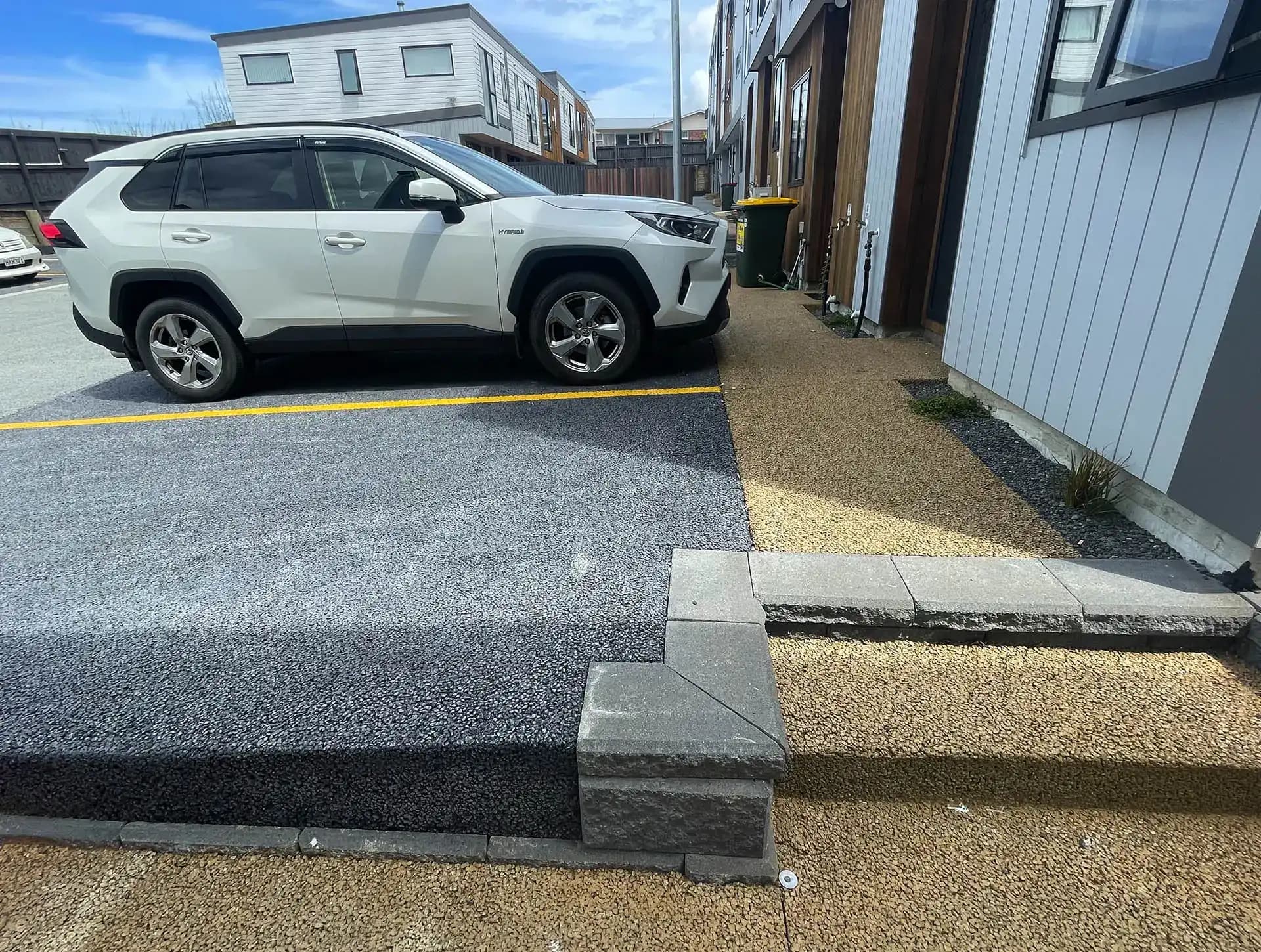
For driveways and car parks, yes. We run 20 to 25 MPa and place 25 MPa or better on trafficked surfaces, which is what AS 3727.1 asks for. It isn't the material for heavy high-speed pavement, and we'll tell you that up front rather than sell you the wrong product.
Footpaths 125mm, driveways 125 to 150mm, car parks 150 to 200mm, each over an open-graded base sized for the storage you need. The final call depends on loading, subgrade CBR and how much water the base has to hold, so we set it after we've looked at the site.
Thickness follows duty, not preference. Footpaths and light pedestrian areas go 125mm. Driveways sit at 125 to 150mm depending on vehicle loading and turning. Car parks run 150 to 200mm. All of it goes over an open-graded stone base, and that base is doing two jobs at once: it spreads the load and it stores the water. Depending on the build-up we design, the base holds somewhere between 28 and 56 litres per square metre, which is often enough to take a detention tank off the drawings.
Below that, the subgrade has to earn its keep. We want CBR 5 or better as a minimum. Softer than that and we're either improving the subgrade or redesigning the profile, because a pervious pavement is only as good as what it sits on. Aggregate sizing shifts by state as well: 10mm through NSW, Queensland, South Australia and Western Australia, 7mm in Victoria and Tasmania. That's local supply and finish expectations, not a compromise on performance.
If you're the engineer, builder or landscape architect carrying this on a drawing set, talk to us early. We'll work through thickness, base storage, subgrade treatment, edge restraint and discharge with you, and give you the detail you need to specify it properly. The same crews then pour it, at over 500 m² a day on an open site. More on the system itself on our permeable concrete page.
We will assess the site, size the base and give you a build-up you can specify or build from. Free assessment, no obligation.