
No puddles, no sheet flow
Water goes down through the slab where it lands instead of running across the surface to the kerb or the garage door.
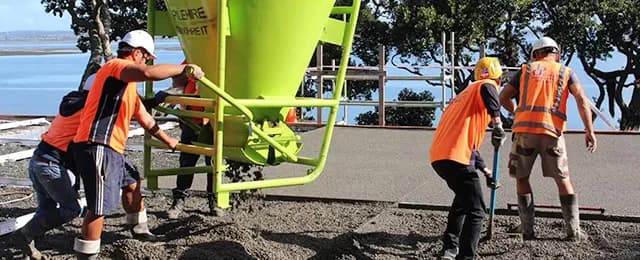
We pour it on site. It is concrete, not pavers, and rain passes straight through the slab into a stone base below. The mix is made at our Mitcham factory in Melbourne's east.
Permeable concrete is a no-fines mix. Cement, water and coarse aggregate, with the sand left out. That leaves a matrix of interconnected voids running through the slab, typically 20 to 26 per cent of the volume. Conventional concrete sits at 3 to 5 per cent. Rain lands on the surface, passes through those voids and reaches an open-graded stone base underneath.
It arrives on a truck and goes down as a continuous pour. No units to lay. No joints filled with grit across the area. If you have been pricing permeable pavers, that is a different product from a different trade, and we set out the comparison in permeable concrete vs pavers.
Infiltration through the surface commonly runs between 80 and 720 litres per minute per square metre. The low end of that range already takes more water than any Melbourne storm will land on it.
It is the first thing people ask. Driveways, footpaths and car parks are typically specified in the 20 to 25 MPa band, and the wider class runs about 5 to 25 MPa. That carries cars, utes and light commercial vehicles at driveway speeds. What we will not put it under is high-speed heavy traffic, and we say so before anyone prices a pour. Strength is a design input. It gets set in the mix and the base, not discovered afterwards.
Melbourne soils change block to block. Reactive clay runs through the eastern suburbs. Heavy basalt soils sit west of the city. Both drain slowly.
So on tight clay we do not pretend the water soaks away. The open-graded base is designed as a storage layer with a controlled outflow. The pavement still lifts the water off the surface, still cuts the peak flow leaving the property, and still keeps puddles off the driveway. It meters the water out instead of pushing it into ground that will not take it.
Where the ground does drain, we let it. On sandier pockets and better profiles, more of the water goes straight into the subsoil and the base gets shallower. That call belongs to the site, not to a rule of thumb, which is why we want to stand on the block and look at levels, fall and soil before anyone talks square metres.
Victorian planning schemes ask new development to meet best practice stormwater standards under Clause 53.18. Councils want that shown with a score.
The STORM tool was retired in October 2025. BlueFactor now does that job for small residential sites up to about a hectare, and MUSIC is still used for larger or more complex proposals. Permeable paving counts as a treatment measure in those assessments, which is why it turns up on so many townhouse and single-dwelling applications across Melbourne. There is more detail in our BlueFactor explainer.
Site coverage is the other lever. Plenty of Melbourne councils cap impervious area or set a minimum permeable area per lot. A permeable surface can bring a site back inside the cap without shrinking the build or burying a detention tank in the front yard.
We are not your planner, and we will not promise you a council outcome. We work alongside your building designer, hydraulic consultant or civil engineer and tell them exactly what the pavement and base will do.
Bring the drainage plan, the soil report if you have one, and a rough area. We will look at the block and tell you what we would pour, what base it needs, and when permeable is the wrong answer.
Water goes down through the slab where it lands instead of running across the surface to the kerb or the garage door.
Permeable paving is a recognised treatment measure, so it counts in a BlueFactor or MUSIC assessment for Clause 53.18.
Where a scheme limits sealed area, a permeable surface can free up paving the plan could not otherwise fit.
Water and air still reach the root zone, which is why it is one of the few pavements allowed in a tree protection zone.
Clogging is the real failure mode. Not cracking, not collapse. Sediment, leaf litter and airborne dust slowly fill the surface voids, and a neglected surface in a dirty setting can lose most of its infiltration within a few years.
The fix is a sweep. Vacuum sweeping, quarterly to annually depending on how much dirt the site sees. If it has been left too long, a pressure wash followed by vacuuming recovers most of the lost capacity. Never a rotary broom. A broom pushes debris down into the voids and makes the problem worse.
Design does the rest. Keep garden beds and unstabilised soil from draining onto the pavement, restrain the edges, and stabilise bare ground upstream while the build is still running. Do that and 30+ years is a fair expectation.
Exposed aggregate, oxide colours and our Ultracon resin finishes all read as finished surfaces rather than back-of-house paving. Colour and aggregate choice get locked in before the pour, so it is worth raising early.
We walk the site. Soil, fall, levels, catchment, vehicle loads and whatever the council has asked for. That is the free part, and it is what everything else is built on.
We set slab thickness, mix and base depth around the site. On clay the base is sized as storage with a controlled outlet. On free-draining ground it can be shallower.
Spoil out, stone base in, compacted in layers. Edges are restrained so nothing migrates and nothing washes in from the garden.
Mix batched at Mitcham to the spec, placed in a continuous run and compacted while it is workable, so the paste coats the aggregate without closing the voids.
Covered curing, then edges, transitions and the chosen finish. You get a sweeping schedule matched to how much sediment your site actually sees.

APC recently completed works in partnership with many local Australian business, taking part in what has become an amazing project. What began as a conversation has...
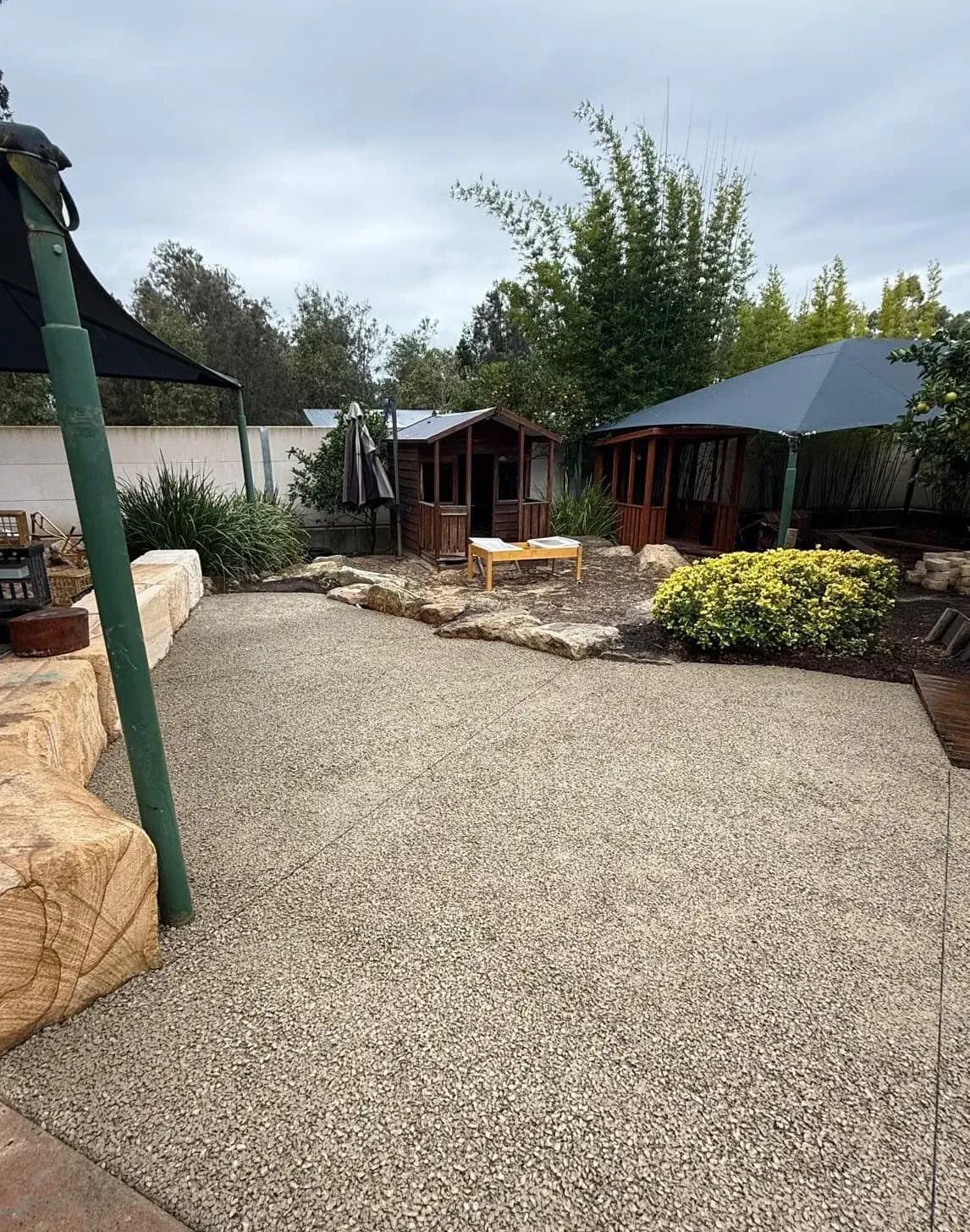
APC recently completed an Early Learning Centre project in Warwick that exemplifies our commitment to delivering innovative and sustainable permeable concrete solut...
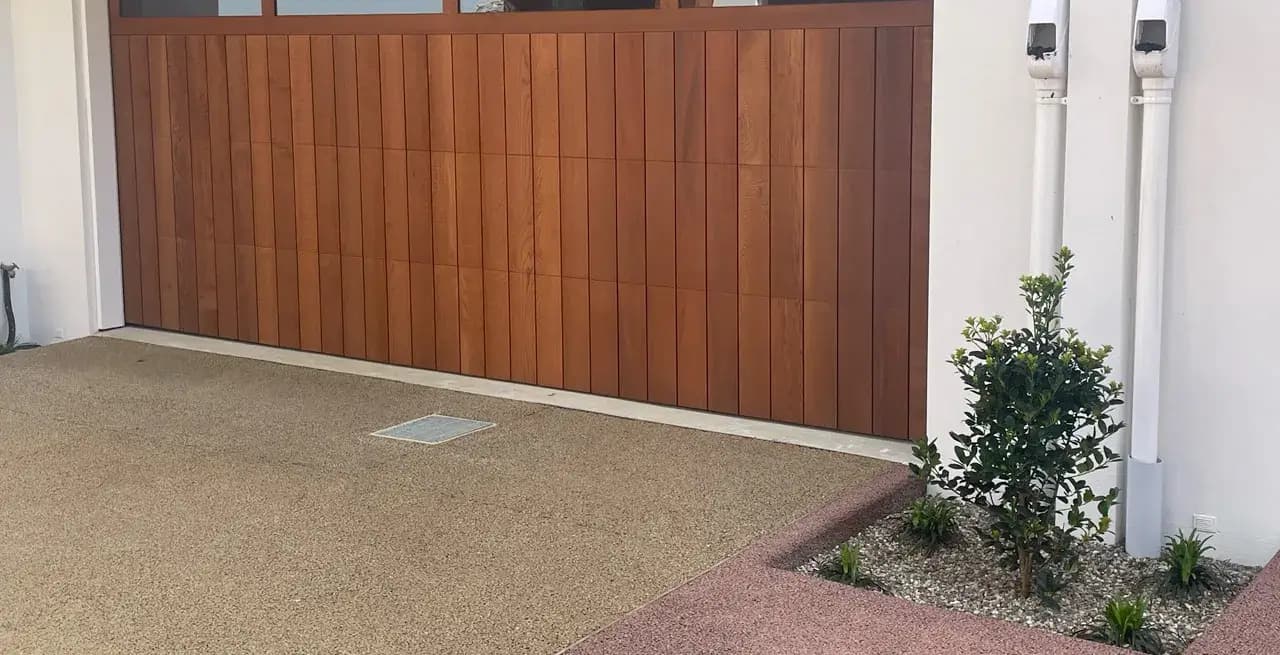
APC recently completed a project as driveway specialists, delivering a stunning permeable concrete solution that seamlessly integrates with the modern, warm aesthet...
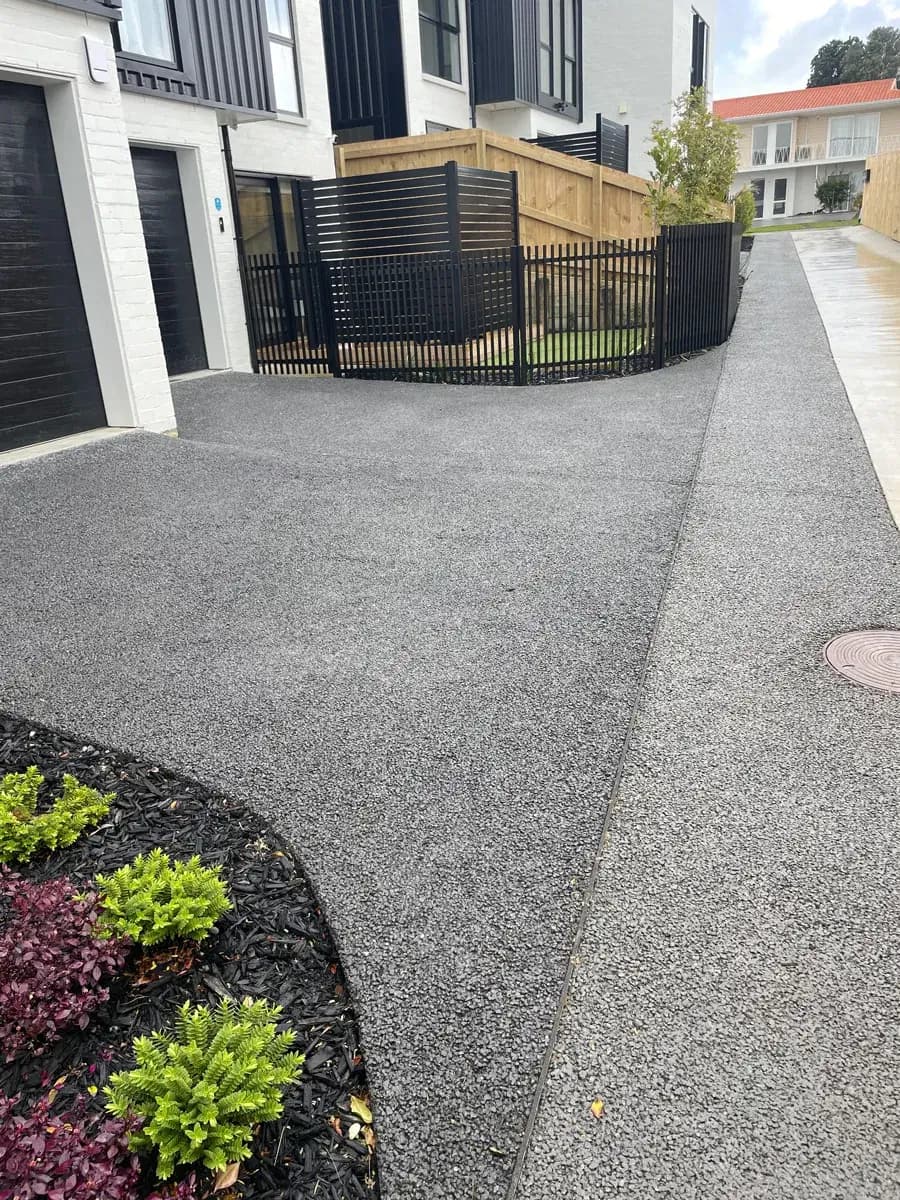
APC recently completed a project as driveway specialists, delivering top-tier permeable concrete solutions that seamlessly integrate durability, aesthetics, and env...
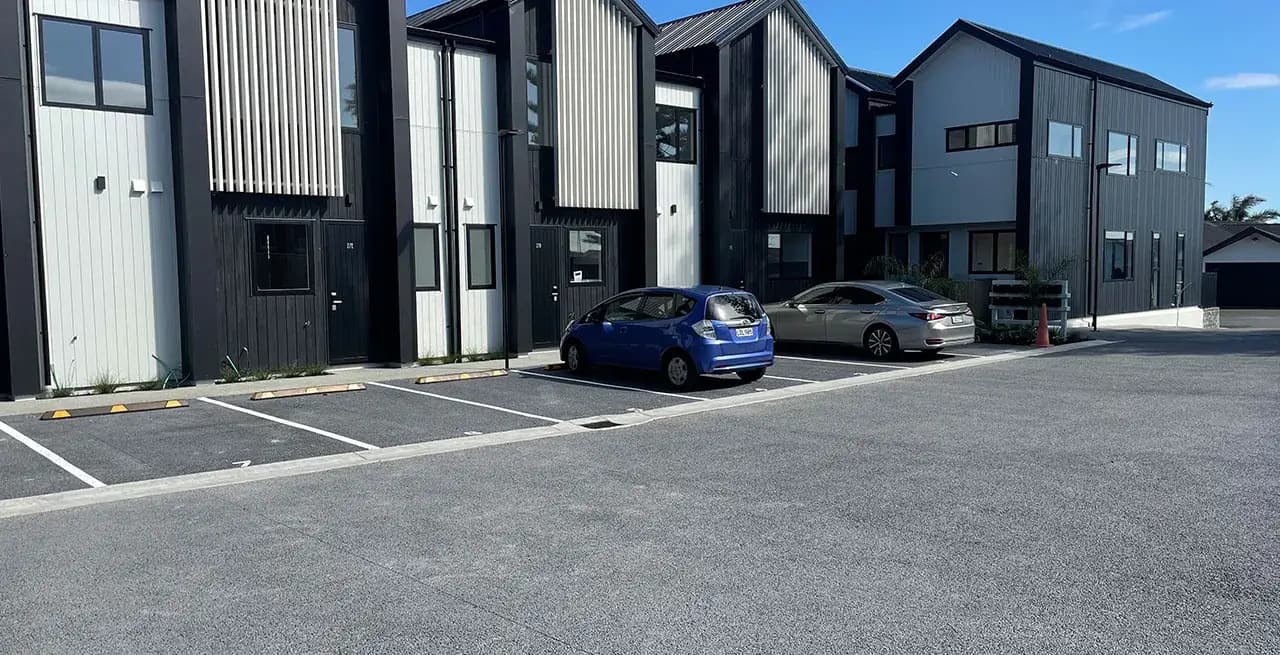
APC recently completed a commercial parking lot project, showcasing our expertise in delivering innovative permeable concrete solutions that enhance functionality,...
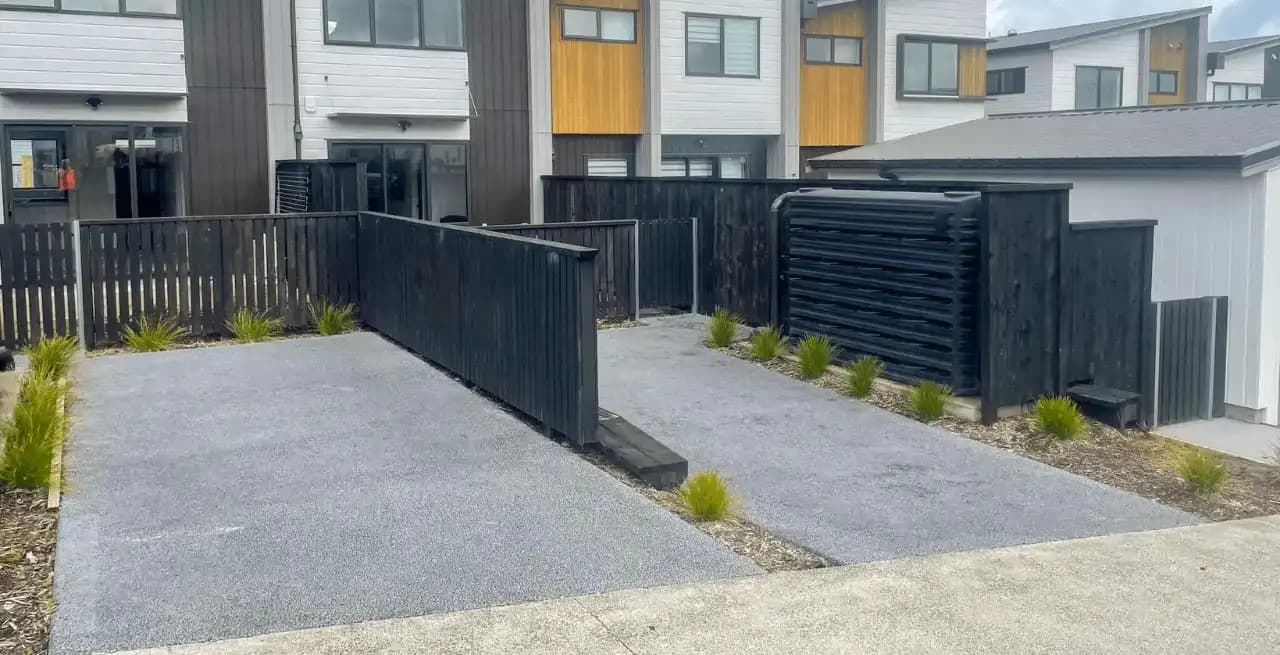
APC Residential Driveway Project Details APC recently completed a residential driveway project that exemplifies our commitment to delivering innovative and sustainable permeable co...
Both. Permcon is our own permeable concrete system. We design the mix, manufacture it at Mitcham and install it with our own crews. That matters because the paste dose and the compaction on site are the same conversation, and splitting them across two businesses is where permeable surfaces go wrong.
Permeable paving is a recognised stormwater treatment measure, so it usually helps a Clause 53.18 assessment and can help with impervious area caps. Every council words its requirements differently, so we work with your designer or hydraulic consultant rather than promise an approval before the site has been looked at.
Yes, but the design changes. On reactive clay the open-graded base is built as a storage layer with a controlled outflow rather than relying on soakage. The surface still drains, the peak flow still drops, and the water leaves slowly instead of all at once.
No. Pavers are units laid by a paving trade, with jointing aggregate between them and the drainage happening in those joints. Permeable concrete is one continuous pour with the voids inside the material. We do not sell pavers. The full comparison is on our permeable concrete vs pavers page.
They will if nothing is done. Vacuum sweeping quarterly to annually keeps the voids open, and a pressure wash followed by vacuuming brings back most of the capacity if it has been left. Rotary brooms are the one thing to avoid.
Service vehicles, delivery vans and waste trucks can be designed for by adjusting the mix, slab thickness and base build-up in the loaded areas. High-speed heavy traffic is outside what we recommend, and where a site has a genuine heavy-duty area we will pair permeable with a conventional slab where it belongs.
It depends on the area, the access, the base depth the soil demands and the finish you want. We will not throw a rate at you over the phone. The on-site assessment is free, and the price comes after we have seen the ground.
One of our team will come out, look at the soil, the fall and the drainage, and tell you straight whether permeable concrete suits the job. Melbourne metro and regional Victoria.
A few quick questions about your site. You get a straight answer about whether permeable concrete is the right call, including when it isn't, before anyone asks for your details.
Get in touch today to discuss your project. We're here to help with all your permeable concrete requirements, from a single driveway to major civil infrastructure.