What sits on it daily
Occasional overflow parking suits loose and cellular surfaces; daily vehicles push you toward a bound, trafficable surface.
There are five or six ways to build a surface that lets rain through, and every one of them is the right answer somewhere. We make one of them. Here is a straight read on all of them, what each does well, and why the poured surface tends to win once daily traffic is involved.
Every permeable surface achieves the same thing at the top: rain enters the surface instead of running off it, then a stone base holds the water and lets it infiltrate or discharge slowly. The differences are not really about drainage. They are about what the surface does after five years of being driven on, walked on, swept and rained on.
Loose and cellular surfaces, gravel and grids, are cheap to build and drain well on day one. They rely on the fill staying where it was put. Jointed systems, permeable pavers, drain through the gaps between units and rely on those gaps staying clean and the units staying level. Bound surfaces, porous asphalt and poured permeable concrete, drain through the material itself and have nothing loose in them at all.
That is the sorting question. If the surface is occasional-use, flat, and lightly loaded, the cheap options are genuinely fine and we will say so. If it carries vehicles or foot traffic every day and has to look presentable in year ten, the case for a poured surface gets strong quickly: 20 to 26 per cent voids fixed in the material, 130 to 170 litres per minute per square metre, 20 to 25 MPa trafficable to AS 3727.1, and a 30 year plus design life with nothing to re-level or top up.
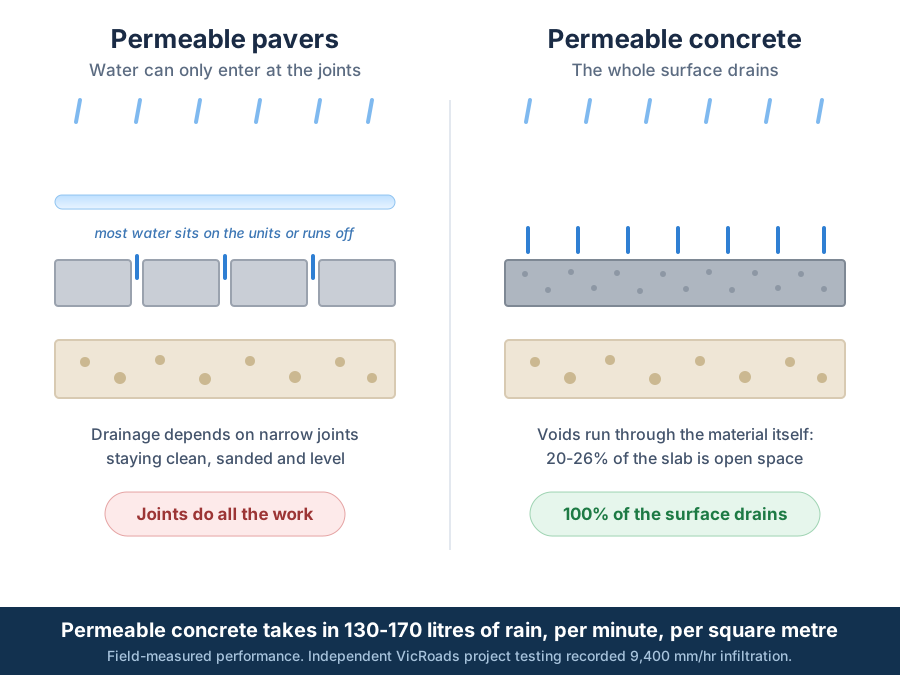
The surface takes in 130 to 170 litres of rain per minute, per square metre, through voids that run through the material itself, 20 to 26 per cent of the slab by volume. Independent testing on a VicRoads project measured 9,400 millimetres per hour.
Below the slab, an open-graded stone base stores the water and lets it soak or release at a controlled rate, holding 28 to 56 litres per square metre inside the system.
A few quick questions about your site. You get a straight answer about whether permeable concrete is the right call, including when it isn't, before anyone asks for your details.
Get in touch today to discuss your project. We're here to help with all your permeable concrete requirements, from a single driveway to major civil infrastructure.
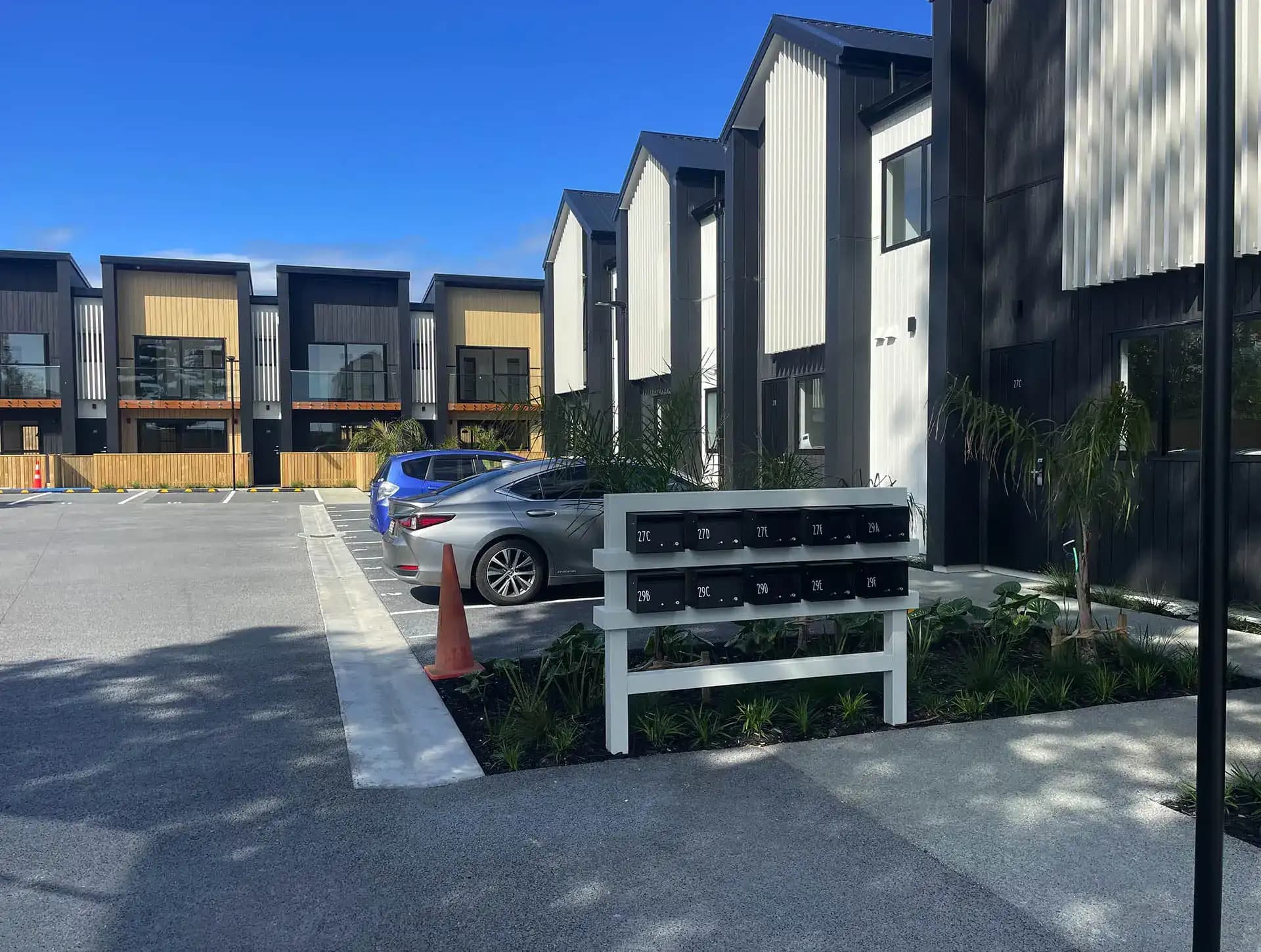
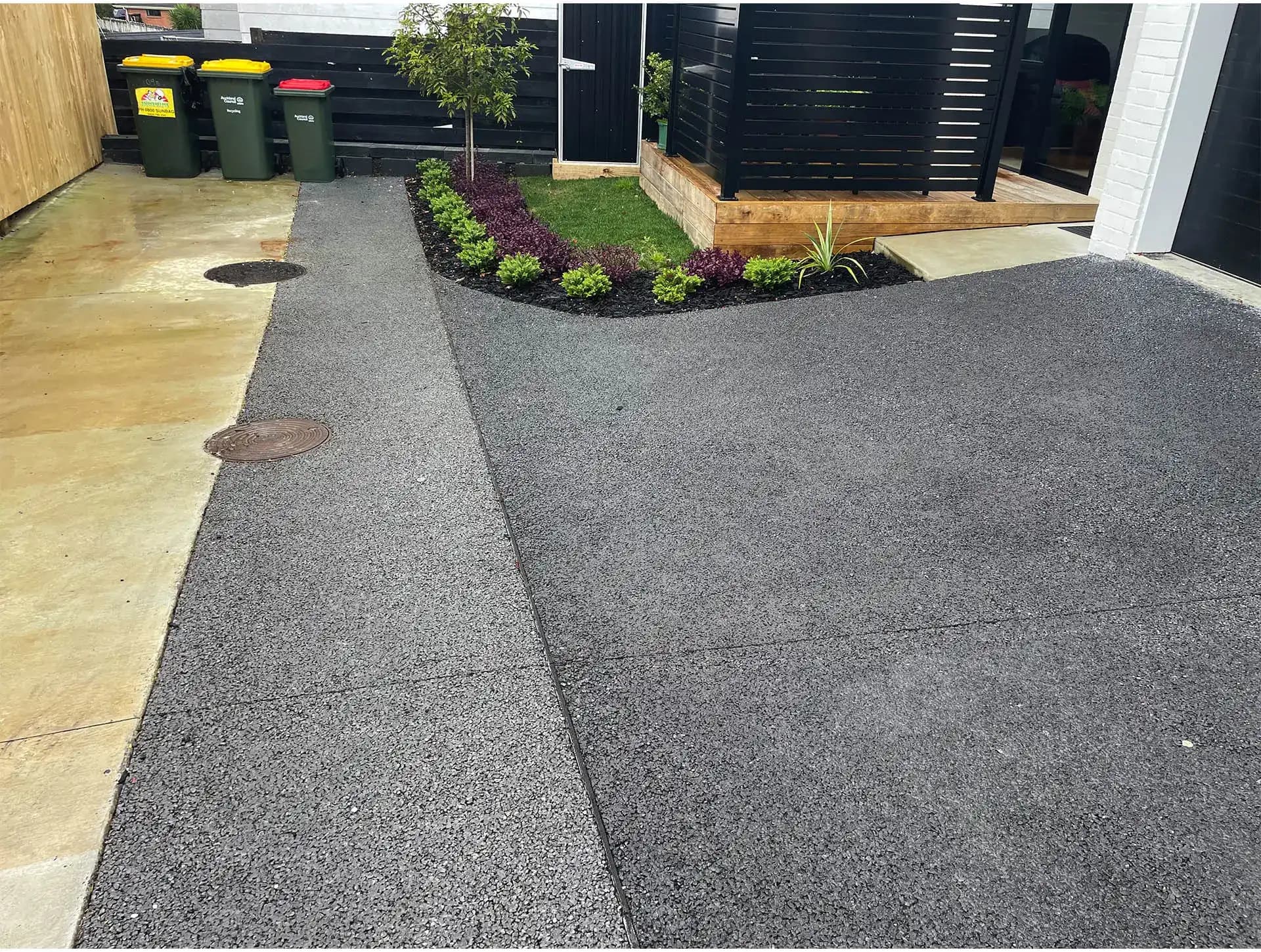
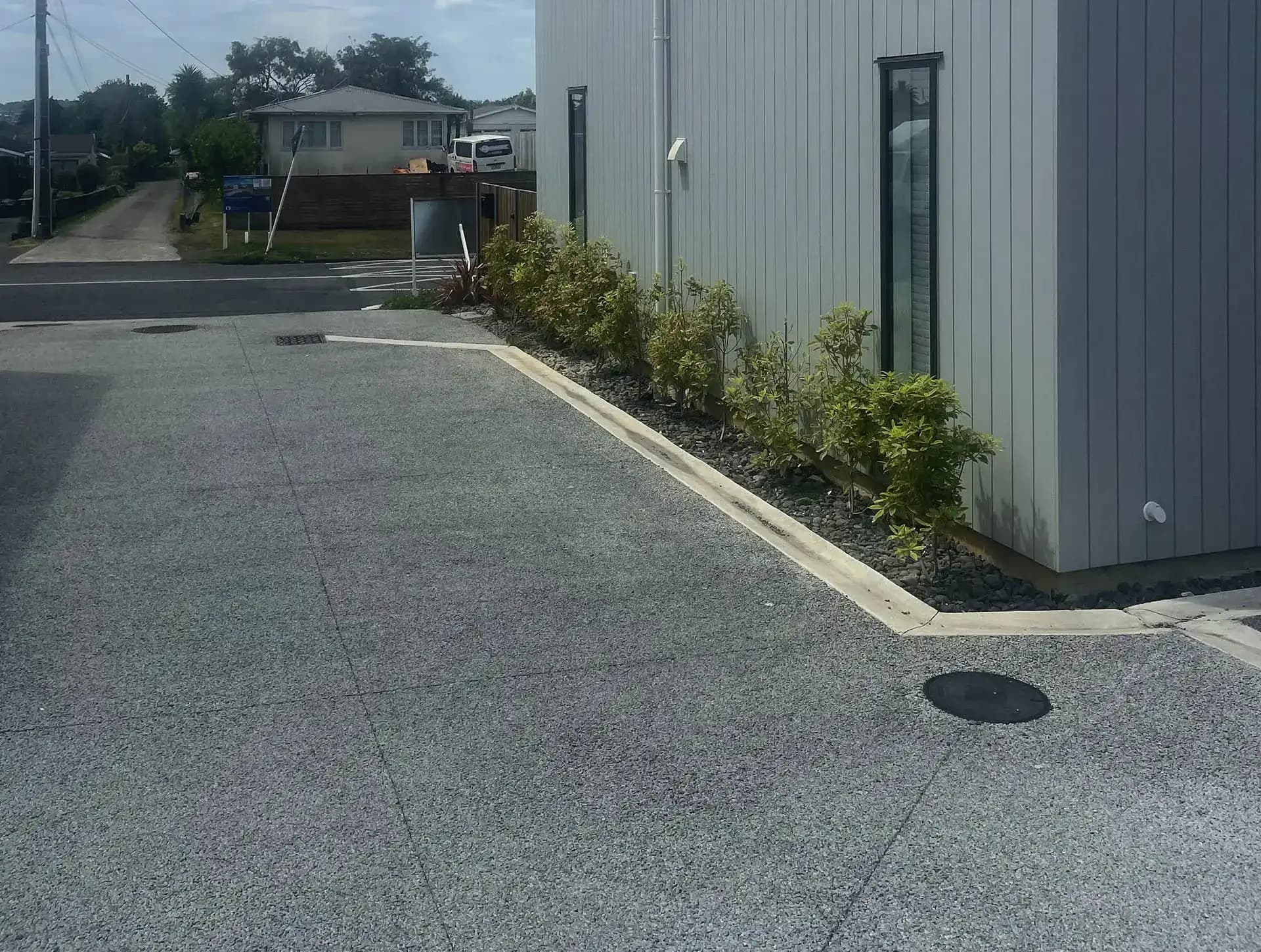
Occasional overflow parking suits loose and cellular surfaces; daily vehicles push you toward a bound, trafficable surface.
Loose fill and open joints need topping up and weeding; a poured surface needs a periodic vacuum sweep and nothing else.
Gravel migrates and grids show through worn turf; a continuous pour looks in year ten much as it did in year one.
Loose surfaces are hard work for wheelchairs, prams and trolleys; a firm P4-rated surface is not.
On CBR 5 and above most systems can infiltrate; on tight clay the base has to be designed as storage and metered, whichever surface sits on top.
If you need to open the surface regularly, segmental units win, because you lift and relay them.
A permeable surface is any pavement built so rain passes through it rather than running off. The surface layer is only half the system. Below it sits an open-graded stone base whose void space stores water, typically 28 to 56 litres per square metre in our builds, and from there the water either infiltrates into the subgrade or leaves through a slow controlled outlet. That combination is why permeable surfaces are recognised water sensitive urban design assets: they infiltrate, they detain, and they filter, catching roughly 70 per cent of the sediment and pollutants that would otherwise wash into a waterway. A well-built system returns a runoff coefficient around 0.3.
Councils across Australia are the reason most people find this page. Impervious-area caps, WSUD conditions on new developments and stormwater requirements on new driveways and extensions all push toward a permeable surface, and reducing the impervious footprint can remove the need for a detention tank entirely.
Loose gravel drains freely and costs the least, and it suits rural entries and overflow parking where nobody minds raking it. Plastic and concrete grid pavers hold gravel or turf in cells and are a good answer for fire access lanes and occasional-use parking bays, though daily wheels wear the fill out of the wheel lines. Segmental permeable pavers drain through widened joints and are the right call for small areas, DIY work, laid-pattern designs and surfaces that must lift for service access. Porous asphalt is a bound permeable surface that places fast at civil scale and makes sense on large car parks where a black finish is acceptable. Resin-bound gravel gives a smooth decorative porous surface and is a different product class again, well suited to light-traffic paths and courtyards. Poured permeable concrete is a no-fines cementitious pavement with the voids inside the material.
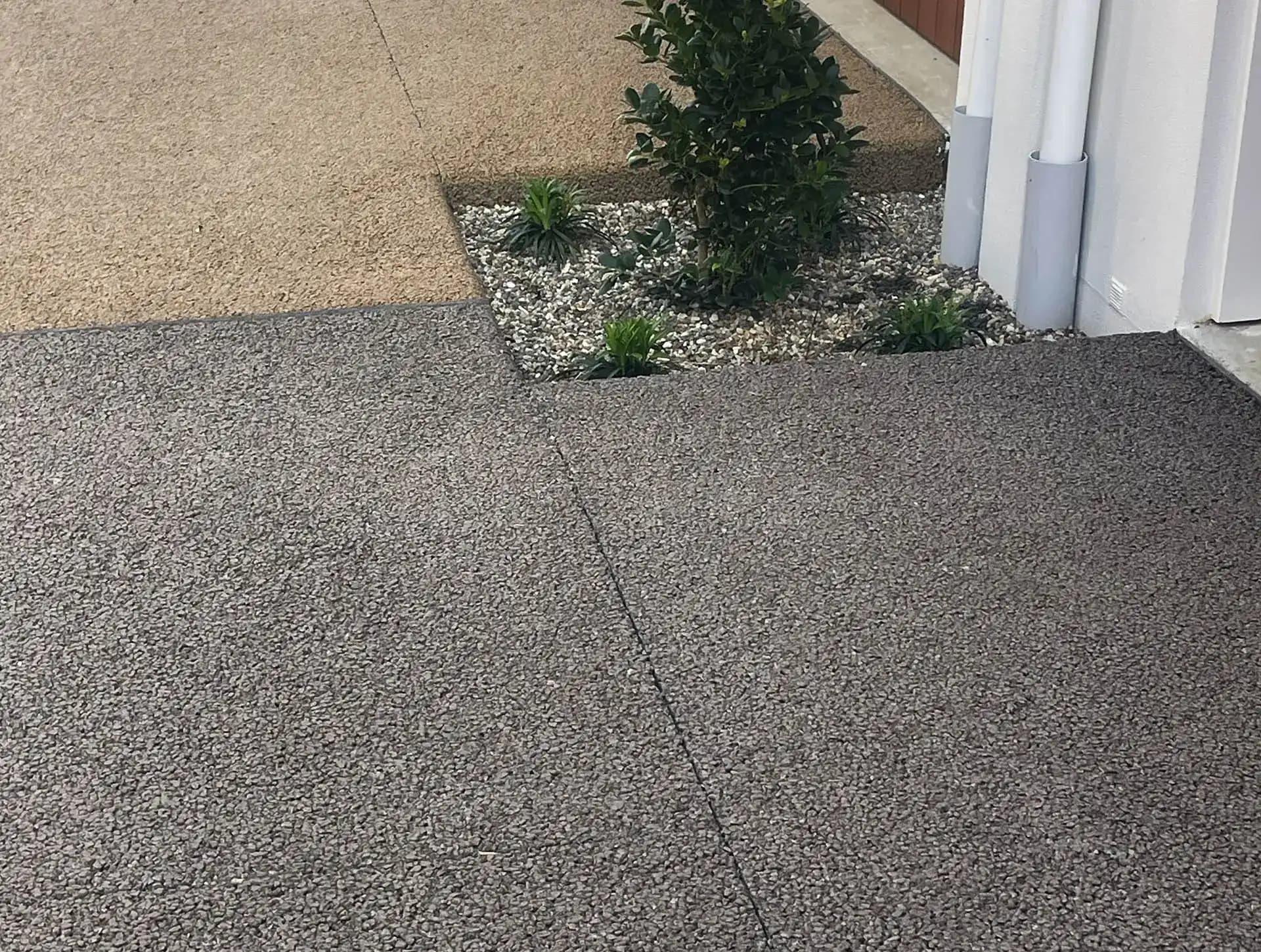
Two properties do the work. The voids are structural, formed by leaving the sand out of the mix and dosing the paste to coat each aggregate particle without sealing the gaps between them, so 20 to 26 per cent of the material is interconnected void and nothing can compact them shut. And the surface is continuous, so there are no units to settle, no joints to silt or weed, and no fill to migrate. Infiltration is 130 to 170 litres per minute per square metre, measured at 9,400 millimetres per hour under VicRoads testing, across the entire area rather than a narrow open band.
Structurally it is a pavement. Trafficable mixes run 20 to 25 MPa to AS 3727.1, higher where an engineer specifies it, with a P4 slip rating wet or dry and a 30 year plus design life. Aggregate is 7 mm in Victoria and Tasmania and 10 mm in New South Wales, Queensland, South Australia and Western Australia.
Every permeable surface clogs if it is neglected, and every one of them can be kept open cheaply. Keep unstabilised soil and garden beds from washing across the surface, edge it, and schedule a vacuum or regenerative-air sweep suited to how much litter and grit lands on it. If capacity has already dropped, a pressure wash followed by vacuuming recovers most of it. Never use a rotary broom on any permeable surface, because it drives the debris down into the voids or joints rather than lifting it out.
Tell us what the surface has to carry, what the council is asking for and what the ground is like, and our estimator will give you a straight recommendation. If a grid or a paver suits your job better than a pour, we will say so. Call 1300 010 499.