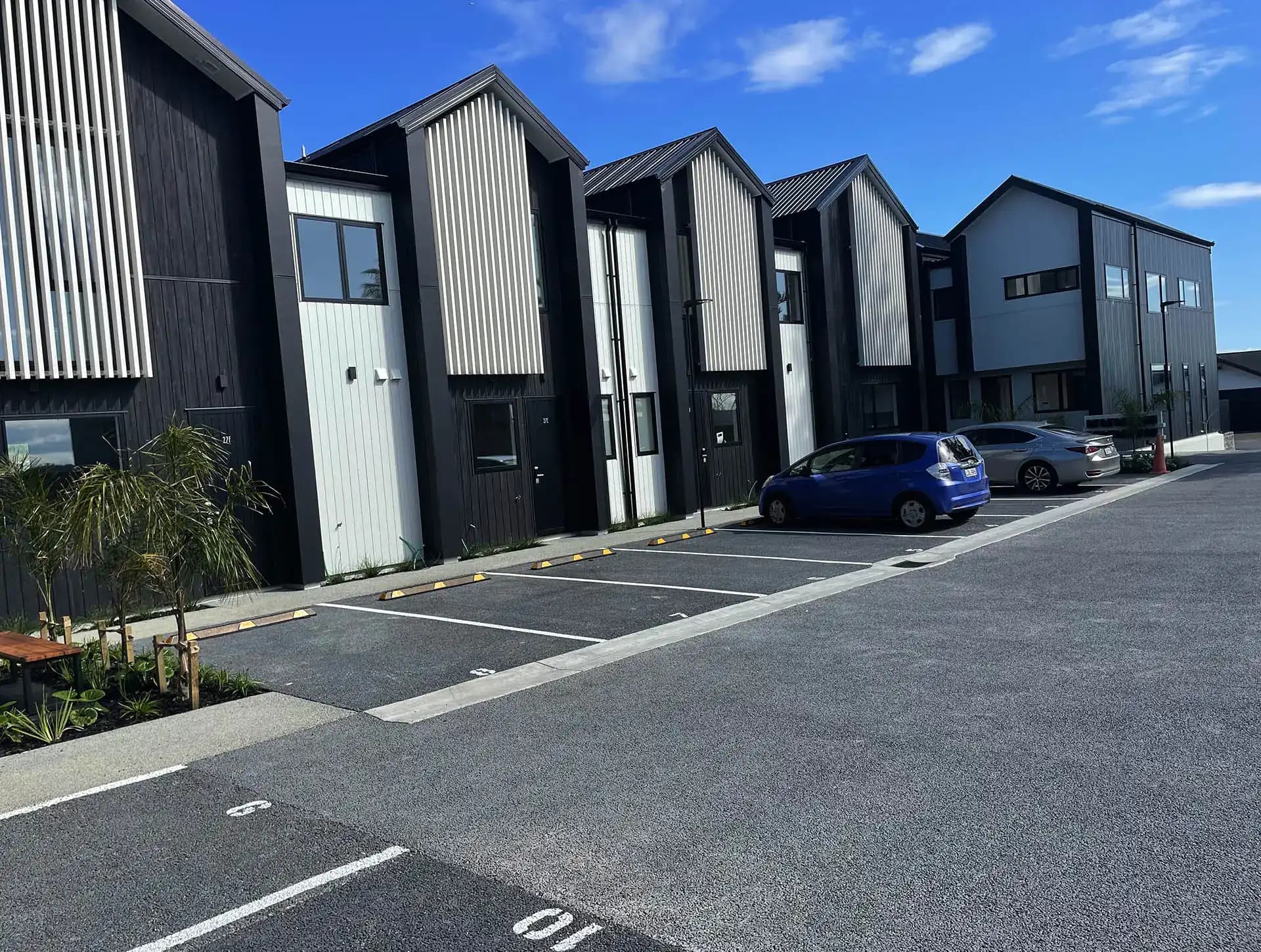
Less volume at the pit
Water is held in the base and released slowly, which can take pressure off an OSD tank and the pipes downstream.
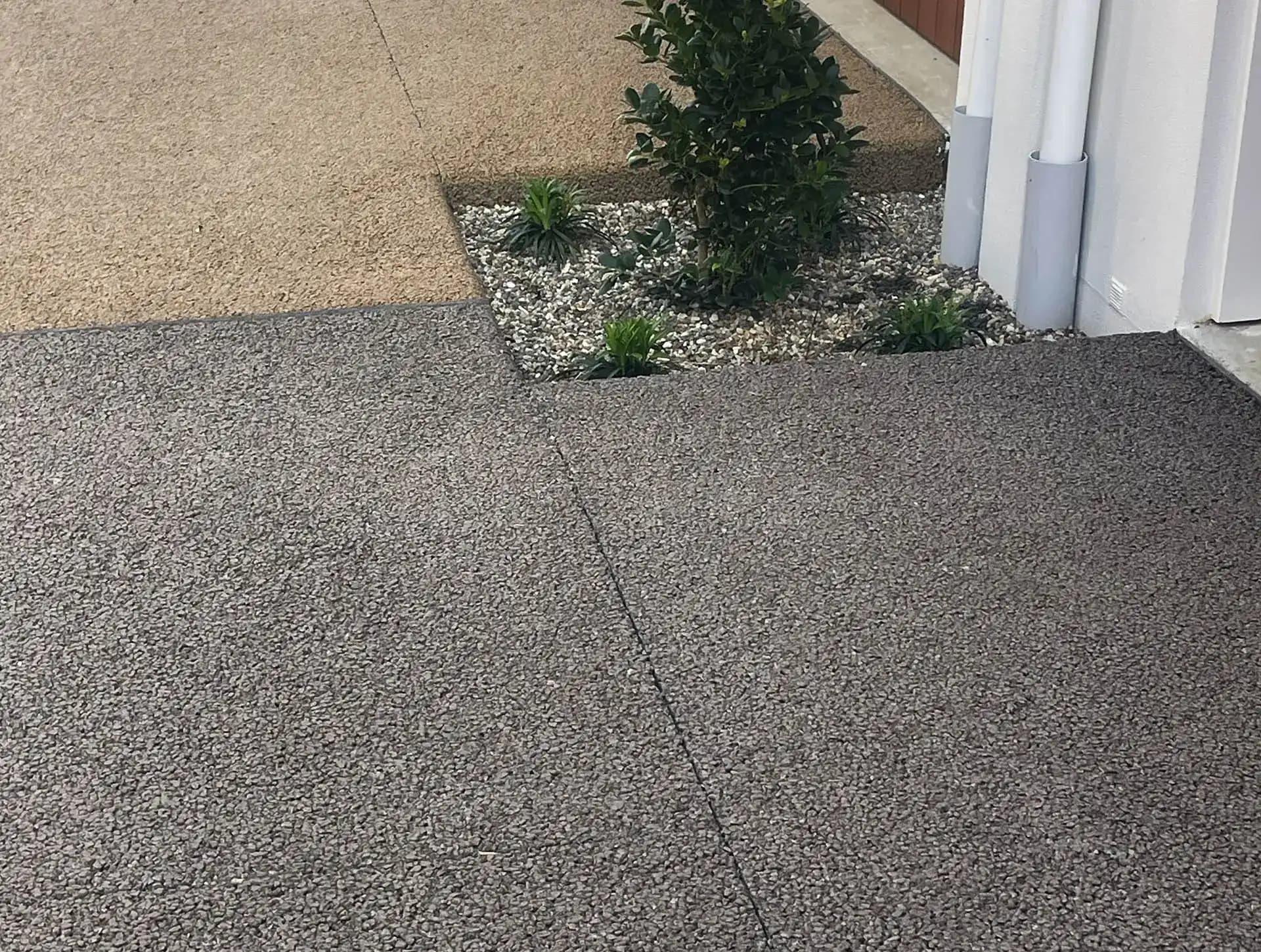
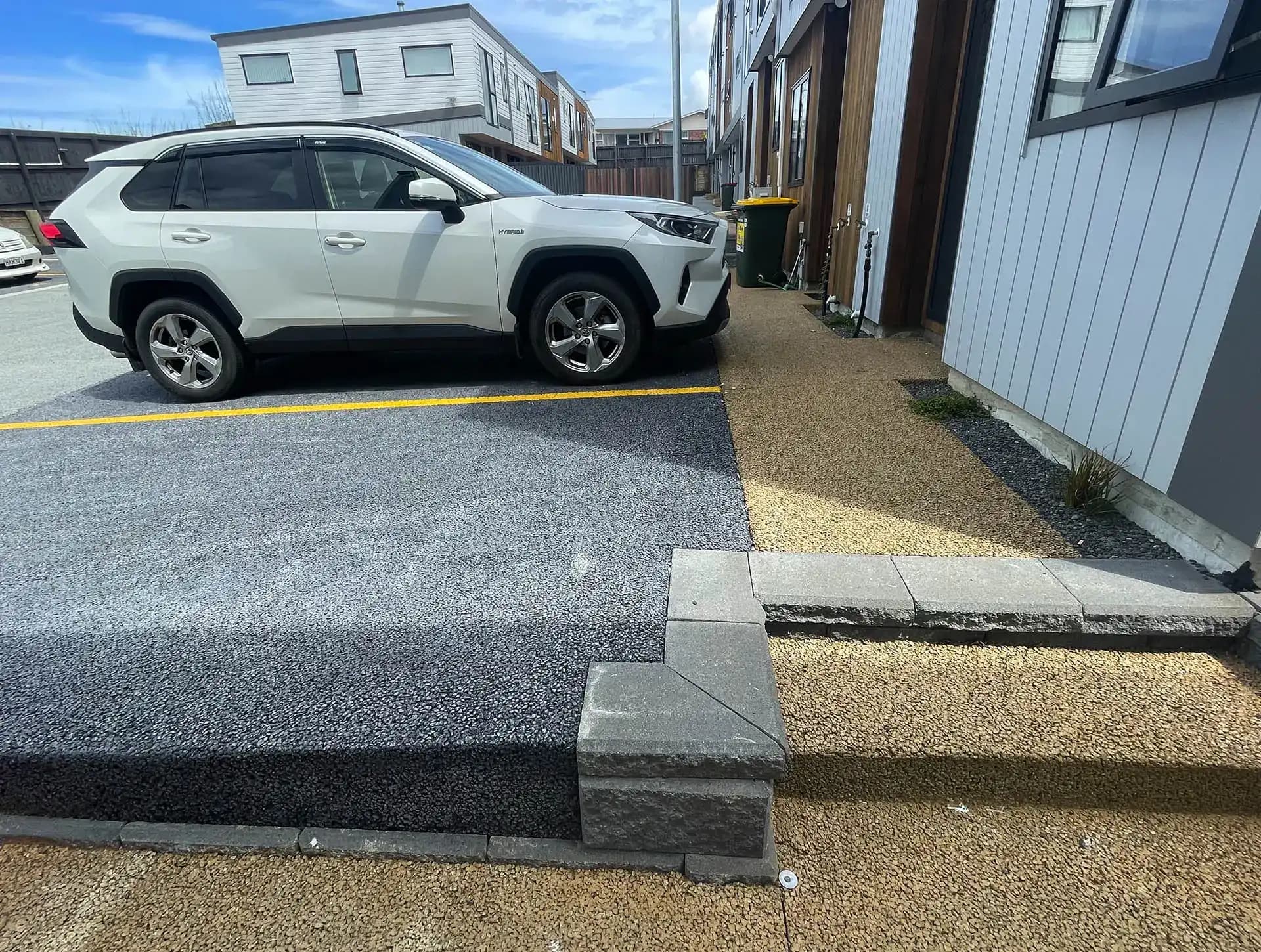
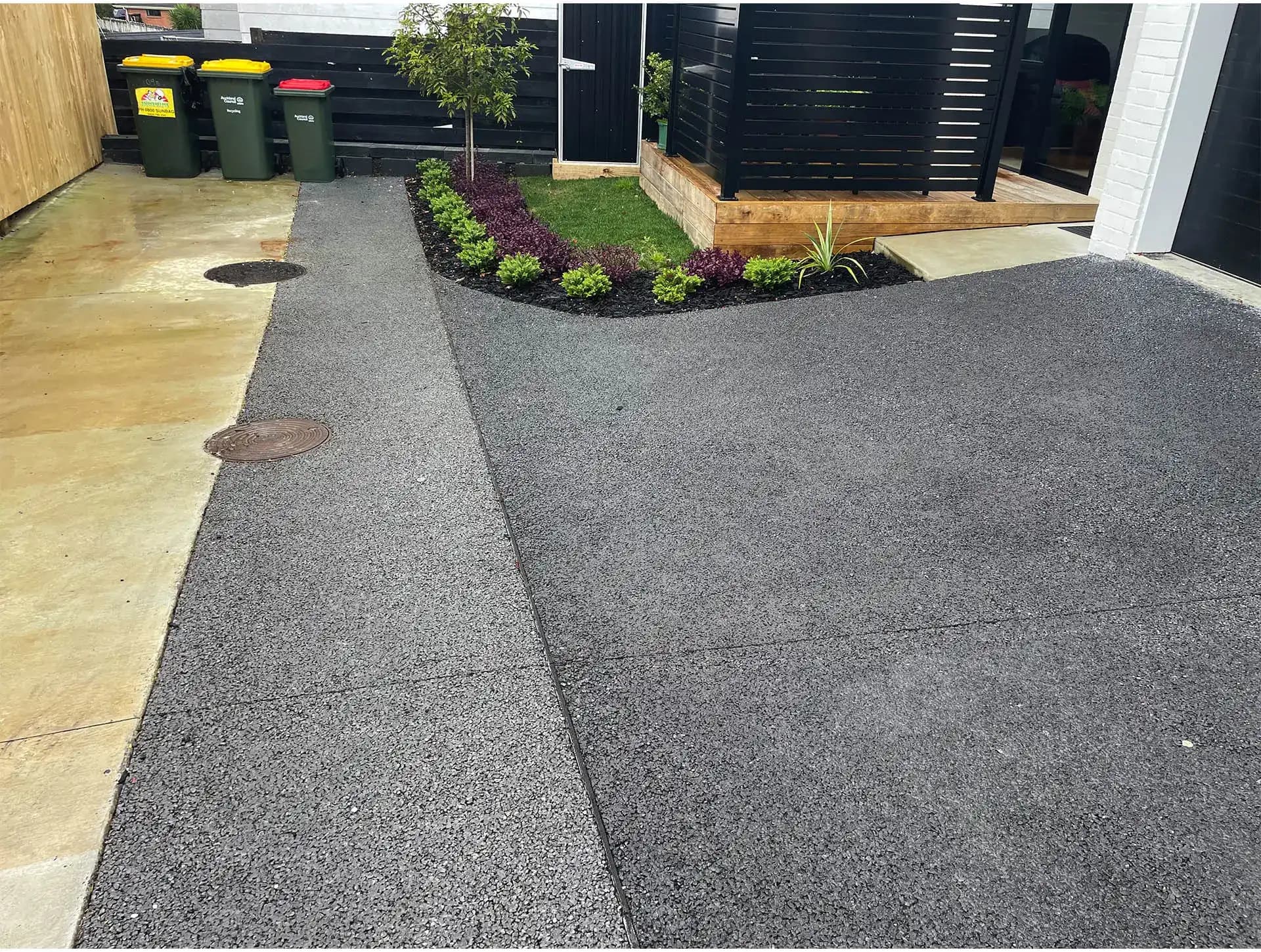
We pour it on site. It is concrete, not pavers, and rain passes straight through the slab into a stone base that holds it and lets it go slowly.
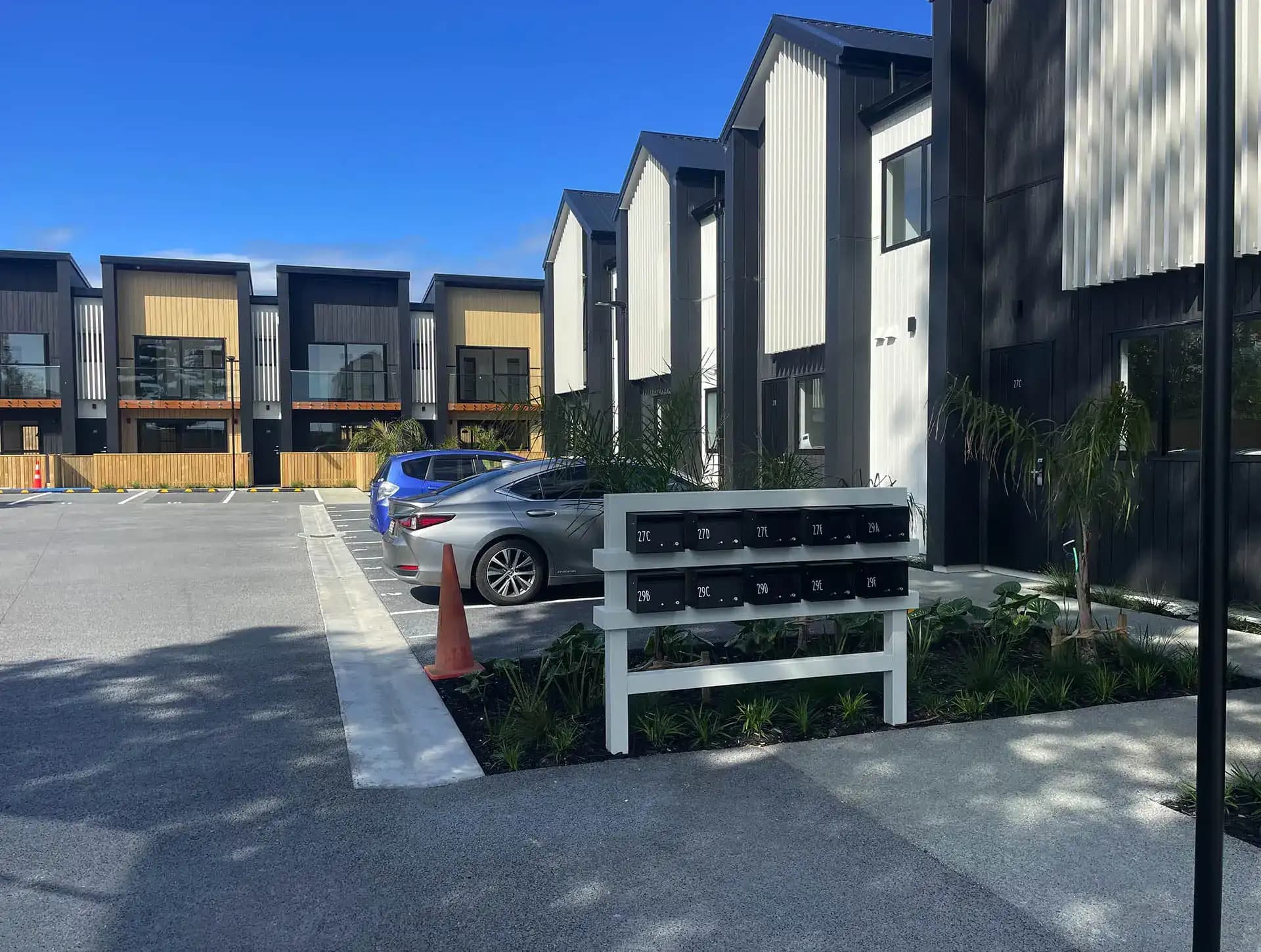
Water is held in the base and released slowly, which can take pressure off an OSD tank and the pipes downstream.
Site coverage and landscaped area conditions bite hardest on dual occupancies. A permeable driveway helps the arithmetic.
Short heavy bursts drain through the surface instead of sheeting across it toward the garage or the neighbour.
Water and air reach the root zone, so it is one of the few pavements that can go inside a tree protection zone.
A few quick questions about your site. You get a straight answer about whether permeable concrete is the right call, including when it isn't, before anyone asks for your details.
Get in touch today to discuss your project. We're here to help with all your permeable concrete requirements, from a single driveway to major civil infrastructure.

We look at soil, fall, levels, catchment, loads and the council conditions already sitting on the job. No charge, and no square metre rate until we have done it.
Slab thickness, mix and base depth get set around the site. On shale and clay the base is storage with a controlled outlet. On sandstone, more of it infiltrates.
We give your hydraulic consultant and civil engineer the numbers they need for the DCP response, rather than leaving them to guess at what the pavement does.
Open-graded stone base compacted in layers, edges restrained, then the mix placed in a continuous run and compacted while it is workable.
Covered curing, edges and transitions finished, and a sweeping schedule matched to how much sediment the site actually collects.
Sometimes it shrinks the tank. Rarely does it remove the condition on its own. Permeable concrete cuts the volume and slows the flow arriving at the pit, and your hydraulic consultant decides how that changes the OSD sizing under your council's DCP. Anyone promising you a specific outcome before seeing the site is guessing.
No. Our factory and head office are in Melbourne, and NSW work is scheduled through our national team with crews travelling to site. Sydney metro, the Central Coast, Newcastle and Wollongong are routine for us. We would rather tell you that than imply a yard around the corner.
Yes, with the base designed as storage rather than soakage. Clay does not infiltrate quickly and we do not pretend otherwise. The open-graded base holds the water and a controlled outlet lets it go slowly, so the surface still drains and the peak flow still drops.
No. Pavers are individual units laid on bedding aggregate with jointing stone between them, and the water goes through the joints. Permeable concrete is a single continuous pour with the voids inside the material. We do not supply pavers, and our comparison page says plainly where pavers are the better choice.
BASIX deals with water and thermal performance for housing and sits alongside your drainage design rather than replacing it. Stormwater stays with the council DCP and your hydraulic consultant, which is where permeable paving does its work.
Cars, utes and light commercial traffic, yes, with the mix, slab thickness and base build-up designed for the loads. Occasional service and waste vehicles can be designed for as well. High-speed heavy-traffic pavement is where we draw the line.
It depends on area, access, base depth and finish, and on a NSW job it also depends on how the work is scheduled. We quote after the site assessment, not before. The assessment is free.
Permeable concrete is a no-fines mix. Cement, water and coarse aggregate, with the sand left out. What is left is a matrix of interconnected voids through the slab, typically 20 to 26 per cent of the volume against 3 to 5 per cent in conventional concrete. Rain passes through the surface into an open-graded stone base below.
It goes down as a continuous pour, not as laid units. There are no joints across the area and nothing to migrate under a turning wheel. If you have been quoted permeable pavers, that is a different product installed by a different trade, and we compare the two honestly on our permeable concrete vs pavers page.
Infiltration commonly runs between 80 and 720 litres per minute per square metre. Sydney rain arrives in short heavy bursts, so peak flow is the design problem rather than annual totals, and taking a driveway or car park out of the runoff equation shaves that peak instead of piping it somewhere else.
Driveways, footpaths and car parks are typically specified around 20 to 25 MPa, with the wider class running about 5 to 25 MPa. That handles cars, utes and light commercial vehicles at the speeds they move on a driveway or in a car park. High-speed heavy-traffic pavement is outside what we recommend, and we will say so rather than sell you the wrong thing.
Tell us the council, the site and the area you need covered. We will come and look, then tell you what we would build and whether permeable concrete is the right call.