Skip to content
CallBook
ISO 9001 • ISO 45001 • ISO 14001 CERTIFIED
Grass Driveways Compared

Want a Grass Driveway? Get the Green Without the Mud

You want a driveway the rain soaks into, with the garden staying green around it. Grass promises exactly that, until wheels wear tracks in it. Permeable concrete keeps the promise: every drop drains through, nothing ruts, nothing needs mowing.

Why grass driveways break their promise

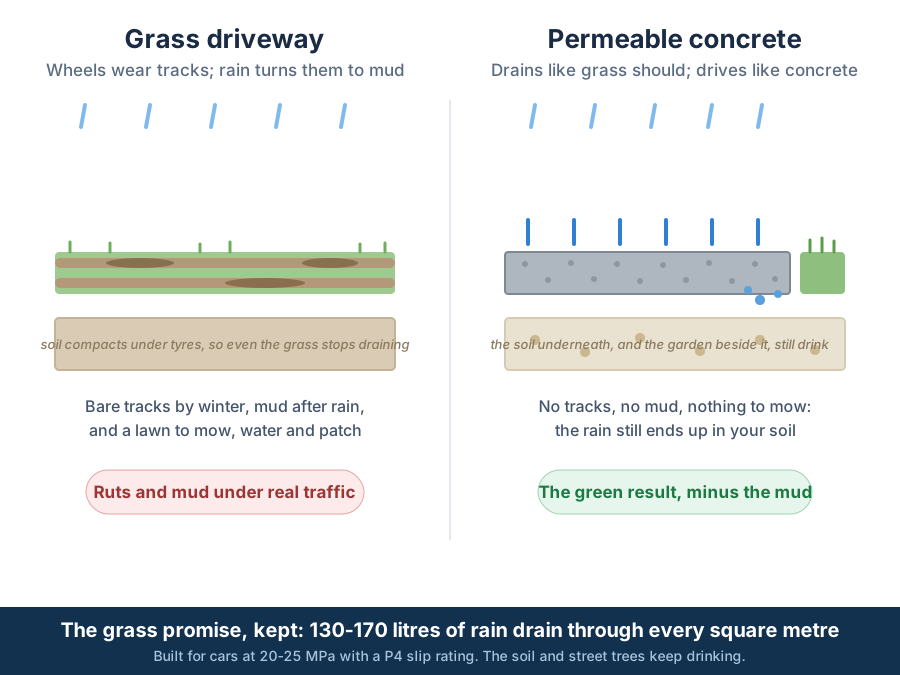
A lawn is not built to carry a car. Tyres run the same two lines every day, the soil under them compacts, and the grass along those lines thins, browns and finally goes bare. Compacted soil barely drains, so the first wet week turns the wheel tracks to mud.

Plastic grass grids slow this down but do not stop it: on a daily-use driveway the grid edges show through as the turf wears, and you still own a lawn that needs mowing, watering and patching. Most grass driveways end up as neither good lawn nor good driveway.

Why grass driveways break their promise
Grass vs permeable concrete, in the rain

Grass vs permeable concrete, in the rain

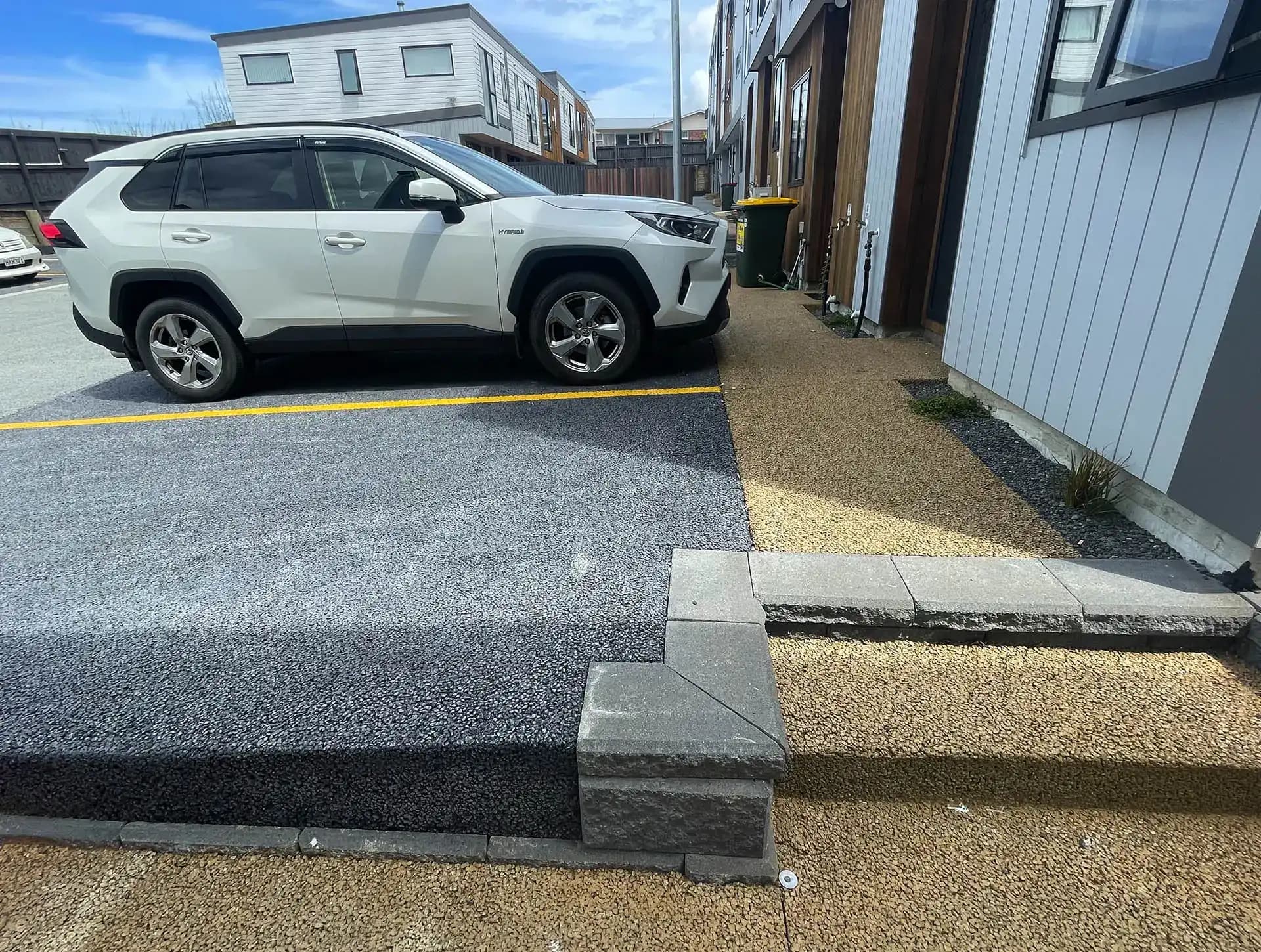
Everything you wanted from grass was really about the water: rain soaking in where it lands instead of flooding off a sealed slab. Permeable concrete does that job better than a lawn under traffic, 130 to 170 litres per minute through every square metre, because its voids are fixed in the material and can never be compacted shut by tyres.

And the water still ends up in your soil. The garden beside the driveway, and any street tree near it, keep drinking exactly as they would beside grass.

20-26%
Void content inside permeable concrete, against 3-5% in conventional concrete
130-170
Litres per minute, per square metre, a permeable concrete surface can take in
20-25 MPa
Typical permeable concrete strength band for driveways, paths and car parks
30+ yrs
Design life with routine maintenance
Will it work at my place?

Check if permeable concrete suits your site

A few quick questions about your site. You get a straight answer about whether permeable concrete is the right call, including when it isn't, before anyone asks for your details.

Site check · 1 of 4

What is the ground like?

A rough answer is fine. We confirm it on site.

Enquire now

Tell us about your project

Get in touch today to discuss your project. We're here to help with all your permeable concrete requirements, from a single driveway to major civil infrastructure.

📞Call us1300 010 499✉️Email us[email protected]
📍Head officeFactory 7, 25-39 Cook Road, Mitcham VIC 3132

Price the green driveway that stays a driveway

Tell us what is there now and what the green goal is. An estimator will come back with a real figure for a fully permeable surface that never ruts or turns to mud.

Green edges, poured surface

The green goals, kept

Rain soaks in, permanently

130 to 170 litres per minute per square metre through voids that tyres cannot compact shut. A lawn under traffic loses its drainage; this never does.

The garden stays green

The water passes through to the soil below and beside the slab, which is why councils accept it inside tree protection zones.

No ruts, no mud, no bare tracks

One continuous 20 to 25 MPa surface built for cars and trafficable to AS 3727.1. Wheels cannot wear lines into it.

Nothing to mow or water

The maintenance is an occasional sweep or vacuum of the surface, not a second lawn to keep alive through summer.

Counts as permeable area

A fully permeable surface that supports council permeability targets and water sensitive design requirements.

Safe when it pours

P4 slip rating wet or dry, and no puddles or slick mud on the walk from the car to the door.

Grass driveway questions, answered straight

Is it really as permeable as grass?+
Under traffic, it is more permeable. A lawn drains through soil, and soil compacts under tyres until water sits on top of it. Permeable concrete drains through voids fixed inside the material, 20 to 26 per cent of the slab, taking in 130 to 170 litres per minute per square metre for its design life.
Can it still look green around the driveway?+
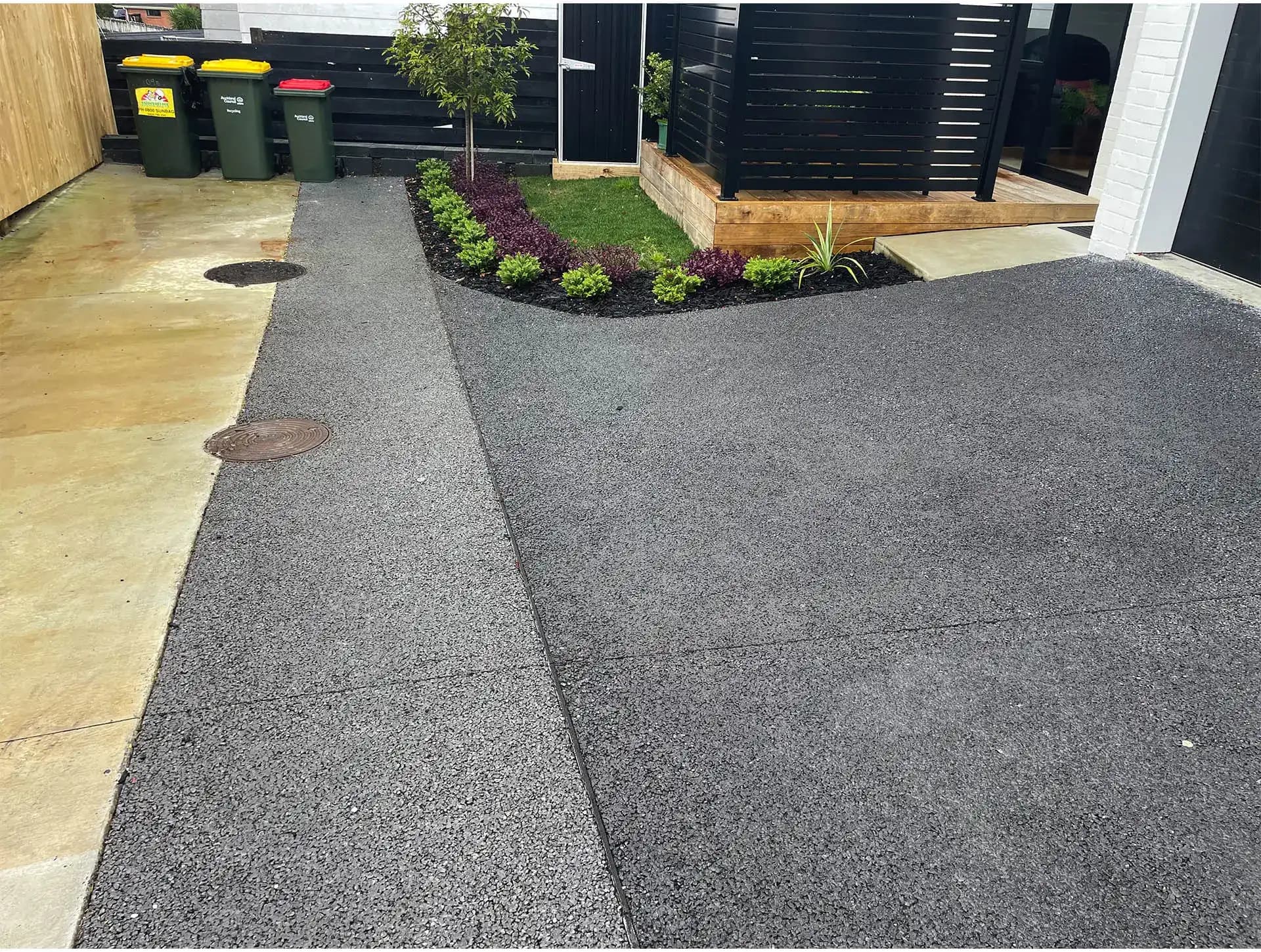
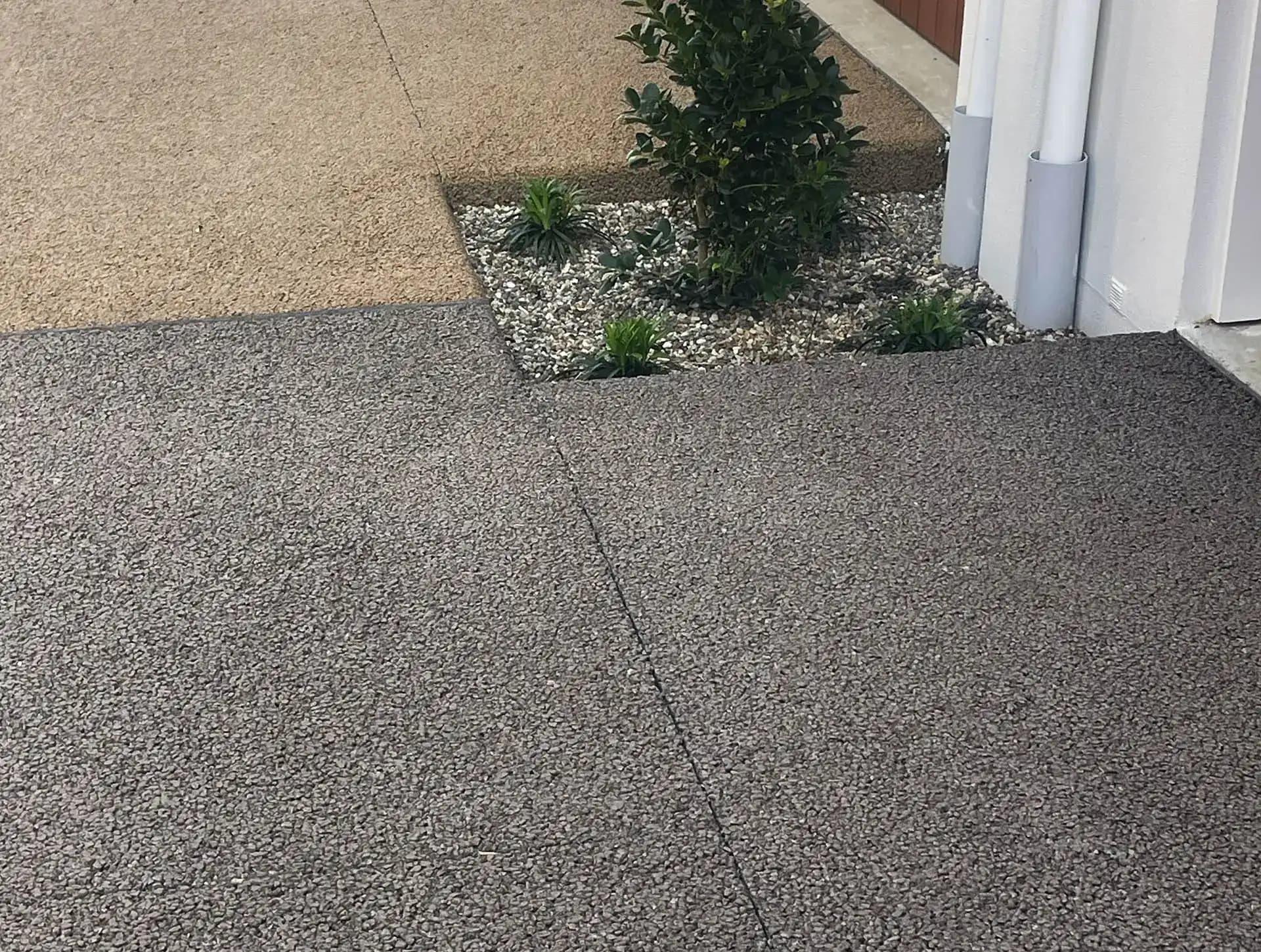
Yes, and this is the honest version of the green driveway: a permeable surface for the wheels, living garden everywhere else. Because water passes through the slab into the soil, lawn and garden beds right at its edge thrive, and it can run through tree protection zones sealed concrete is banned from.
What about grass pavers or turf grids?+
For a patch of overflow parking used a few times a month on flat ground, grids can be the right call, and we will tell you so. For a driveway used daily, the turf in the wheel lines wears through and the grid shows; you inherit the maintenance of a lawn and the look of neither. We do not sell grids, so you are getting our honest read, not a pitch.
Does it satisfy council permeable-area rules?+
Permeable concrete is a fully permeable surface and supports council permeability targets and stormwater requirements. Rules vary by council, so confirm your specific percentage with them, and we can supply the surface documentation your application needs.
What does it cost compared to a grass driveway?+
It depends on your ground, area and access, so we price from a free on-site assessment rather than a rate table. When you compare, count the whole picture: a grass driveway keeps costing mowing, watering, re-turfing and mud cleanup; this surface is designed for a 30 year and longer life with routine maintenance.

Get the green driveway that stays a driveway

An estimator walks your site, checks the falls and the soil, and gives you a real figure for a fully permeable driveway with living garden around it. If a grass grid genuinely suits your job better, we will say so.