Built for vehicles
20 to 25 MPa trafficable to AS 3727.1 as standard, with higher strength mixes available for heavier or commercial use.

A driveway has to do two jobs at once: take the rain and take the weight, every day, for decades. Plenty of permeable options do one and struggle with the other. We pour a permeable driveway rated 20 to 25 MPa and trafficable to AS 3727.1, so the water goes down and the car goes on.
The reason most people land on the term permeable pavement driveway is a council condition or a puddle. Both are solvable, but only if the surface is engineered as a pavement rather than a drainage feature. Our trafficable mixes run 20 to 25 MPa, placed to AS 3727.1 for domestic driveways and hardstands, with higher strength mixes available where an engineer or a commercial crossover calls for them. Reversing trailers, a loaded ute, a removalist truck on handover day: normal driveway loading, designed for.
The drainage is not a compromise for that strength. Permcon holds 20 to 26 per cent interconnected voids and takes water at 130 to 170 litres per minute per square metre, measured at 9,400 millimetres per hour by VicRoads. The classic driveway problem, water sheeting down the slope and pooling against the garage threshold, simply does not form, because the rain leaves the surface where it lands rather than travelling to the low point.
Underneath, an open-graded base holds 28 to 56 litres per square metre and either infiltrates into the subgrade or discharges slowly where the ground is tight. That base is what turns a driveway into stormwater infrastructure on your permit, and it is why a permeable driveway can free up impervious-area allowance for the house behind it.
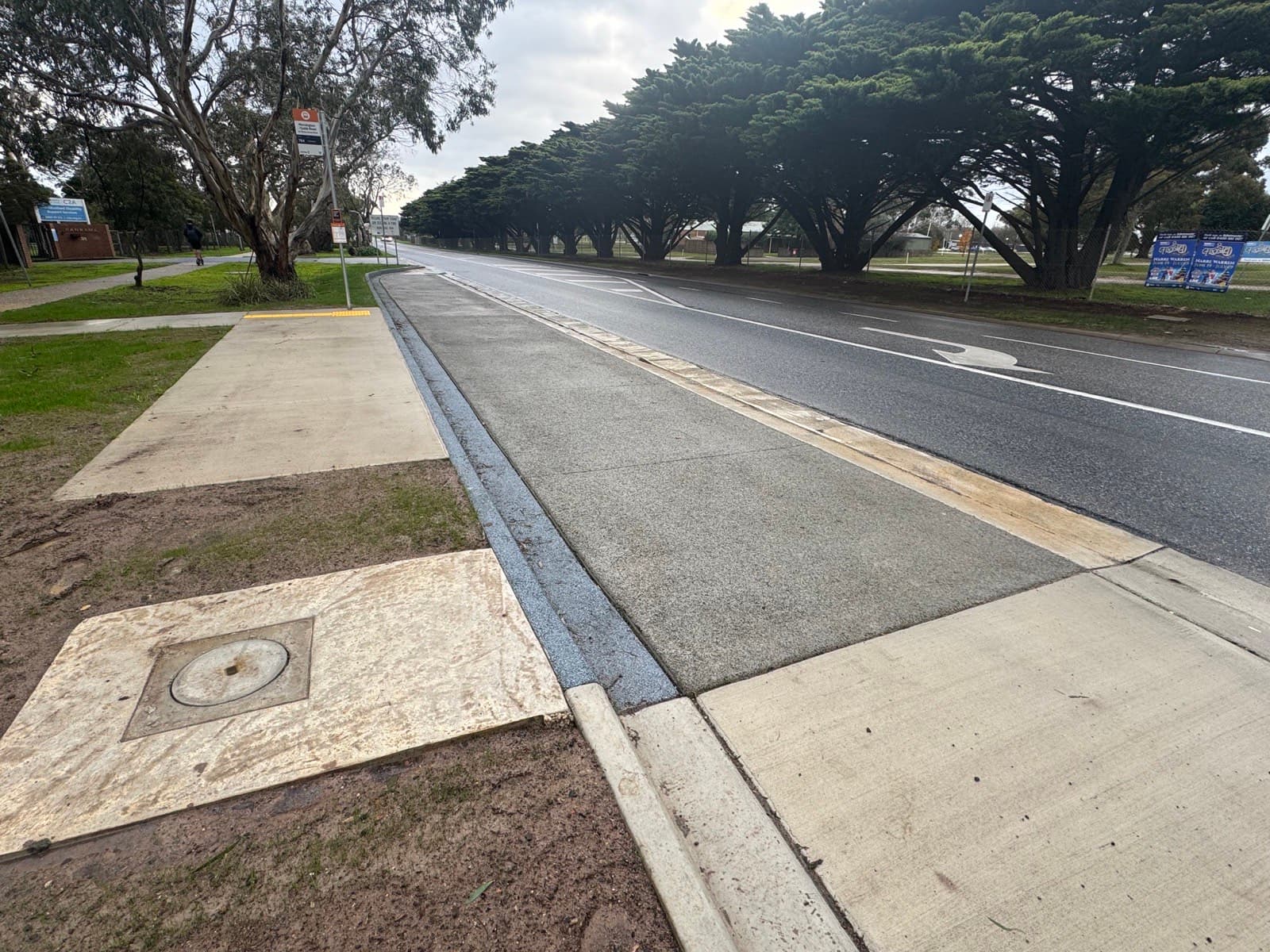
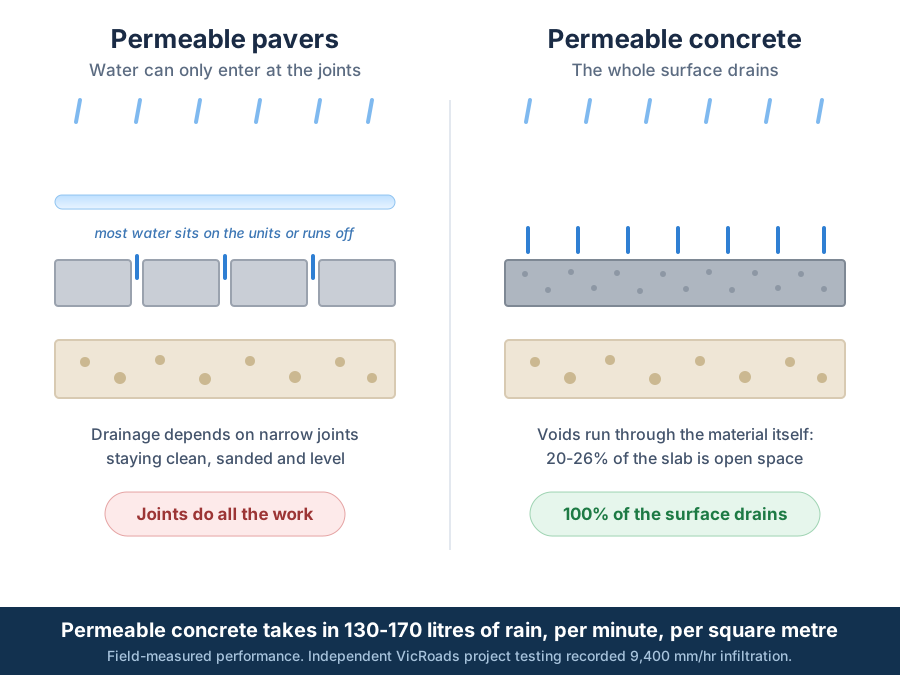
The surface takes in 130 to 170 litres of rain per minute, per square metre, through voids that run through the material itself, 20 to 26 per cent of the slab by volume. Independent testing on a VicRoads project measured 9,400 millimetres per hour.
Below the slab, an open-graded stone base stores the water and lets it soak or release at a controlled rate, holding 28 to 56 litres per square metre inside the system.
A few quick questions about your site. You get a straight answer about whether permeable concrete is the right call, including when it isn't, before anyone asks for your details.
A rough answer is fine. We confirm it on site.
Get in touch today to discuss your project. We're here to help with all your permeable concrete requirements, from a single driveway to major civil infrastructure.
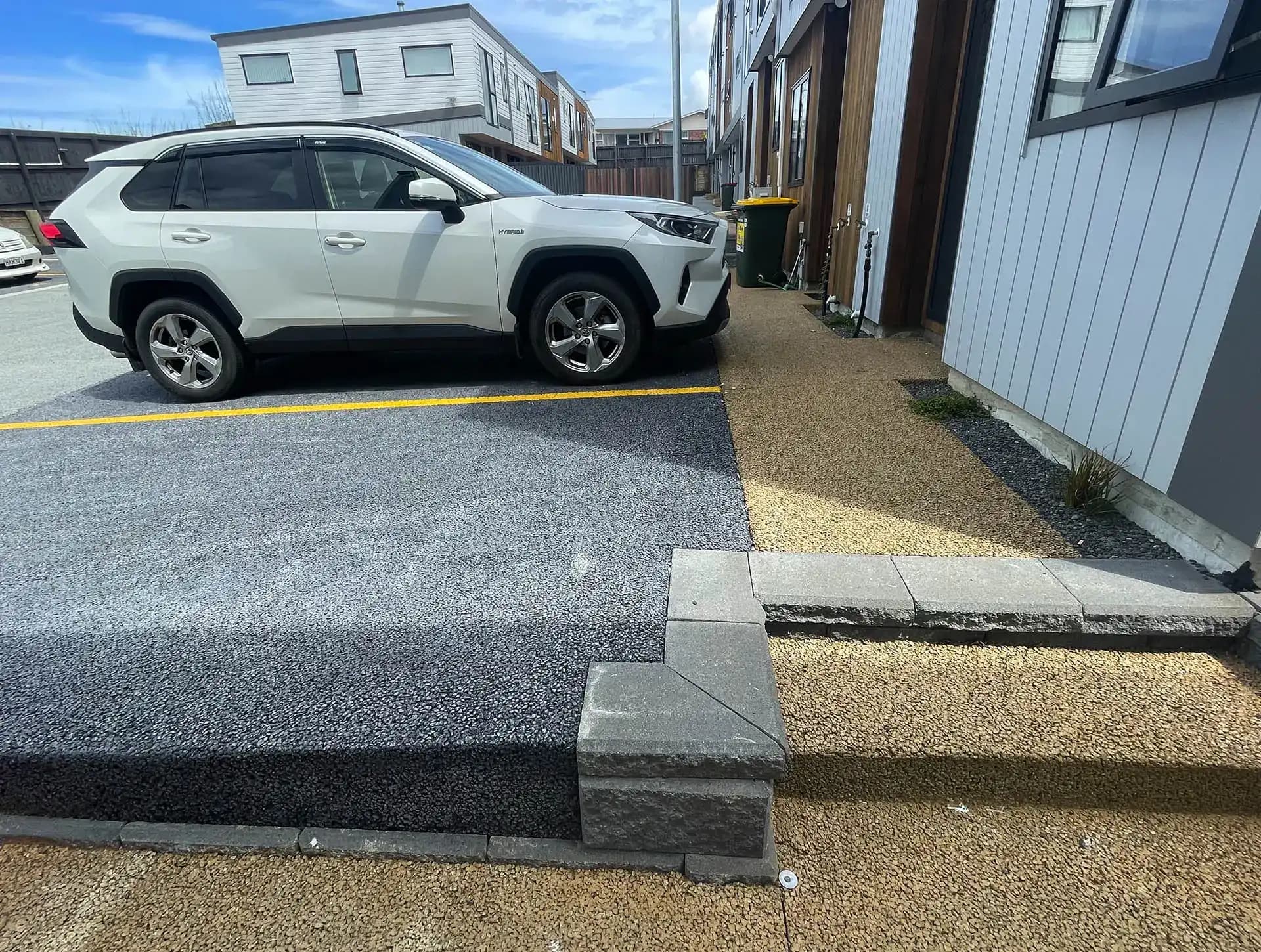
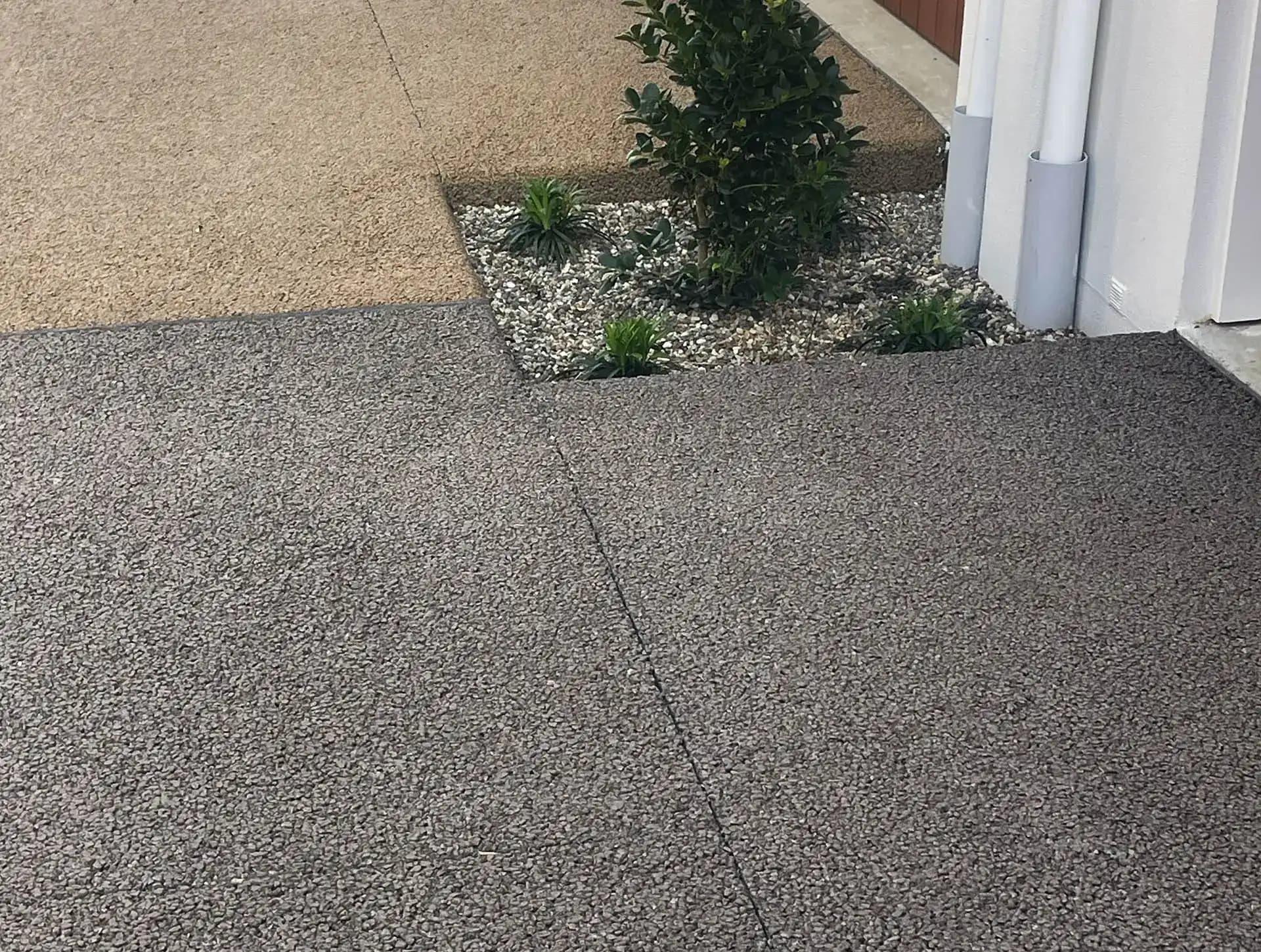
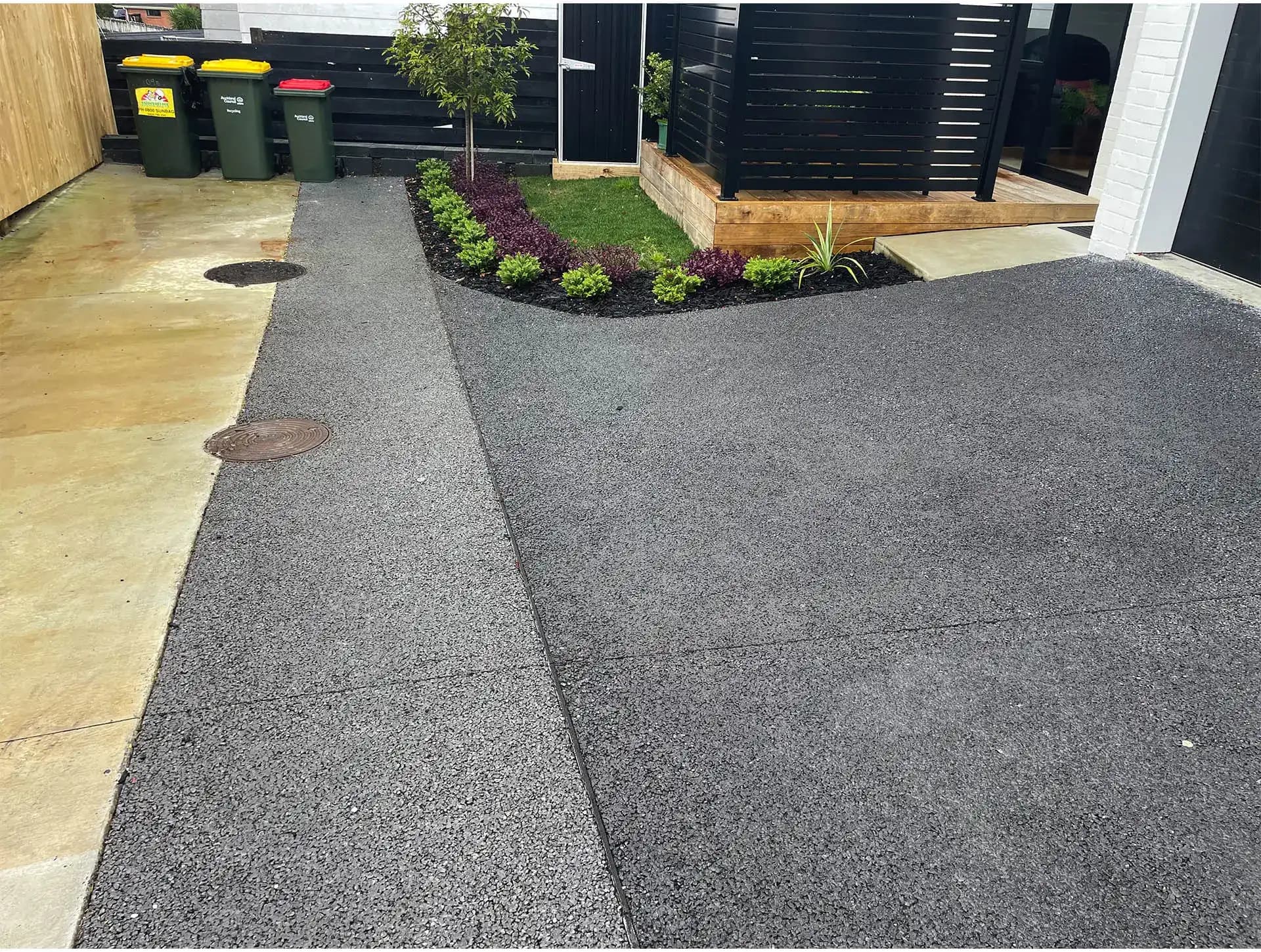
20 to 25 MPa trafficable to AS 3727.1 as standard, with higher strength mixes available for heavier or commercial use.
Water enters across the whole slab at 130 to 170 litres per minute per square metre, so nothing runs down and pools at the threshold.
A fully permeable surface that supports council permeability targets and water sensitive urban design conditions on new builds and extensions.
28 to 56 litres per square metre stored in the base, which often reduces or removes the need for separate detention.
A P4 slip rating wet or dry, and no sheet of water across the surface between the car and the front door.
Our crews place 500 square metres and more per day, so most residential driveways are a single continuous pour.
Permeable pavement is the American-influenced term for a surface built so rain passes through it into a stone base rather than running off to a kerb or grate. Applied to a driveway, it covers several products: porous asphalt, segmental permeable pavers, plastic grids filled with gravel or turf, and poured permeable concrete. They all target the same outcome, which is keeping rain on site. They differ enormously in how they behave under a car parked in the same spot every night for fifteen years.
We pour the concrete version. If you want the full residential picture including finishes, colours and site preparation, see our permeable concrete driveways page. This page covers the driveway-specific engineering.
A driveway is a pavement and should be specified like one. Our trafficable mixes are placed at 20 to 25 MPa and comply with AS 3727.1, the standard covering residential and light commercial pavements, with higher strength options where an engineer nominates them. The material is a no-fines cementitious mix, so its strength comes from the paste bond between aggregate particles rather than a dense sand matrix. That means placement and compaction matter, which is why our own crews place it rather than a subcontractor working off a spec sheet. Over thirty years we have installed more than 85,000 square metres of it.
Aggregate size is set by region: 7 mm in Victoria and Tasmania, 10 mm in New South Wales, Queensland, South Australia and Western Australia. Smaller aggregate gives a tighter surface texture without losing the void structure that carries the water.
Most Australian councils now cap the impervious area on a residential lot, and many attach stormwater conditions to a new dwelling, a second dwelling or a large extension. A sealed concrete driveway is often the single biggest impervious surface on a suburban block, so making it permeable can be the difference between a compliant plan and a redesign, or between needing a detention tank and not needing one. The pavement carries its own detention: an open-graded base storing 28 to 56 litres of water per square metre, with a system runoff coefficient around 0.3 and roughly 70 per cent of pollutants filtered out on the way through.
The same properties make a permeable driveway one of the few pavements accepted inside a tree protection zone, because water and air still reach the root plate. If you have a significant tree between the street and the garage, this is often the only surface a council arborist will approve.
We work with subgrades of CBR 5 and above directly. Below that, or on reactive clay, the design changes rather than the answer: a deeper base, geotextile separation, and where infiltration is limited or not permitted, a lined base with a metered outlet so the pavement still detains and filters. The on-site assessment looks at falls, soil, existing drainage, garage threshold levels and truck access, because all five change the price and the build. That is why we quote from the ground rather than a rate table.
An estimator walks the site, checks the fall to the garage and the soil under it, and prices a permeable driveway that will pass your council conditions. Call 1300 010 499 or book a free on-site assessment.