No joints in the frontage
One continuous pour instead of hundreds of units, so nothing sinks, lips, spreads or sprouts weeds along the driveway line.

Driveways, courtyards, side paths and street frontages across Melbourne, in a surface the rain goes straight through. We make it at our Mitcham factory and place it ourselves, so there are no pallets to lay, no joints to sand and nothing to lift over the years.
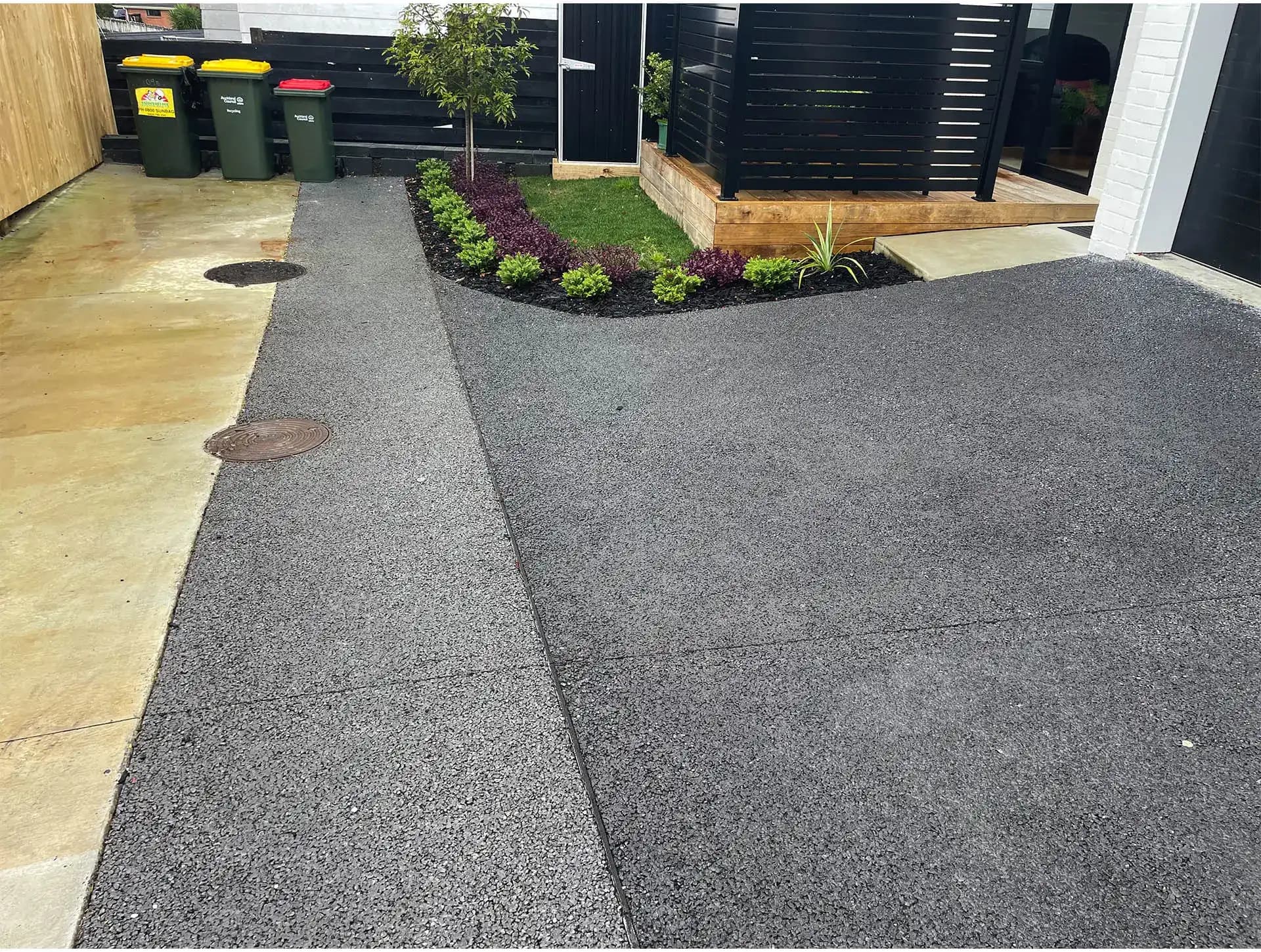
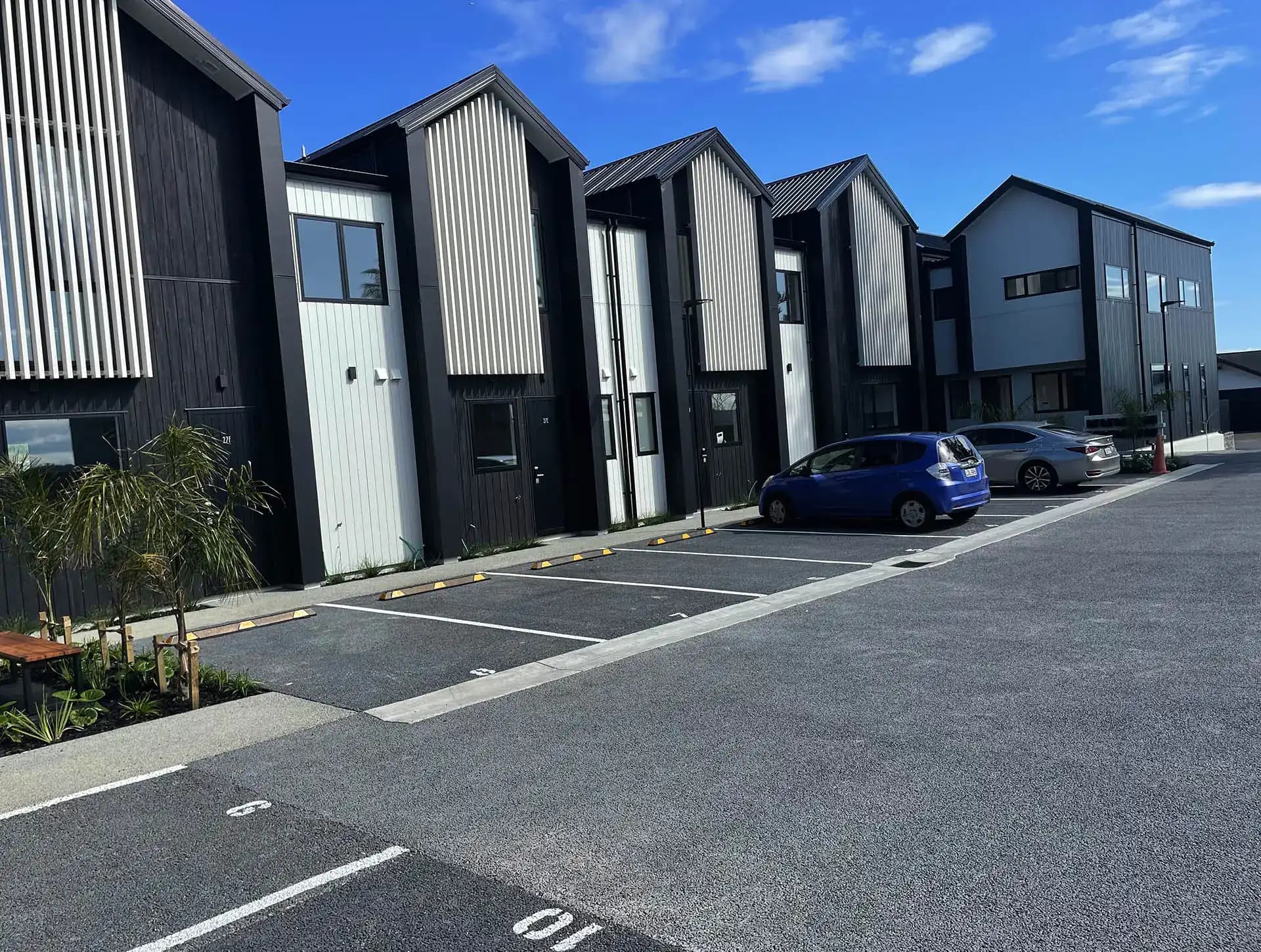
The jobs we do most around Melbourne are domestic and visible. A driveway between the street and a garage. A courtyard behind a single-fronted terrace where there is nowhere for the rain to go. The strip of frontage on a heritage street where the council will not allow more sealed surface. A path down the side of a townhouse development where five units share the drainage.
All of them work better as one continuous pour than as pieces. Permeable paving in the segmental sense drains through the joints between units, and joints are also where things go wrong: silt packs in, sand washes out, weeds appear, and one unit settles a few millimetres and starts catching the wheel. A poured surface has 20 to 26 per cent voids running through the material itself, so it takes 130 to 170 litres per minute per square metre across the whole area with nothing to maintain between the pieces.
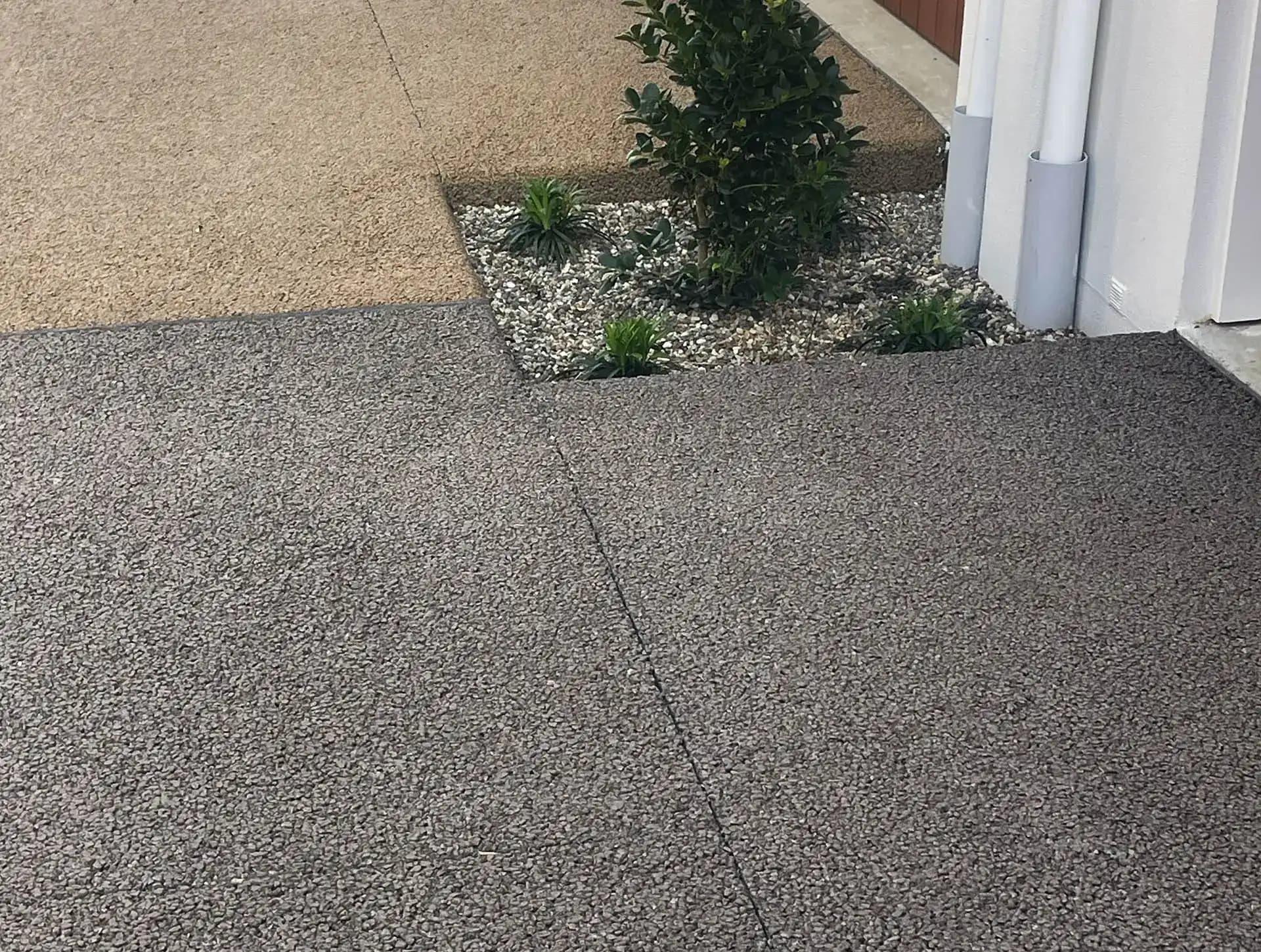
We make it locally, at Factory 7, 25 to 39 Cook Road, Mitcham, with 7 mm Victorian aggregate that gives a finer surface texture than the 10 mm mixes used in the other states. That texture reads well against brick, bluestone and render, and it is available in charcoal and other oxide colours, or in our Ultracon finishes for a premium frontage.
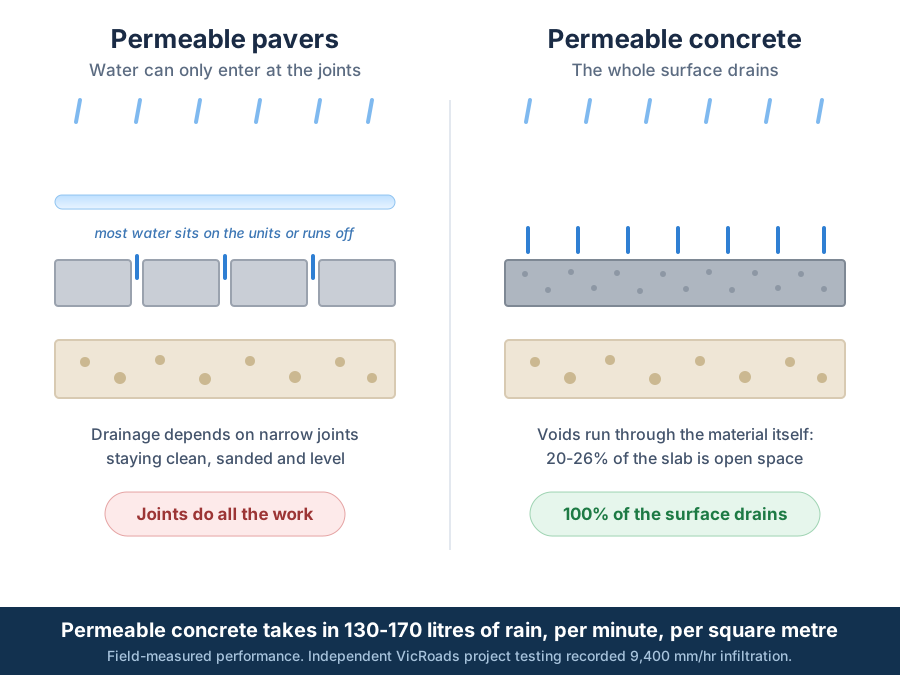
The surface takes in 130 to 170 litres of rain per minute, per square metre, through voids that run through the material itself, 20 to 26 per cent of the slab by volume. Independent testing on a VicRoads project measured 9,400 millimetres per hour.
Below the slab, an open-graded stone base stores the water and lets it soak or release at a controlled rate, holding 28 to 56 litres per square metre inside the system.
A few quick questions about your site. You get a straight answer about whether permeable concrete is the right call, including when it isn't, before anyone asks for your details.
Get in touch today to discuss your project. We're here to help with all your permeable concrete requirements, from a single driveway to major civil infrastructure.
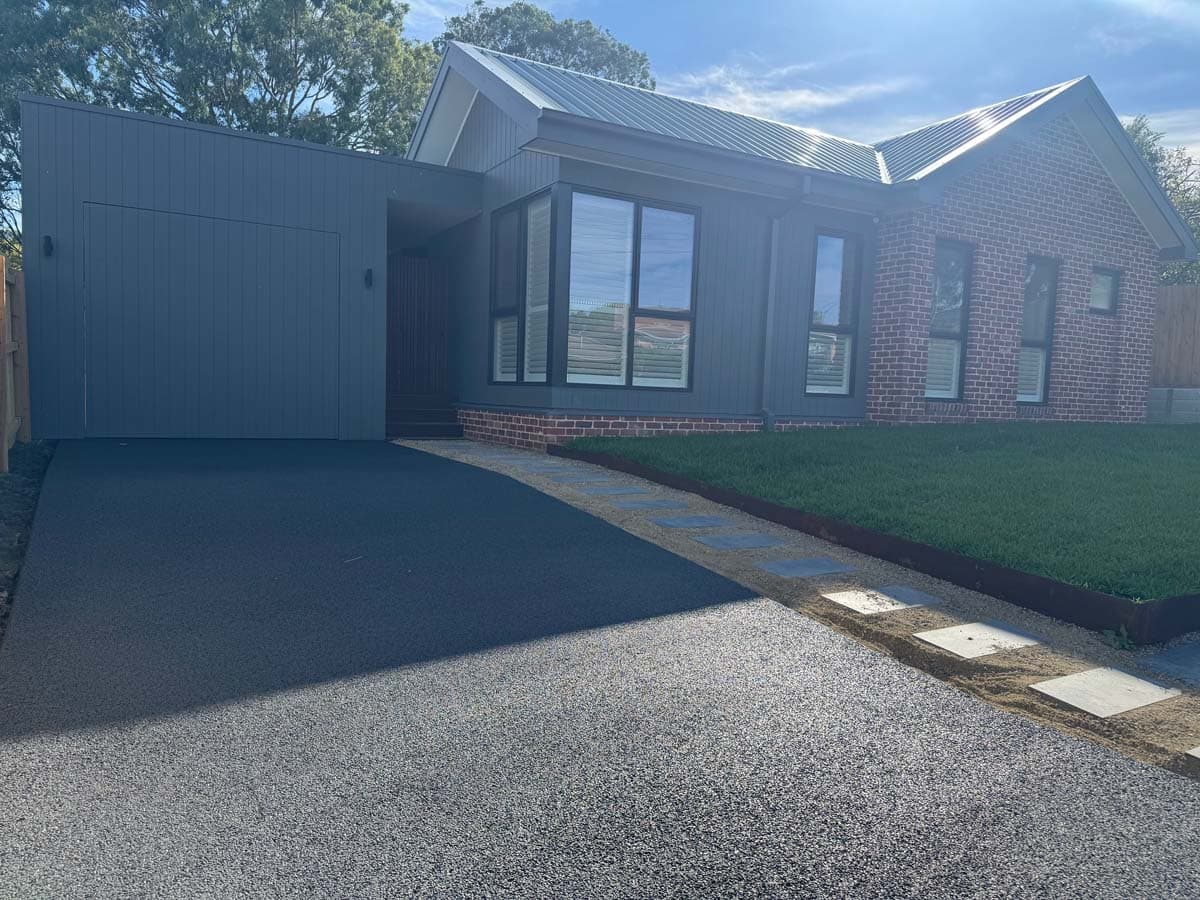
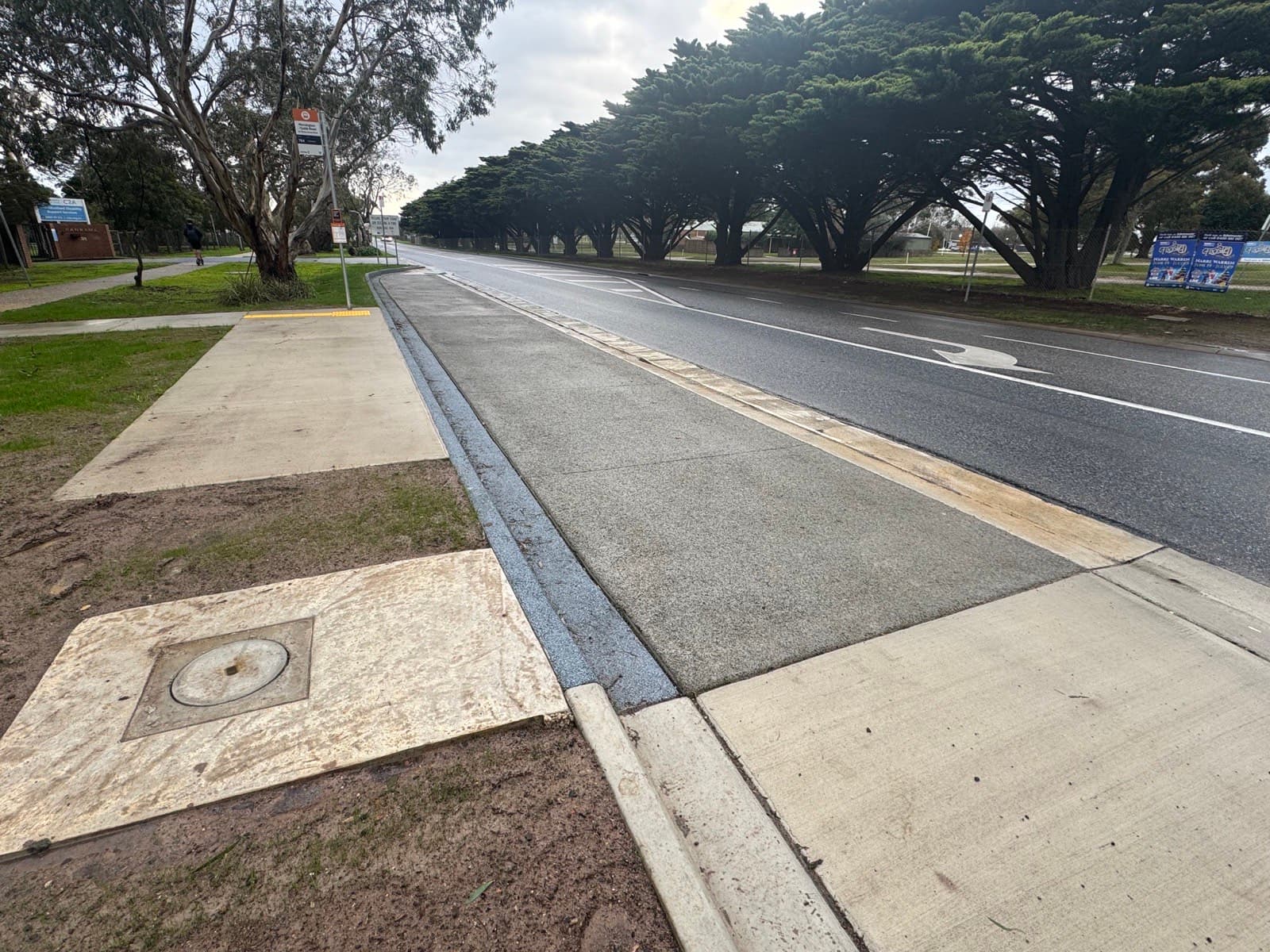
One continuous pour instead of hundreds of units, so nothing sinks, lips, spreads or sprouts weeds along the driveway line.
130 to 170 litres per minute per square metre through the material, not through a narrow band of joint stone.
Designed, batched and quality-controlled at our own Victorian factory using 7 mm local aggregate, and placed by our own crews.
A fully permeable surface that supports permeable-area targets on new dwellings, second dwellings and extensions.
Water and air still reach the root zone, which is why it is one of the few surfaces accepted inside a tree protection zone.
Exposed aggregate texture with charcoal and other oxide colour options, plus the Ultracon range for premium frontages.
In most Melbourne quotes, permeable paving means segmental units: concrete pavers laid with widened joints, or plastic grids filled with gravel or turf. Water drains through the gaps into a stone base. It is a valid system and it is not what we sell. We make poured permeable concrete, a no-fines cementitious pavement with 20 to 26 per cent interconnected voids through the material itself, placed as one continuous surface with no units and no joints.
The practical difference on a residential frontage is that our whole area takes water rather than a small percentage of it, and that nothing in the surface can move independently. Infiltration is 130 to 170 litres per minute per square metre, measured at 9,400 millimetres per hour under VicRoads testing. Trafficable mixes run 20 to 25 MPa to AS 3727.1 with a P4 slip rating and a 30 year plus design life.
Two things shape residential work here. First, the ground: much of the eastern and northern suburbs is reactive clay that will not infiltrate at a useful rate, so we design the open-graded base as a storage reservoir holding 28 to 56 litres per square metre and either infiltrate on subgrades of CBR 5 and above, or line the base and discharge slowly where the clay will not take it. Second, the blocks: Melbourne lots are getting tighter, driveways longer and gardens smaller, so the driveway is often the largest single impervious surface on a property and the easiest one to change.
The rainfall pattern rewards this. Melbourne delivers long runs of light falls, then an intense summer cell that arrives all at once. Light rain never gets a chance to sheet across the surface, and the heavy cell goes into a base built to hold it rather than into the street drain in one surge.
Driveways from the crossover to the garage, including around protected street trees. Courtyards and rear yards on subdivided blocks. Side paths and clothesline areas where a sealed slab would create a puddle against the fence. Street frontages and nature strip treatments where the council limits sealed surface. Pool surrounds, where drainage and the P4 slip rating both count. Shared driveways and forecourts on small townhouse developments, where several dwellings drain to one point and a detention tank would otherwise be needed.
The material is designed and made at our Mitcham factory and installed by our own crews under ISO 9001, 14001 and 45001 certification, and we are Master Builders Victoria members. That single line of responsibility is the difference between a mix that is right for your ground and a generic product placed by whoever won the subcontract. Across thirty years we have installed more than 85,000 square metres of permeable concrete, and our crews place 500 square metres and more per day, so a typical Melbourne driveway is one pour and one visit.
We come out, check the falls, the soil and the access, and give you a real figure for a poured permeable driveway or courtyard. If the access is too tight to pour, we will tell you that too. Call 1300 010 499 or book a free on-site assessment.