Made 20 km from the CBD
Designed, batched and quality-controlled at our Mitcham factory, so supply, samples and mix questions are local.
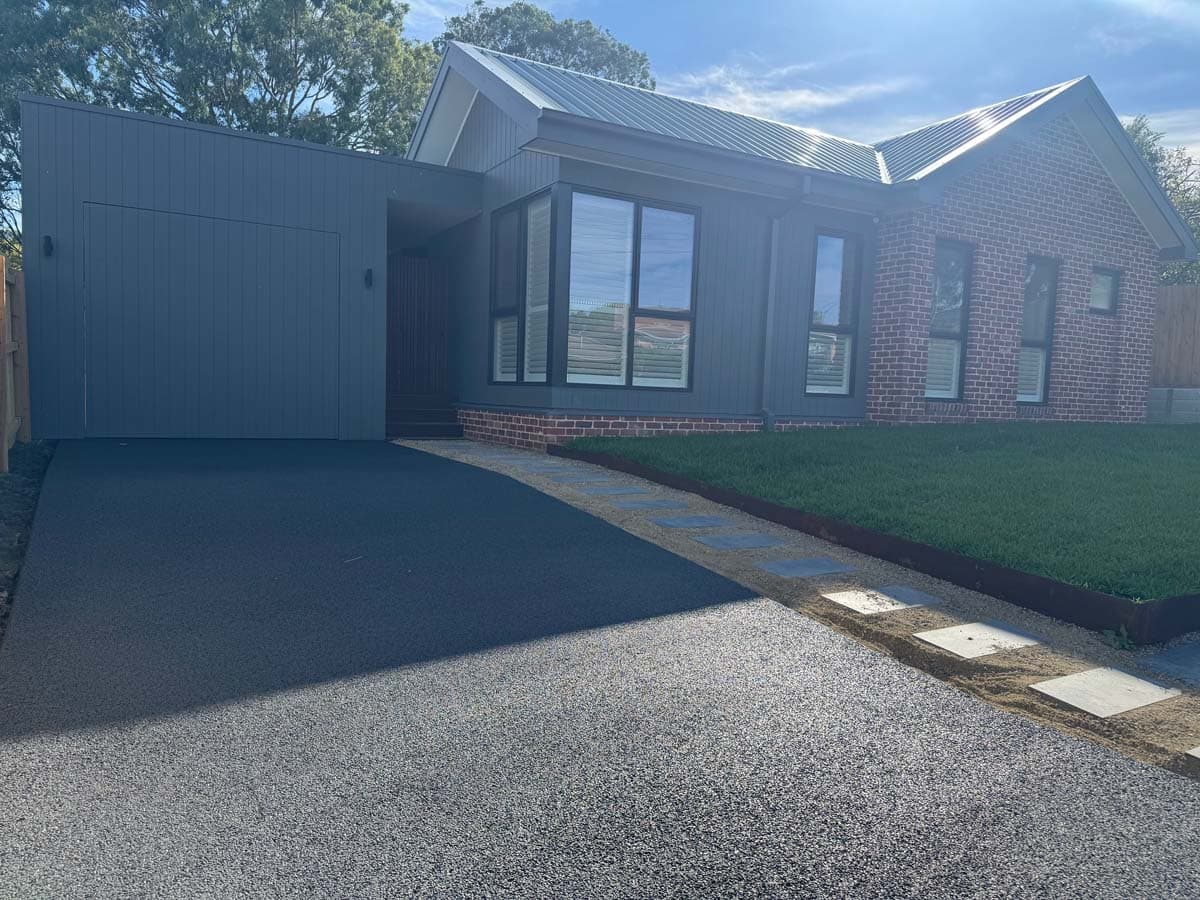
Our factory is in Mitcham, twenty kilometres from the CBD. The mix in your car park is designed here, batched here and placed by our own crews, using 7 mm Victorian aggregate that suits local supply and local ground. When something needs to be answered on site, you are talking to the manufacturer.
Most porous paving sold in Melbourne is somebody else's system, resold and installed by a contractor who did not design it. Ours is not. Permcon is developed and manufactured at Factory 7, 25 to 39 Cook Road, Mitcham, and installed by crews working under our own ISO 9001, 14001 and 45001 systems. We are Master Builders Victoria members. If the mix needs adjusting for a site, that decision is made by the people who make the material.
Melbourne ground is the reason that matters. Large parts of the eastern and northern suburbs sit on reactive clay that will not take infiltration at any useful rate, and a porous surface designed for sand behaves very differently on it. We design the base as a storage reservoir first, holding 28 to 56 litres of water per square metre, then decide whether that water infiltrates or leaves through a metered outlet. Clay is a design input here, not a reason to walk away.
Melbourne rain also has a shape: long runs of small falls, then a summer cell that dumps everything in twenty minutes. The surface handles the second case because it takes water at 130 to 170 litres per minute per square metre, far more than any cell delivers, and the base absorbs the peak so the drainage system downstream never sees it.
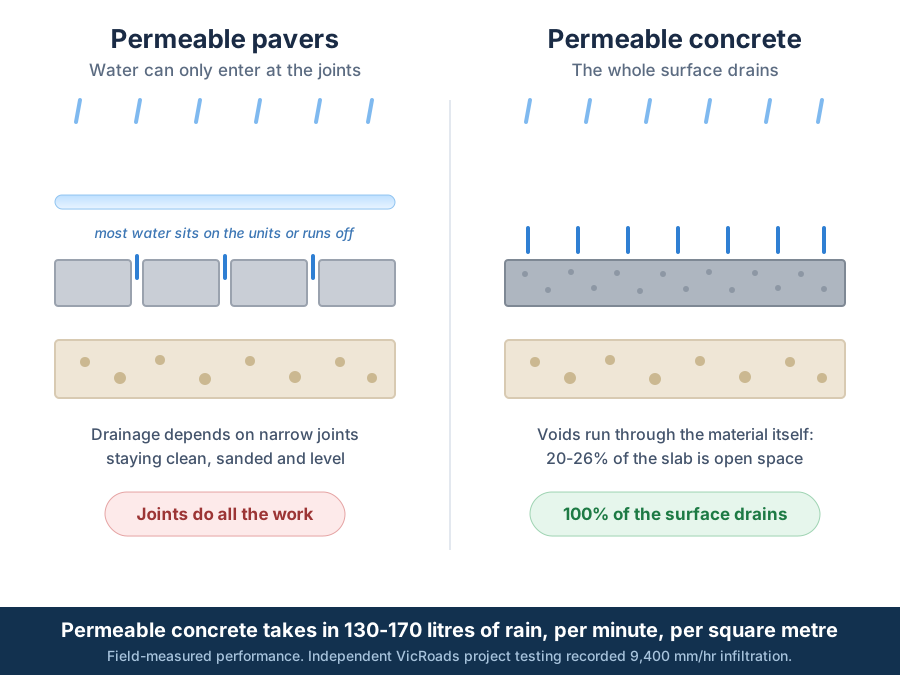
The surface takes in 130 to 170 litres of rain per minute, per square metre, through voids that run through the material itself, 20 to 26 per cent of the slab by volume. Independent testing on a VicRoads project measured 9,400 millimetres per hour.
Below the slab, an open-graded stone base stores the water and lets it soak or release at a controlled rate, holding 28 to 56 litres per square metre inside the system.
A few quick questions about your site. You get a straight answer about whether permeable concrete is the right call, including when it isn't, before anyone asks for your details.
Get in touch today to discuss your project. We're here to help with all your permeable concrete requirements, from a single driveway to major civil infrastructure.
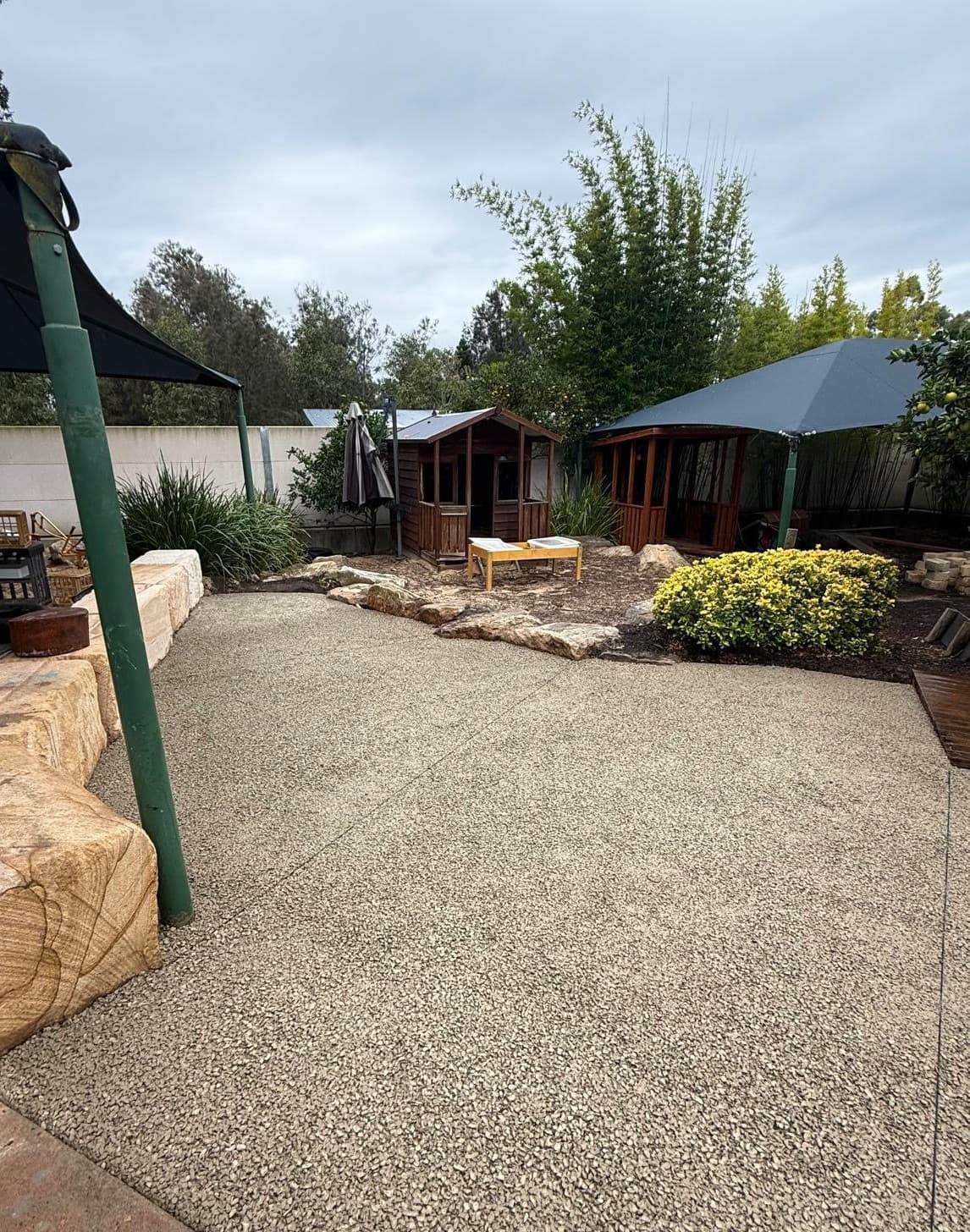
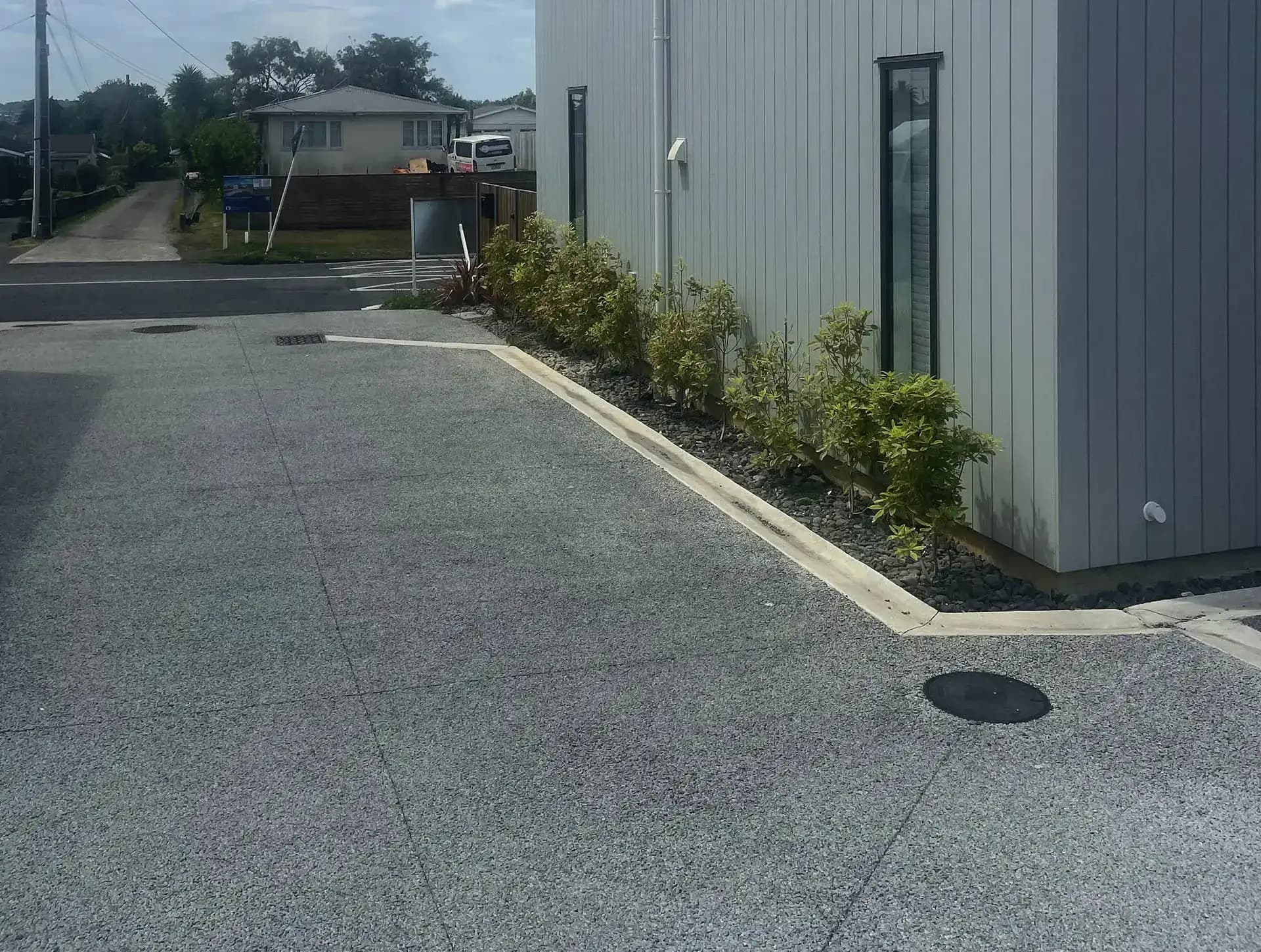
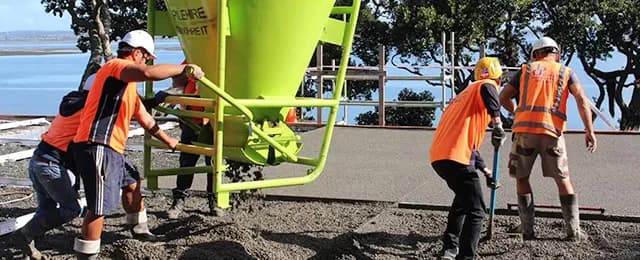
Designed, batched and quality-controlled at our Mitcham factory, so supply, samples and mix questions are local.
7 mm mixes for Victoria and Tasmania, matched to local stone supply and giving a tighter surface texture.
The base is built as storage first, holding 28 to 56 litres per square metre, then lined and metered where the subgrade will not infiltrate.
A runoff coefficient around 0.3 and roughly 70 per cent pollutant filtering, with figures we can hand your consultant.
ISO 9001, 14001 and 45001 certification and Master Builders Victoria membership, on our own labour rather than a subcontract chain.
500 square metres and more per day, with staged pours to keep a car park or forecourt partly trading.
Porous paving, permeable paving and pervious paving all describe a surface that lets rain pass through it into a stone base rather than shedding it to a kerb. In Melbourne the term usually comes up because of a planning condition. Victorian councils apply water sensitive urban design requirements to new commercial developments, car parks, public realm upgrades and larger residential projects, and impervious-area limits sit inside many local planning schemes. A porous surface reduces the impervious footprint, cuts the peak flow reaching the drainage system, and can reduce or remove separate detention infrastructure.
Poured porous concrete is the version we make. It is a no-fines cementitious pavement with 20 to 26 per cent interconnected voids running through the material, distinct from resin-bound gravel, plastic grids and jointed permeable pavers, which all sit in the same category but behave differently under daily traffic.
Our factory sits at Factory 7, 25 to 39 Cook Road, Mitcham. Being local is not a sentiment, it changes the job. Aggregate supply in Victoria runs to 7 mm, where New South Wales, Queensland, South Australia and Western Australia use 10 mm, and the mix design follows the stone rather than fighting it. Smaller aggregate gives a finer surface texture without losing void interconnectivity, which matters on a public forecourt where people are looking down at the finish. Being twenty kilometres from most of our Melbourne sites also means a mix question gets answered the same day.
We hold ISO 9001, 14001 and 45001 certification and are Master Builders Victoria members. Across thirty years we have placed more than 85,000 square metres of permeable concrete.
The eastern, northern and outer suburbs throw up a lot of reactive clay, and a porous pavement on clay is a different design to the same pavement on sand. Our approach is to build the open-graded base as a reservoir first, holding 28 to 56 litres of water per square metre in the void space between the stones. On subgrades of CBR 5 and above that storage drains down into the ground. Where the clay will not take it, or where infiltration is not permitted by the approval, the base is lined and connected to a slow controlled outlet. In both cases the surface performs identically: no ponding, no runoff surge, and about 70 per cent of the sediment and hydrocarbons captured in the profile.
Car parks and commercial forecourts, where impervious-area caps and WSUD points drive the specification. Council footpaths, plaza surfaces and shared paths, where the P4 slip rating and the absence of puddles matter for accessibility. Tree pits and tree protection zones, where a permeable surface is one of the few pavements permitted over a root plate. Sports court surrounds and pool decks. Anywhere a 20 to 25 MPa trafficable surface to AS 3727.1 with a 30 year plus design life is the right answer and a sealed slab is not.
Send us the site, the loading and the stormwater condition you are working to, and our estimator will come out, look at the ground and price it. Call 1300 010 499 or email [email protected].