APC Completes High-Traffic Commercial Car Park Project
Bays that can't close for long
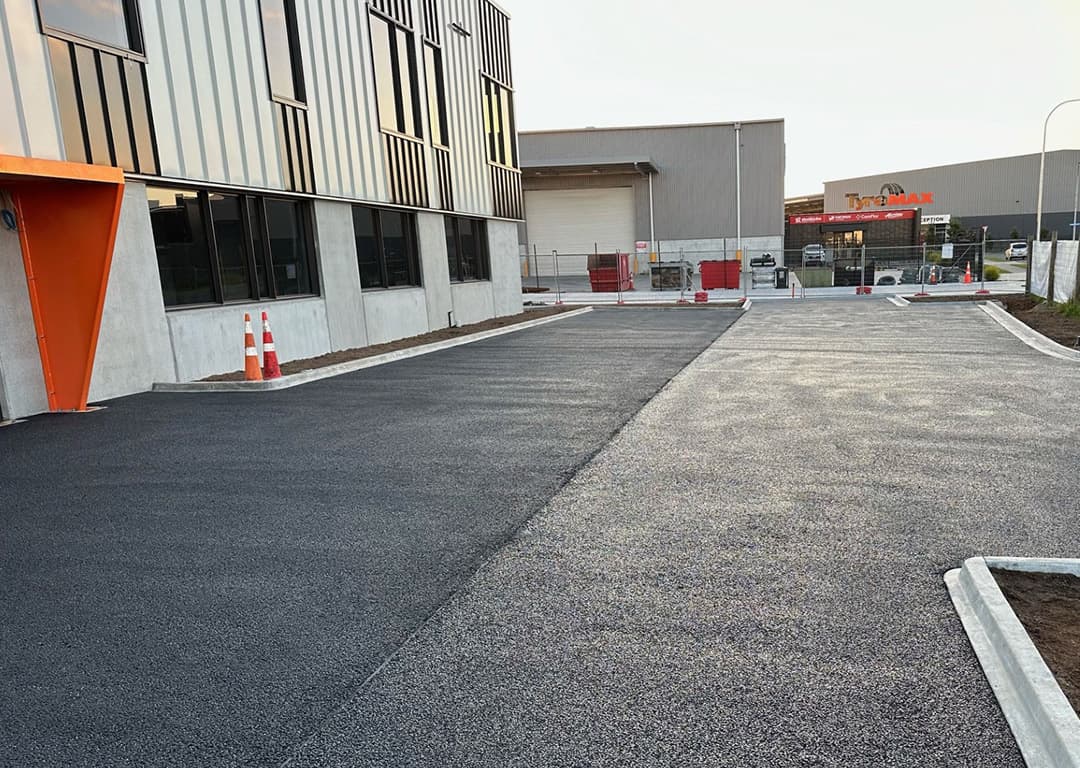
Every closed bay costs the owner money on a trading site, which makes programme as important as the spec. It's a busy commercial car park: delivery trucks, customer vehicles, trolleys and foot traffic, all using the same surface, every day. Sealed pavement struggles to give a site both things it needs at once. A slab strong enough for trucks braking and turning. A surface that doesn't pool at the entries.
Standard pavement on a site like this wears under the constant wheel path of delivery vans, and water sheets off toward the low points, sitting as puddles at pedestrian crossings and adding pressure to the site's stormwater pipes.
The build
No joints. One continuous pour of 25+ MPa concrete over a base of clean screenings, with no fall built into the surface because water goes down through it rather than across it. Same mix every time; thickness is the variable. Our standard is 125 mm.
What the surface does with water
At 8,000 to 10,000 mm/hr, rain moves through the wearing surface faster than most storms can deliver it, straight into the base below. No pooling at entries, exits or crossings, and less slip risk for anyone walking to their car. A P4 slip rating helps there too. The base stores what lands on it, 42 to 56 litres per square metre in a typical car park profile, then lets it go to the ground or through an under-drain at a controlled rate. It filters as it stores, holding back up to 70 per cent of the heavy metals, hydrocarbons and suspended solids that wash off a trafficked surface before that water goes anywhere else.
After handover
Crews here placed 500 m² and more a day, because on a trading site, speed is part of the job. What's left after that is small: a monthly look over the surface, landscaping soil kept off it, a sweep once a year, and a wash if a patch ever slows down. Structural failure sits under our 10-year warranty. We assess it, remove it, replace it.
New car park, or an old one that's never managed water properly: either way, send through the site plan. Our car park page covers how we size the slab and base for jobs like this, and we'll look at your site and put a real figure on it.