How Permeable Concrete Works: A Detailed Explanation of Its Unique Properties
Understanding how permeable concrete works starts with what's missing from the mix. Permeable concrete is becoming a popular choice for both commercial and residential projects in Melbourne and across Australia, valued for managing water effectively while still giving you a durable, functional surface. We get asked a lot by clients what sets it apart from traditional concrete, how it actually works, and why it's a smart pick for sustainable builds. Here's a closer look at the properties that make it different and how permeable concrete works in practice.
How Permeable Concrete Works: The Mix Behind It
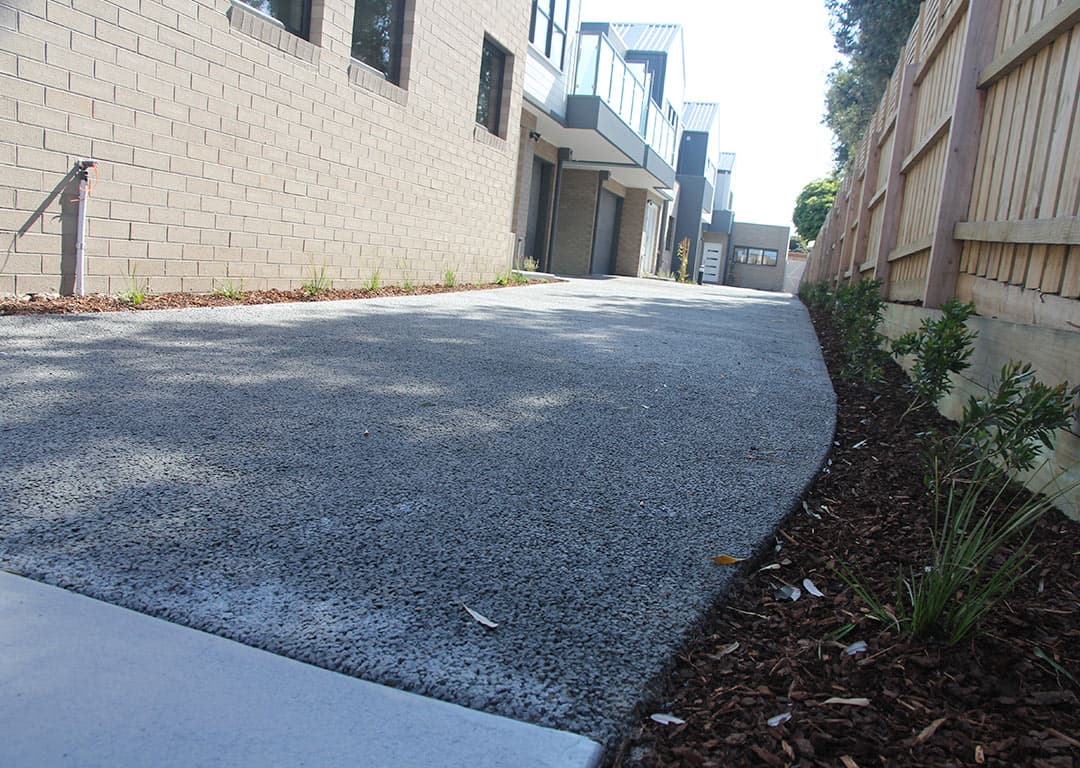
Permeable concrete is made from cement, water and coarse aggregates, but without fine aggregates like sand. Leaving sand out of the mix is what makes the whole system work: it creates interconnected pores throughout the concrete that let water flow straight through the surface and into the ground below, rather than pooling or running off.
Getting that pore structure right isn't a set-and-forget job. The mix has to be carefully balanced, because too little cement, or too much or too little water, changes the outcome of the finished product. Get it wrong and you either lose strength or lose permeability, and a driveway or path needs both to do its job properly.
- Cement, water and coarse aggregate only, with no sand or fine aggregate
- Interconnected pores that allow water to pass through to the ground
- A tightly controlled water-to-cement ratio to protect strength
- Consistent aggregate sizing so the pore structure stays even across the surface
Why Quality Control Matters
Because the margin for error is small, we maintain strict quality control on every batch to make sure both the strength and the permeability requirements are met. That means checking the mix as it's placed, not just relying on the recipe, since site conditions like temperature and moisture can shift how the concrete cures.
This is also where how permeable concrete works ties back to the reason people choose it in the first place. A well-placed permeable surface takes rainwater off your hands on the spot, cutting down on surface runoff and pooling around driveways, paths and car parks. For councils and property owners dealing with stormwater rules, that's a real point in its favour, and it's a big part of why we're seeing more of it specified for sustainable projects across Melbourne.
If you're weighing up permeable concrete for a driveway, path or commercial surface and want to know whether it's the right fit for your site, get in touch with our team and we'll talk through the options.