Traffic Carpark Project
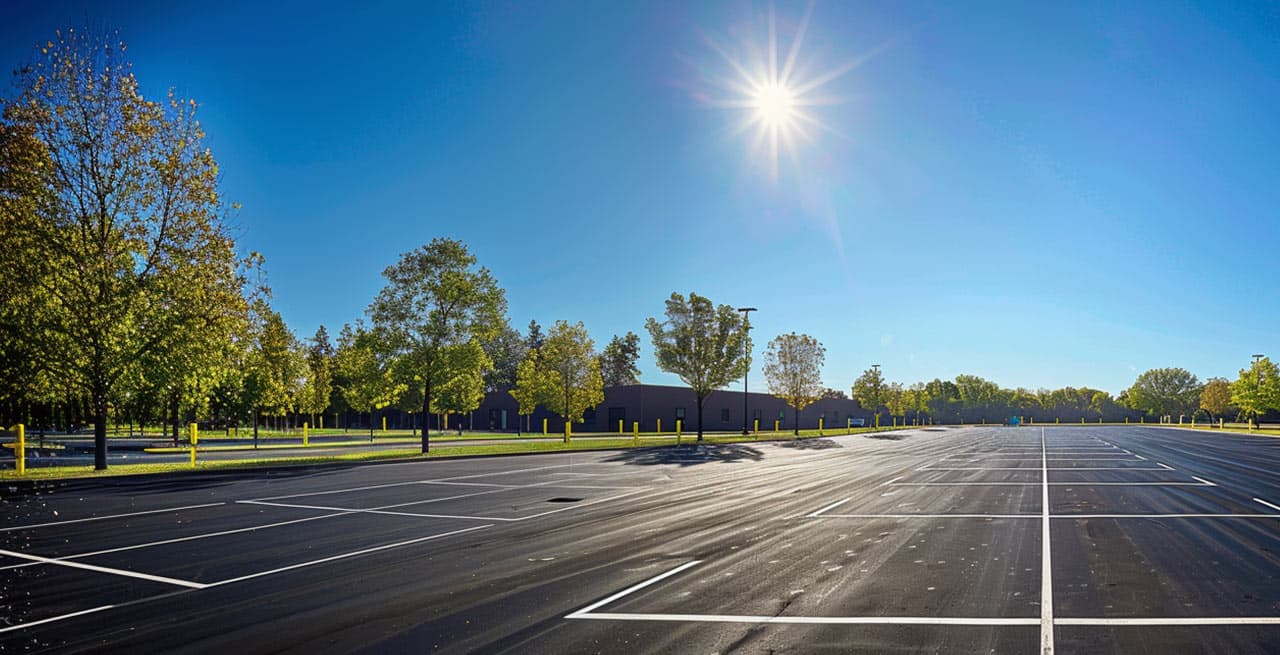
Delivery vans, ute fleets, bin trucks and staff cars move through this car park from opening to close. Heavy axles, all day. That's what high-traffic car park paving has to shrug off, along with keeping water out of the bays and off the lanes instead of pooling at the kerb. We poured it in Permcon. Drainage wasn't bolted on afterwards; it sat in the base design from the first drawing.
Sized for the heaviest vehicle
Every slab we pour is 25+ MPa. That figure doesn't change from job to job; the thickness does. A 125 mm slab is the standard thickness, used for almost every application. Where a heavier vehicle turns in, the slab steps up to 150 mm or 175 mm. We put the strength where the load actually sits. Before we draw anything, the client has to name the heaviest vehicle that will ever pull in, not the one that shows up most Tuesdays. That vehicle sets the number on the drawing.
High-traffic car park paving that drains itself
On this site the pavement is the drainage system. Rain passes straight through the Permcon surface at 8,000 to 10,000 mm/hr into the stone base below, which feeds it back into the ground. Nobody steps out of a car into a puddle. Far less water reaches the stormwater network once a storm passes than a sealed surface of the same size would send there.
Constant use, less upkeep
A car park like this takes heavy traffic every day. It also cuts the flooding risk at the kerb, whatever pulls in. That's the same approach to car parks from the ground up we take on every job: start with the site, then the vehicles that will actually use it.