Permeable Concrete vs. Traditional Concrete: Which is Better for Your Driveway?
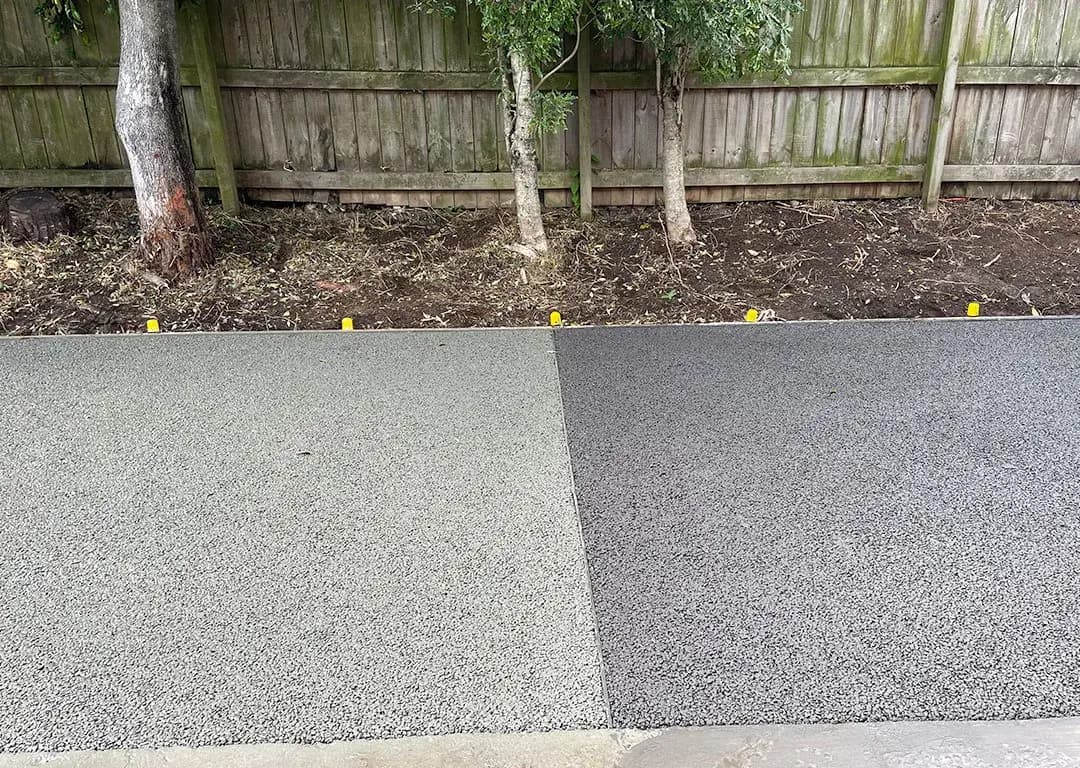
A permeable concrete driveway changes how your property looks, drains, and performs over time compared with a traditional slab. When we speak with homeowners, developers, and landscapers, the comparison often comes down to permeable concrete versus traditional concrete. Both have clear strengths, but they suit different priorities. In this guide, we walk through the practical differences so you can make an informed decision based on performance, cost, drainage, and long-term value.
How a Permeable Concrete Driveway Handles Water
A permeable concrete driveway is built with an open-graded structure that lets water pass straight through the surface and into a compacted base layer below, rather than pooling on top or running off into the street. That matters most on sloping blocks, properties with limited drainage capacity, or sites where council conditions call for on-site stormwater management. Instead of adding to the load on kerbs, pits, and shared drainage systems, the water is absorbed close to where it falls.
Because it manages water at the source, a permeable concrete driveway can also reduce pooling on the surface after heavy rain and lessen the amount of sediment and debris carried into gutters. For new builds and renovations where drainage is tight, this is often the deciding factor over a sealed surface.
Traditional Concrete: Strengths and Limitations
Traditional concrete has long been a familiar choice for residential and commercial driveways. It creates a solid, sealed surface designed to support vehicle loads and daily traffic, and many people choose it for its clean appearance and predictable installation process. From a durability perspective, traditional concrete performs well when installed correctly. It handles regular vehicle use and requires minimal day-to-day upkeep.
However, because it's non-porous, water cannot pass through the surface. Rainwater runs off into surrounding areas or drainage systems, which can place pressure on stormwater infrastructure. For properties with limited drainage capacity, sloping blocks, or strict council requirements, this runoff can become a real concern. Cracking may also occur over time if water pools beneath the slab or if ground movement isn't properly managed during construction.
Quick Comparison
- Drainage: permeable concrete lets water pass through the surface; traditional concrete sheds it off to drains or the surrounding ground.
- Council requirements: a permeable concrete driveway can help meet on-site stormwater conditions that a sealed slab can't.
- Appearance: traditional concrete gives a smooth, uniform finish; permeable concrete has a slightly textured, open surface.
- Maintenance: both need minimal day-to-day upkeep when installed correctly, though permeable surfaces benefit from periodic clearing to keep the pores open.
- Cracking risk: both can crack if water isn't managed properly during construction or if ground movement isn't accounted for.
Choosing Between the Two
If your block drains well, council conditions are straightforward, and a smooth, uniform finish is the priority, traditional concrete remains a solid option. If you're dealing with a sloping site, limited drainage capacity, or stormwater conditions attached to your approval, a permeable concrete driveway gives you a way to manage water without shifting the problem onto the street or your neighbours.
Every site is different, and the right base preparation and installation method matter as much as the surface you choose. If you're weighing up options for a new driveway or need advice on what will work for your block, get in touch with our team and we'll talk through what's practical for your property.